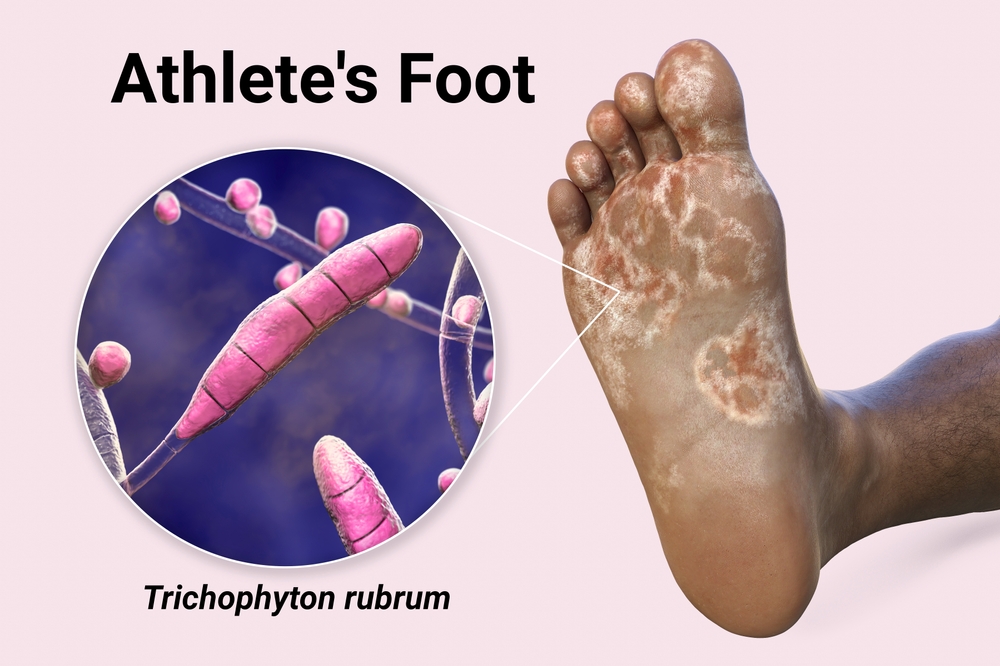
Athlete’s foot is common, contagious, and often mismanaged. Here is what the symptoms mean and how to treat them effectively.
Most people who develop athlete’s foot spend the first few days assuming their skin is just dry. By the time the itching intensifies or the cracking begins, the fungal infection has already had time to take hold. Known medically as tinea pedis, athlete’s foot is one of the most common skin conditions in the world, and one of the most frequently undertreated.
What a fungal infection actually looks like
Athlete’s foot does not always announce itself dramatically. The early signs tend to appear gradually, often between the toes or along the soles, and can closely resemble ordinary dryness or irritation. Redness, flaking, and peeling are among the first indicators. As the infection progresses, the skin may crack, blister, or develop a soft, waterlogged texture between the toes.
On the soles and sides of the feet, the skin may thicken over time. In some cases, the affected areas take on a lighter tone than the surrounding skin. A persistent burning or stinging sensation is also typical, and scratching, while instinctive, tends to worsen rawness and prolong recovery. If the infection reaches the toenails, the nails may discolor, thicken, or become brittle.
The discomfort varies. Some people experience only mild itching. Others deal with enough irritation that walking becomes unpleasant, particularly when the skin has cracked or blistered.
How athlete’s foot travels and who is most at risk
The fungus behind tinea pedis thrives in warm, damp conditions. Locker rooms, communal showers, and pool decks are classic transmission zones, which explains why the condition became associated with athletes in the first place. However, anyone who walks barefoot in shared spaces carries some level of exposure.
The infection spreads through direct contact with infected skin or contaminated surfaces. Shoes, socks, and towels can all harbor the fungus, which is capable of surviving on surfaces for days or even weeks without a host. Tight, non-breathable footwear creates the kind of environment where the fungus can persist and grow even without external reinfection.
Keeping the infection from spreading
Hygiene practices make a meaningful difference in both prevention and containment. Keeping feet clean and thoroughly dry after bathing or exercise reduces the conditions the fungus relies on. Wearing waterproof footwear in public showers or pool areas limits direct surface contact. Towels, socks, and any items that touch infected skin should be washed in hot water and kept separate from items used by others in the household.
After applying any topical treatment, washing hands thoroughly prevents accidental transfer to the hands or other parts of the body. Footwear that cannot be cleaned effectively should be replaced rather than continued in rotation.
Treatment that works and when to see a doctor
For most cases, over-the-counter antifungal products are effective. Medications containing miconazole (sold as Monistat-Derm), terbinafine (Terbinex), or clotrimazole (Lotrimin AF) are widely available and work well when applied consistently for the full recommended duration. Stopping treatment early as soon as symptoms ease is one of the most common reasons the infection returns.
If symptoms persist beyond two weeks or continue to worsen despite treatment, a healthcare provider should evaluate the case. More severe or long-standing infections may require prescription-strength antifungals. Complications are uncommon but become more serious in people with compromised immune systems or conditions like diabetes. Increased swelling, spreading redness, warmth, pain, or any discharge from the affected area warrants prompt medical attention rather than continued home management.
Athlete’s foot is rarely dangerous, but it is persistent when ignored. Catching it early and treating it completely are what separate a minor inconvenience from a prolonged problem.