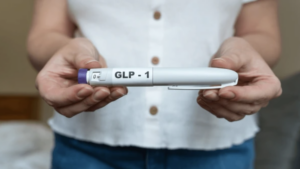
Eating disorders affect more than 30 million people in the United States, and a growing body of research suggests that the surge in GLP-1 weight loss medications may be making things significantly worse for one of the most overlooked groups: women over 50. One in eight American adults is currently taking a GLP-1 medication, and the age group reporting the highest usage is adults between 50 and 64, a demographic that has been heavily targeted by pharmaceutical advertising through celebrity endorsements, dramatic before-and-after imagery, and social media content framing appetite suppression as an uncomplicated win.
Research published in a leading eating disorder journal found that GLP-1 medications can worsen existing eating disorders or contribute to the development of new ones. For clinicians working with midlife and older women, those two data points are impossible to ignore side by side.
Eating disorders in older women are widely missed
More than 30 million people in the United States live with an eating disorder, but the image that most commonly comes to mind is still a teenage girl. That mental picture has consequences. Research shows that roughly 13 percent of women over 50 exhibit symptoms of disordered eating, and that number is growing.
The midlife and post-menopausal years create conditions that can quietly feed disordered eating. Metabolism shifts. Weight that once responded predictably to dietary changes no longer does. The body changes in ways that feel outside a person’s control, at the same moment that pharmaceutical companies are spending hundreds of millions of dollars annually to offer what appears to be a solution. That messaging lands with particular force on women who have spent years being told that their aging bodies are problems requiring correction.
Medical training has historically made this population even harder to identify and treat. The textbook presentation of an eating disorder has long centered on young white women. When an older woman skips meals, it may be interpreted as blood sugar management. When she exercises two hours a day, it may be read as commendable discipline. When she reports no longer feeling hungry after starting a GLP-1, it may be documented simply as an expected side effect. The behaviors of disordered eating can look indistinguishable from health consciousness in a woman navigating midlife.
This blind spot is not limited to age. Research consistently shows that Black teenagers are significantly more likely than white peers to exhibit bulimic behaviors, yet far less likely to be diagnosed or receive treatment. That same disparity follows Black women into adulthood and older age. The standard clinical image of who has an eating disorder excludes them, too.
What GLP-1 drugs are reopening for women in recovery
GLP-1 medications work by suppressing appetite and slowing digestion. For people managing diabetes or obesity, they can produce meaningful health improvements. But for women who spent their 20s and 30s in the grip of disordered eating and then worked for years to build a different relationship with food, these medications introduce something more complicated.
The sense of control over appetite and intake that GLP-1s produce is, for some women in recovery, not new. It is familiar. And it is the same feeling that once drove behaviors they worked hard to move away from. What is different now is that the mechanism is prescribed by a doctor, covered by some insurance plans, and celebrated publicly. That social legitimacy can make it far more difficult to recognize when the line between medical use and disordered behavior has been crossed.
Women who have struggled with restriction or control around food in the past are particularly vulnerable to this dynamic, and the warning signs may not announce themselves clearly.
Warning signs worth paying attention to
Disordered eating connected to GLP-1 use can develop gradually and often does not feel alarming from the inside. Some patterns to watch for include skipping meals to accelerate results beyond what is medically recommended, checking weight multiple times throughout the day, speaking frequently about how little one is eating with a mix of pride and anxiety, and combining the medication with extreme calorie restriction.
Physical warning signs can include persistent dizziness, significant hair loss, fatigue that interferes with daily functioning, and worsening muscle weakness.
A person does not need to be in acute crisis to reach out for support. The National Alliance for Eating Disorders offers free virtual and in-person support groups, provider directories, and a staffed helpline. Those seeking culturally specific care from Black, Brown, or Indigenous specialists can find provider directories through organizations dedicated to BIPOC eating disorder care.
A gap that medicine needs to close
The deeper problem is structural. Medical education needs to reflect what research has long confirmed, that eating disorders affect people across every age group, racial background, and body type. Insurance coverage needs to extend to treatment well before someone reaches a point of medical emergency.
GLP-1 medications are not inherently dangerous, and for many patients they represent a genuine therapeutic tool. But prescribing them without screening for eating disorder history, or without monitoring for disordered patterns as they develop, leaves a significant and growing population without the care they need.
The conversation about who GLP-1 drugs help and who they may harm is one medicine has been slow to have. It is well past time to have it.