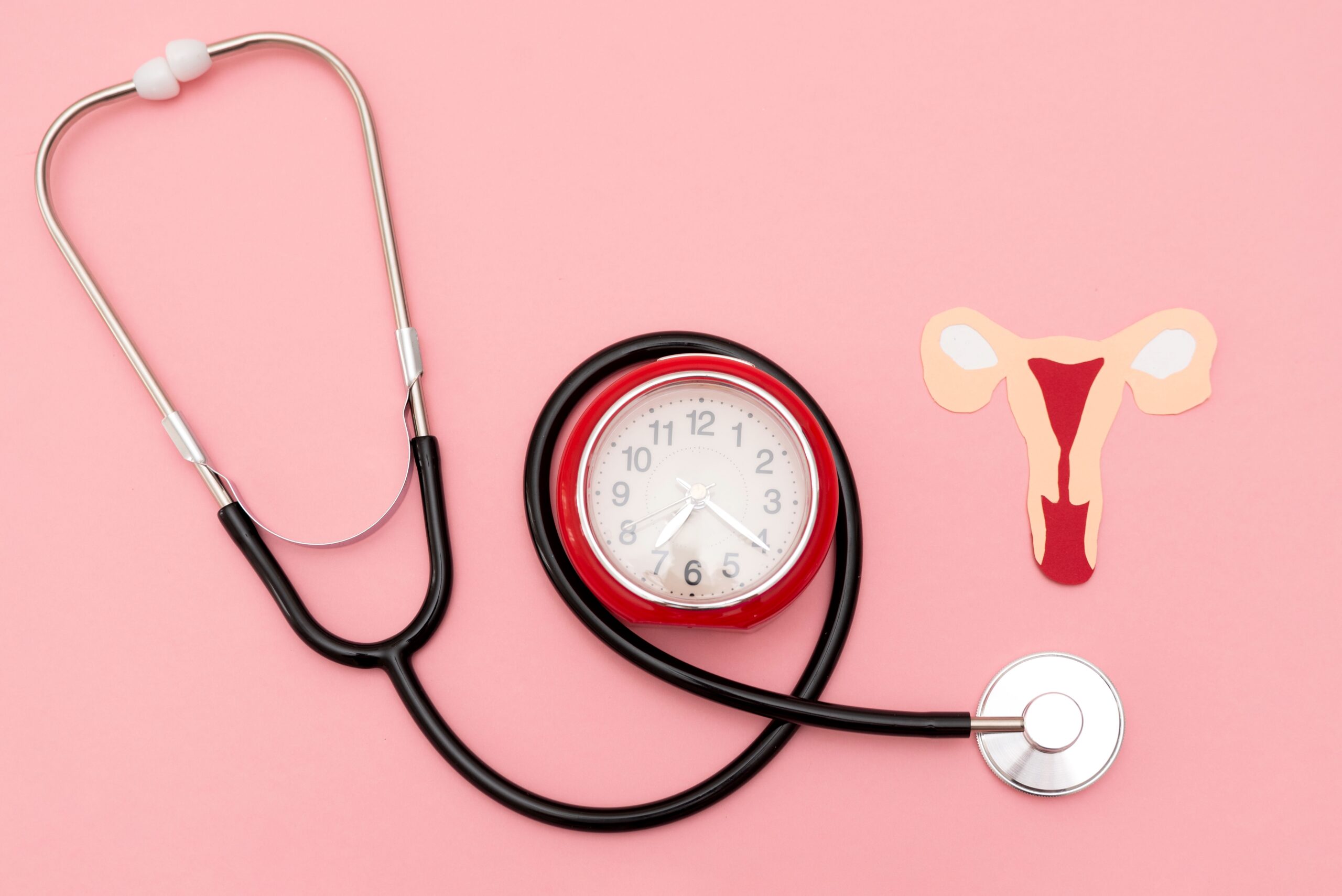
Menopause marks the point at which a woman’s menstrual periods stop permanently, ending the reproductive years. It is typically confirmed after 12 consecutive months without a period and most commonly occurs between the ages of 45 and 55. The underlying driver is a gradual decline in the production of estrogen and progesterone, two hormones that regulate the menstrual cycle and support a range of other biological functions.
It is a natural process, not a medical event in the conventional sense, though its effects can be significant enough to require medical attention and support.
The transition begins before most women expect
What catches many women off guard is that menopause does not arrive without warning. The years leading up to it, a phase known as perimenopause, can begin as early as the mid-30s or early 40s and may last anywhere from a few years to a full decade. During this window, hormone levels fluctuate rather than decline steadily, which is part of why the experience can feel unpredictable.
Menstrual cycles may become irregular, arriving earlier or later than expected, lasting longer or shorter than usual, or varying in intensity. These shifts are often the first sign that the transition has begun, though they are easy to attribute to stress or other causes and go unrecognized for some time.
How menopause shows up in the body and mind
The symptom profile of menopause is broader than the hot flash conversation that dominates most public discussion of it. Hot flashes are real and common, involving sudden waves of warmth that can be intense enough to cause visible sweating and significant discomfort. But they are one part of a larger picture.
Sleep disturbances are another frequent complaint, often connected to night sweats that interrupt rest at the point when the body most needs it. The cumulative effect of poor sleep compounds other symptoms, including shifts in mood that can manifest as heightened irritability, unexpected sadness, or a general flattening of emotional resilience that women sometimes struggle to explain or attribute accurately.
Energy levels also tend to change during menopause, with many women describing a fatigue that feels different from ordinary tiredness, less connected to how much sleep they got and more persistent across the day.
Not every woman experiences all of these symptoms. Some move through the transition with relatively little disruption. Others find that the changes significantly affect their daily functioning, their relationships, and their sense of themselves. Both experiences are within the range of normal, which is part of what makes menopause a difficult subject to generalize about.
What shapes the experience
The gap between women who move through menopause with minimal disruption and those who find it genuinely difficult is not random. Several factors influence how the transition unfolds.
Lifestyle plays a measurable role. Diet, physical activity, and stress levels all affect how the body responds to hormonal change. Women who enter perimenopause with strong sleep habits, regular movement, and a diet that supports cardiovascular and bone health tend to report less severe symptoms, though exceptions exist in both directions.
Health history matters as well. Pre-existing conditions, particularly those that interact with hormonal systems, can amplify certain symptoms or introduce complications that require closer attention. Family history offers some predictive value too, as the timing and character of a mother’s menopause experience often resembles her daughter’s.
Genetics adds another layer that sits largely outside individual control, influencing not just when menopause begins but how intensely its symptoms present. Understanding these variables does not eliminate the experience, but it gives women a more useful framework for anticipating and responding to it.
Getting through it
Menopause is not a problem to be solved, but it is a transition that benefits from preparation, honest conversation with a healthcare provider, and access to accurate information. The range of available support has expanded considerably in recent years, from hormonal and non-hormonal treatment options to peer communities where women share experiences across the full spectrum of the transition.
The most consistent finding across the research and the clinical conversation is that women who understand what is happening in their bodies are better positioned to navigate it. Menopause will look different for every woman who reaches it. That variation is not a flaw in the system. It is the system.