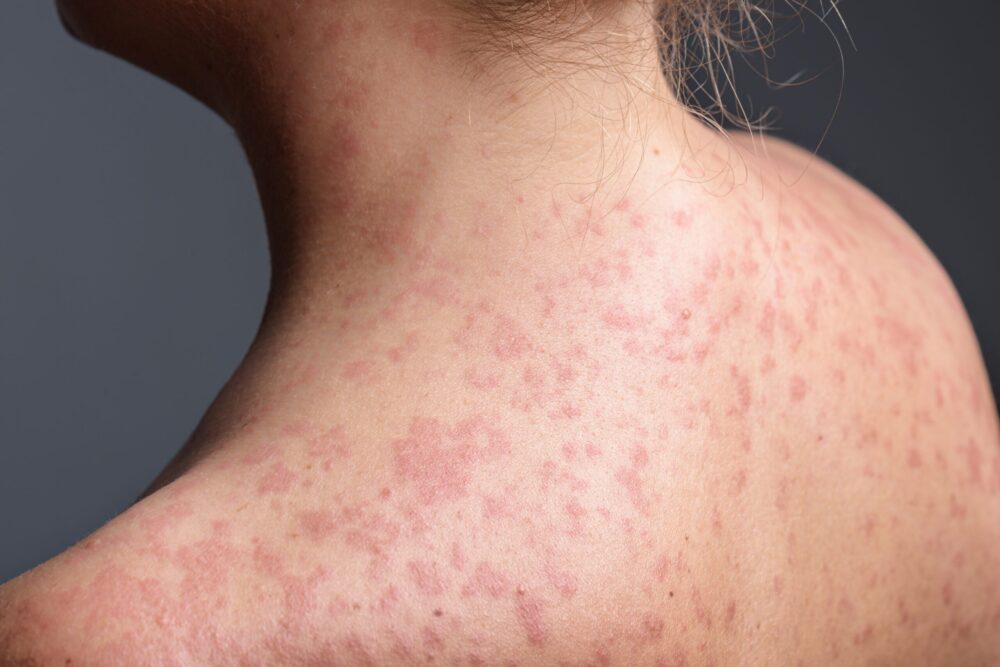
Skin rash is one of the broadest terms in dermatology, covering everything from a mild reaction to a new detergent to a symptom of a serious underlying disease. Any area of skin that becomes swollen, inflamed, or irritated qualifies, and the appearance can range from red and blotchy to scaly, blistered, or raised. Because so many different diseases and reactions produce a skin rash, knowing how to distinguish between the most common types is the first and most important step toward finding the right treatment.
Common skin rash conditions and how to tell them apart
Chickenpox produces one of the most recognizable skin rash patterns, starting with itchy fluid-filled blisters on the face before spreading down the chest, back, and body. Fever and headache typically accompany the outbreak. The condition is highly contagious to anyone not previously vaccinated, and a widely available vaccine has significantly reduced how often it appears today.
Rubella causes a skin rash of red spots that can feel rough and bumpy to the touch. The redness is less visible on medium to deeper skin tones, which can complicate identification. It spreads downward from the face and arrives alongside fever, swollen glands, and sore throat. It poses particular danger during pregnancy due to the risk of birth defects in the developing infant.
Hives produce a skin rash that appears suddenly anywhere on the body. On lighter skin tones the welts appear pink or red, while on deeper tones they may look slightly darker or lighter than the surrounding skin. Most cases are triggered by food, medication, or illness and resolve within days to weeks with antihistamine treatment. Any individual welt lasting more than 24 hours alongside pain or fever warrants medical evaluation.
Drug reactions create two distinct types of skin rash. An immediate reaction involves hives, itching, and potentially difficulty breathing or facial swelling, which requires emergency care. A delayed drug reaction can appear days or even weeks after starting a medication, presenting as bumps, purple or red patches, or thickened scaly areas. Stopping the medication and managing inflammation with antihistamines or steroids is the standard approach, though reactions involving fever or open sores on the mouth or genitals need urgent attention.
Heat rash develops when sweat becomes trapped in pores, most commonly in areas where skin rubs against clothing or other skin. On darker skin it may appear gray or purple rather than the red typically associated with prickly heat. Cooling the area, keeping it dry, and reducing friction resolves most cases without additional treatment.
Intertrigo is a skin rash that forms in body folds including the underarms, inner thighs, and beneath the breasts. Chafing and moisture create the conditions for infection with yeast or bacteria, causing rawness, oozing, and itching. Keeping the area dry and using appropriate topical treatments addresses most cases.
Rosacea causes persistent facial redness, flushing, and sometimes visible blood vessels or small bumps on the skin surface. On deeper skin tones the redness may be harder to detect, though burning and stinging remain common. There is no cure, but antibiotic treatments reduce flare-up intensity.
Eczema is a group of inflammatory skin conditions rather than a single disease. The most common form causes itching, cracking, and sometimes oozing, and can appear pink, red, gray, or darker brown depending on skin tone. Avoiding known triggers and maintaining consistent moisturization are the cornerstones of long-term management.
Psoriasis is a chronic immune-mediated skin rash that produces thick, raised plaques covered with silvery or gray scales anywhere on the body. It affects millions of Americans and is linked to an overactive immune response that accelerates skin cell turnover. Topical creams, light therapy, and systemic medications are all used to manage it over time.
Impetigo is a bacterial skin rash caused most often by streptococcal or staphylococcal bacteria, producing crusty red sores or blisters around the nose and mouth. It is highly contagious and spreads easily through direct contact. Antibiotic creams resolve most cases, with oral antibiotics reserved for more widespread infections.
When a skin rash needs medical attention
Many cases respond well to hydrocortisone cream, gentle moisturizers, and time, clearing within two weeks without further intervention. Medical care becomes necessary when a skin rash is accompanied by fever, when blisters or open sores appear on the mouth, genitals, or broad areas of the body, when it is spreading rapidly or causing significant pain, or when home treatment produces no improvement after two weeks. A dermatologist or primary care provider can identify the underlying cause and recommend the most effective course of treatment.