When Alysia Montaño crossed the finish line at the 2014 USA Track and Field Championships with a flower tucked behind her ear and a baby bump that was impossible to miss, she wasn’t just racing. She was making a statement. The decorated 800 meter runner, who has won seven USA outdoor championships and broken the American record twice, was eight months pregnant with her daughter and competing anyway.
Three years later, she did it again, running at five months pregnant with her son. The reaction from the public was, to put it mildly, mixed. But for Montaño, stepping onto the track was simply a continuation of normal life. She had maintained her training throughout both pregnancies, leaning into core strength and conditioning at a time when much of the conventional wisdom around exercise during pregnancy was still clouded by outdated thinking. She knew her body. She trusted it.
When a sponsor threatened to pause her contract
What Montaño did not expect was how her professional relationships would shift the moment motherhood entered the picture. Before the birth of her first child, a sponsor made clear that her contract would be paused if she became pregnant. No formal protections. No accommodations. Just a quiet warning that carried a very clear message: choose the sport or choose the family.
It was a moment that would reshape how Montaño saw her role not just as an athlete but as an advocate. She began speaking publicly about the lack of systemic support for pregnant athletes, and the conversation caught fire. Her story helped expose a widespread but rarely discussed reality in professional sports: that many women faced financial penalties at the exact moment they needed stability most.
Building a movement beyond the finish line
Today, Montaño works with sponsors including Cadenshae, a maternity activewear brand, along with Altra Running and Nuun Hydration companies she credits with genuinely understanding what it means to support a pregnant or postpartum athlete. But her work has expanded well beyond sponsorship conversations.
She co-founded &mother, a nonprofit that launched on Mother’s Day and is dedicated to advocating for women across all career spaces, not just athletics. The organization pushes for workplace policies that allow mothers to remain competitive professionally without being forced to sideline their identities or ambitions. Montaño has been clear that the problem is not unique to sports it is a structural issue that runs across industries and affects working mothers everywhere.
What she wants other women to know
Montaño speaks often about the pressure society places on women to treat motherhood and career as an either or proposition. In her view, that framing is not only limiting but wrong. She approaches both roles with the same focus and intention, and she believes that more women in leadership positions across sectors are key to driving the kind of policy change that makes balance more than a buzzword.
She points to the growing visibility of conversations around equal pay in women’s sports, and the broader cultural reckoning sparked by movements demanding accountability from powerful institutions, as signs that the ground is shifting. Social media, she has noted, has given athletes and working mothers a platform to hold companies accountable in ways that simply were not possible before.
For women who feel uncertain about navigating motherhood alongside a career, her message is consistent: take stock of what genuinely brings lasting meaning, and build from there. A career is important. So is family. Neither has to disappear.
What comes next for Montaño
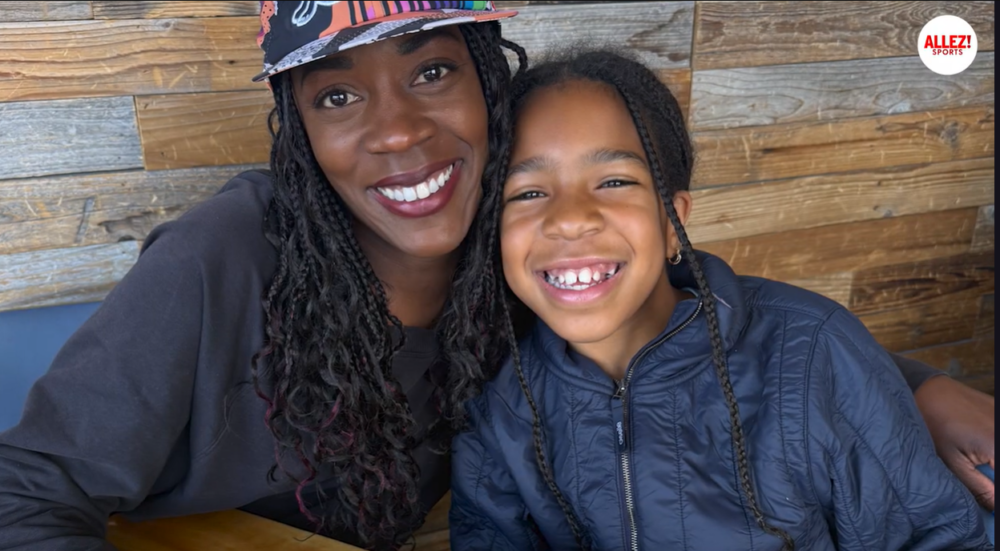
Now a mother of three, Montaño is channeling her energy into several fronts at once. She recently completed a fitness book focused on fun, sustainable workout challenges, and plans to write additional titles covering prenatal and postpartum fitness an area where she believes there is still a significant gap in accessible, practical guidance for women.
She also remains committed to expanding &mother, and sees the nonprofit’s work as ongoing and urgent. For Montaño, the flower she wears at every race has always symbolized both strength and femininity the idea that the two are not opposites. Her life, she says, is the argument.