Science is catching up to what artists have always known — making something with your hands changes everything.
There is something that happens the moment a brush meets canvas. The noise in your head quiets. Your shoulders drop. Time bends. For centuries, artists have lived inside that feeling without needing to explain it. Now, the science is finally catching up — and what researchers are finding is striking.
Creative expression is not just a hobby. It is a powerful, underutilized tool for mental and emotional wellness — one that works regardless of skill level, background, or experience.
Art as a Form of Emotional Release
Emotions that are difficult to put into words often find their way out through color, shape, and texture. Painting, drawing, sculpting, and even collaging give the mind a channel to process grief, trauma, anxiety, and stress without requiring language. This is the foundation of art therapy, a clinical practice that has been used for decades to support people navigating depression, PTSD, chronic illness, and emotional burnout.
What makes it especially powerful is accessibility. You do not need a gallery showing or a fine arts degree to benefit. The act of creation itself — the process, not the product — is where the healing lives.
Creativity and the Stress Response
When the body is under stress, cortisol levels rise. Sustained high cortisol is linked to a long list of health problems, including heart disease, weakened immunity, and disrupted sleep. Creative activity has been shown to lower cortisol levels, shifting the nervous system out of fight-or-flight mode and into a calmer, more regulated state.
A 2016 study published in the journal Art Therapy found that just 45 minutes of creative activity significantly reduced cortisol levels in participants — regardless of their artistic ability. The takeaway was clear— making art works, even when the art is not particularly good.
Why the Community Needs This Conversation
Conversations around mental health have historically been harder to access in communities that have faced generational trauma, systemic healthcare gaps, and cultural stigma around seeking help. Creative expression offers an entry point that does not require a clinical setting, insurance paperwork, or a waiting list.
Art-making is communal by nature. It shows up in
- Community murals that reclaim public space
- Music passed down through generations as emotional memory
- Storytelling traditions that hold history and healing in the same breath
- Dance as both cultural expression and physical release
- Craft circles that double as spaces of connection and support
These are not small things. They are survival tools dressed in creativity.
How to Start — No Experience Needed
Getting into a creative practice does not require a studio or supplies that break the bank. Here is how to begin
- Pick one medium — paint, pencil, clay, collage, or even digital drawing
- Set a timer for 20 minutes and create without judgment
- Focus on feeling, not outcome — the goal is expression, not perfection
- Do it consistently — even twice a week builds momentum
- Share it if it feels right — community amplifies the benefit
The barrier to entry is lower than most people think. A sketchbook and a set of colored pencils can open a door that talk alone sometimes cannot.
The Bigger Wellness Picture
Mental wellness is not a single conversation. It is built from daily habits, community, movement, nutrition, rest — and yes, creativity. Adding an expressive practice to a wellness routine is not a luxury. For many people, it is a lifeline.
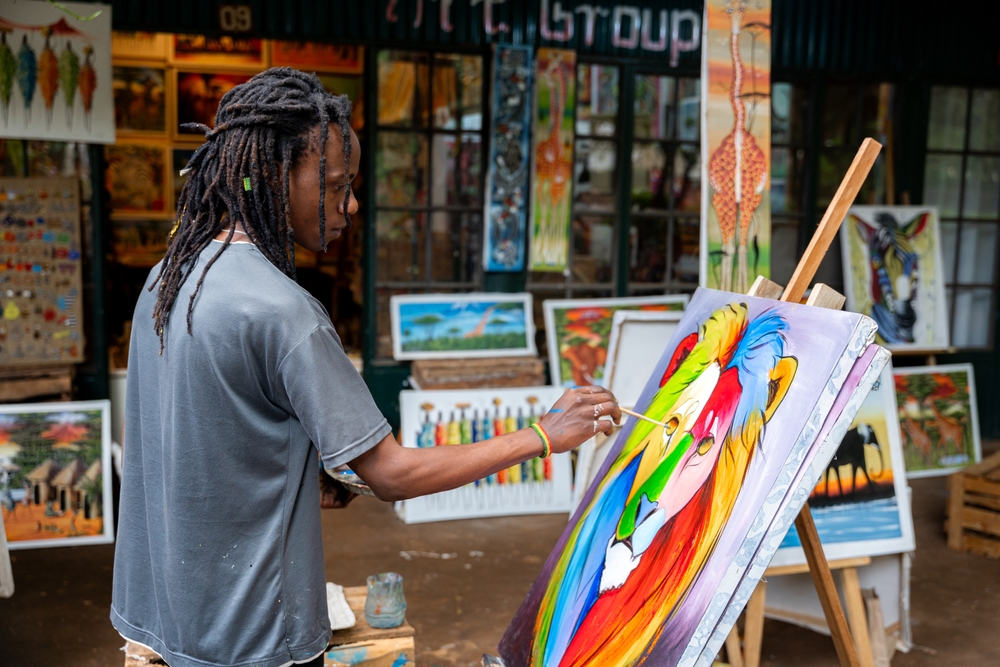
The artist in the image at the top of this page is not just painting a lion. He is doing something deeply human — turning feeling into form, chaos into color, and struggle into something the world can see.
That is medicine. And it has always been free.