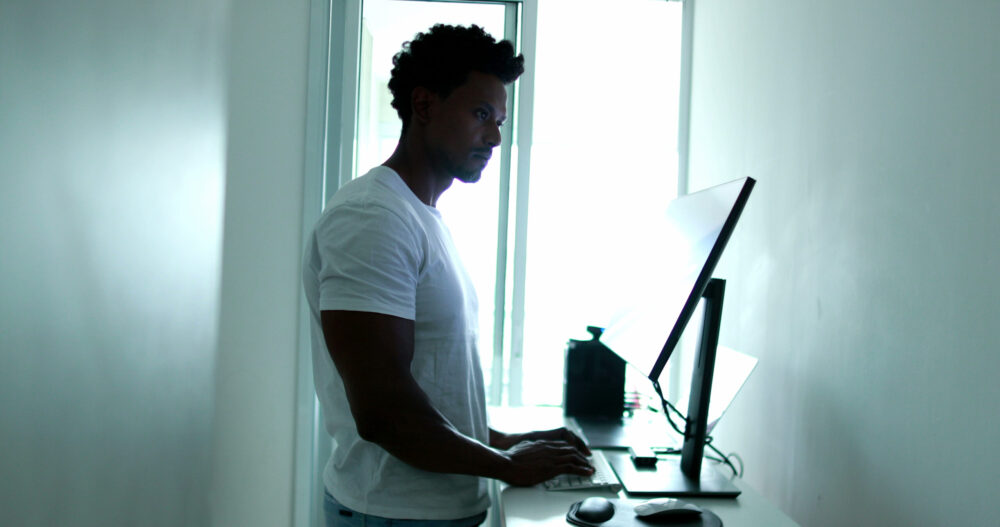
Standing too long and sitting is the new smoking. It is catchy, it is memorable, and it points to something real but it is also dangerously incomplete. If sitting were simply the villain, the solution would be obvious. Everyone would just stand up, and the problem would be solved. But that is not how the human body works.
For millions of workers around the world, standing for long hours is not a lifestyle choice or a wellness trend. It is the job. Healthcare workers, factory employees, teachers, waitstaff, hairdressers and retail workers spend entire shifts on their feet and the physical toll is significant, measurable and often overlooked.
The real workplace health crisis
Musculoskeletal disorders, which affect the back, neck, shoulders, legs and feet, are the most common workplace health problem across Europe. In Spain alone, nearly 3 in 10 work related accidents resulting in sick leave were caused by physical overexertion. Musculoskeletal disorders accounted for 78% of all occupational illnesses recorded that year.
Those are not small numbers, and they represent real people living with real, chronic pain. The data makes one thing clear, the body does not discriminate between sitting and standing when it comes to causing harm. Both can hurt you. The difference is mostly in where and how.
What prolonged sitting does to the body
Sitting for extended periods places consistent pressure on the lumbar spine and tends to cause stiffness and discomfort in the neck and shoulders. The muscles responsible for supporting posture become underused, and circulation slows. Over time, this compounds into chronic pain and increased risk of metabolic and cardiovascular issues. But here is what often gets left out of that conversation: standing for hours at a time carries its own serious consequences.
What prolonged standing does to the body
Standing work is strongly associated with fatigue, lower back pain and excessive pressure on the knees, ankles and feet. A study of assembly line workers found that a full day of standing led to measurable changes in posture, shifts in how pressure was distributed across the soles of the feet, and frequent reports of discomfort in the lower back, knees and feet.
Not all feet respond identically to the same physical demands either. Individual biomechanical differences the shape of the arch, weight distribution, gait can all influence how quickly discomfort sets in and where it appears in the body.
That matters because the foot is the mechanical foundation of everything else. It contacts the ground, absorbs impact, distributes pressure and transmits force upward through the ankle, knee, hip and spine. When the feet are under stress for hours, the rest of the body follows.
What actually protects workers
Varying posture, incorporating movement and reducing time spent in any single static position is what consistently supports worker health. That guidance applies whether someone is seated at a desk all day or standing on a factory floor.
Some people turn to height adjustable desks, ergonomic chairs, custom insoles or posture correcting devices. These tools are not without value, but none of them can compensate for a poorly structured workday on their own.
The measures that genuinely work tend to be far less high tech. Taking regular short breaks, rotating between tasks, adjusting workstations to fit individual body proportions, choosing appropriate footwear, staying physically active outside of work hours and building movement into daily schedules these are the interventions with real, consistent evidence behind them.
The better question to ask
So which is healthier, sitting or standing? It turns out that framing the question that way leads everyone in the wrong direction. The more useful question is: how long are you staying in one position, and how often are you moving?
The body is not designed for stillness. It is designed for variety, for shifting weight, for walking, for changing angles. Any posture held long enough no matter how correct or ergonomic becomes a source of strain.
The goal is not to stand more or sit less. It is to move more, stay static less and design work environments and schedules that actually make that possible.