A new study finds that widening of small arteries, not blockages in large ones, may drive this common stroke type, putting standard treatments in question.
For years, the medical approach to lacunar stroke has rested on a foundational assumption: that the same artery-narrowing processes behind larger ischemic strokes were also responsible for this smaller, deeper variety. A new study published in the journal Circulation challenges that assumption directly, and the implications for how patients are treated could be substantial.
The research, which analyzed data from 229 stroke patients including 131 who had experienced lacunar strokes, found no meaningful connection between the narrowing of large arteries and lacunar stroke occurrence. What it did find was a strong association between the widening and elongation of small arteries within the brain and both lacunar stroke and a related condition known as cerebral small vessel disease, or cSVD. Patients with lacunar strokes were four times more likely to show this arterial widening than those without.
What lacunar stroke actually is
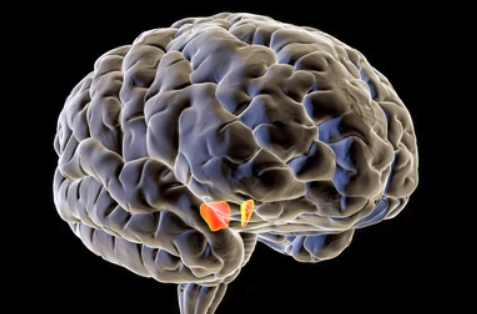
Lacunar strokes are a subset of ischemic stroke that occur deep in the brain’s subcortical regions. Unlike strokes caused by clots traveling from the heart or large vessels, lacunar strokes originate in the small blood vessels that supply the brain’s interior structures. They are among the most common stroke types, yet the precise mechanisms behind them have remained poorly understood.
The study’s findings suggest that the damage driving lacunar strokes is fundamentally different in nature from what causes other ischemic events. Joanna Wardlaw, a professor at the University of Edinburgh and one of the study’s authors, characterized the culprit not as fatty blockages in larger arteries but as disease affecting the brain’s smallest vessels at a microvascular level.
Why current treatments may not be reaching the problem
Medications like aspirin are routinely prescribed to reduce ischemic stroke risk by addressing clotting and arterial narrowing. That logic works for strokes rooted in large-artery disease. For lacunar strokes, the study raises serious questions about whether these treatments are targeting the right mechanism at all.
The distinction matters because cSVD is not simply a smaller version of the same process. It involves a different kind of arterial dysfunction, and the treatments designed for large-vessel disease were never built with that dysfunction in mind. The study found that more than a quarter of participants had experienced silent strokes, events with no noticeable symptoms that nonetheless signal underlying brain damage and elevate future risk.
What might be driving the arterial widening
The researchers offered two possible explanations for why small artery widening correlates so strongly with lacunar stroke. One is a shared genetic predisposition that makes certain individuals vulnerable to this specific pattern of vascular change. The other is a mechanical theory: that widening in some vessels places added pressure on adjacent blood vessels, disrupting normal flow and creating conditions for damage.
Neither explanation has been confirmed, and the authors are careful to frame them as hypotheses rather than conclusions. What the data does establish clearly is that the widening pattern is present and that its link to lacunar stroke is strong enough to warrant a meaningful shift in research and clinical attention.
Where treatment research goes from here
The study’s authors argue that improving small blood vessel function in the brain, rather than managing large artery narrowing, should become a priority for patients with lacunar strokes. The ongoing LACunar Intervention Trial 3, known as LACI-3, is designed to test whether existing cardiovascular drugs can be applied to target cSVD damage more directly.
The trial represents one concrete step toward building a treatment framework that reflects what the science is now showing. Whether current drugs can be repurposed effectively, or whether new ones will be needed, remains an open question. What is no longer open is whether the existing approach is sufficient on its own.
Lacunar stroke accounts for a significant share of all strokes globally and carries its own risk of cognitive decline through cumulative small vessel damage over time. Getting the underlying biology right is not an academic question. For the patients accumulating that damage silently, it is a clinical one that medicine has been too slow to ask.