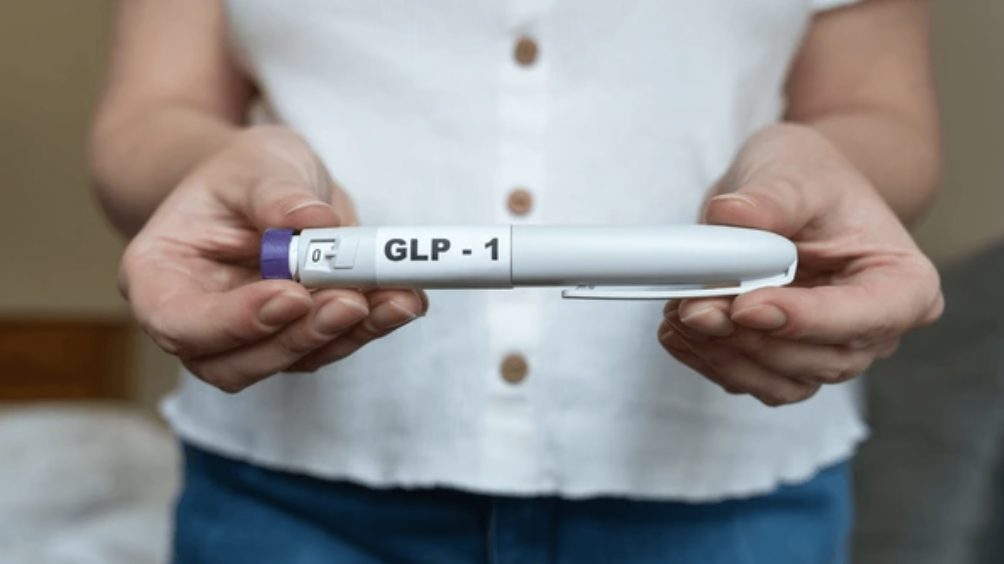
More than 20% of US households now include at least one GLP-1 user, and the ripple effects on grocery spending, fast food, fashion, and beauty products are accelerating faster than any consumer shift in recent memory.
When Megan McDonald started taking the GLP-1 drug Zepbound two years ago, she was not thinking about its effect on the grocery industry. She was thinking about her health. After losing 175 pounds, dropping from roughly 313 pounds to a range of 136 to 143, she noticed her relationship with food had changed in ways that went far beyond the scale.
She no longer thinks about stopping for a snack on the way home from work. She does not feel the mental preoccupation with food that she once described as constant background noise. At the grocery store, she heads to the perimeter, fresh produce, meats, and dairy, and skips the center aisles almost entirely.
Her experience is playing out across millions of American households, and the industries built around how people eat, dress, and take care of themselves are paying close attention.
The grocery store is being rerouted
The pattern McDonald describes has become one of the most documented behavioral shifts among GLP-1 users. Shoppers are migrating away from the center of the supermarket, where processed foods and snacks have historically generated the most sales, toward the outer edges where fresh and whole foods live.
Overall grocery spending in households with at least one GLP-1 user has declined 3% to 4%, and in single-person GLP-1 households the drop reaches 7% to 9%, according to analysis from PwC. The initial decline in volume spending is real, but it does not tell the complete story. As users continue on the medication and begin feeling results, spending reallocates rather than simply disappears. Multivitamins, supplements, protein bars, and organic foods begin absorbing the dollars that once went to snacks and processed goods.
Sales of foods categorized as GLP-1 qualified, meaning those high in protein, fiber, and unsaturated fats, have risen for three consecutive years. They were up 3.8% in 2023, 4% in 2024, and 5.1% in 2025, according to Nielsen IQ data.
Protein has become the defining nutritional priority for GLP-1 users. Because the drugs suppress appetite while the body continues losing both fat and muscle mass, users are actively working to maintain muscle density through dietary choices. Food companies have responded with a significant expansion of protein-infused products across cereals, snacks, drinks, and bars.
Fast food loses ground while casual dining holds
The decline in appetite is hitting quick-service restaurants harder than sit-down establishments. Fast food spending among GLP-1 users is down roughly 4% to 5% overall, and closer to 10% in single-person GLP-1 households, driven by fewer impulse visits and reduced habitual frequency.
The casual dining segment has seen a slight uptick by comparison. When people are eating less overall, the meals they do choose tend to be more intentional and experience-driven. McDonald described a recent dinner out where she ordered a side of pasta rather than a full entree, took leftovers home, and found the experience entirely satisfying.
Clothing and beauty spending rises with confidence
While food spending contracts in some areas, spending on clothing and beauty products moves in the opposite direction. As weight comes off and confidence builds, GLP-1 users are investing in wardrobes and personal care in ways they may not have before.
PwC’s analysis found a 4% to 6% increase in apparel categories including activewear, denim, and intimates among GLP-1 households, driven by wardrobe replacement and a shift toward more form-fitting clothing. Women’s bra spending rises 14.4% in the first 12 months after starting GLP-1 use before settling to a 9.4% increase afterward. Off-price retailers have seen shopper counts rise 6.9% as users seek value on sizes they may only wear temporarily during an ongoing transition.
McDonald described the experience of shopping at American Eagle, a store she had never fit into as a teenager, as one of the more meaningful moments of her weight loss journey.
How big this gets
At least 20% of all US households had at least one GLP-1 user as of December 2025, up from 9% the year prior. The recent approval of an oral GLP-1 pill from Eli Lilly and the expansion of direct-to-consumer channels are expected to push that number significantly higher over the next 12 months.
Industry analysts are comparing the pace of adoption to the rollout of the iPhone as a consumer disruption benchmark, a framing that suggests this is not a trend businesses can afford to monitor passively.
Source: USATODAY