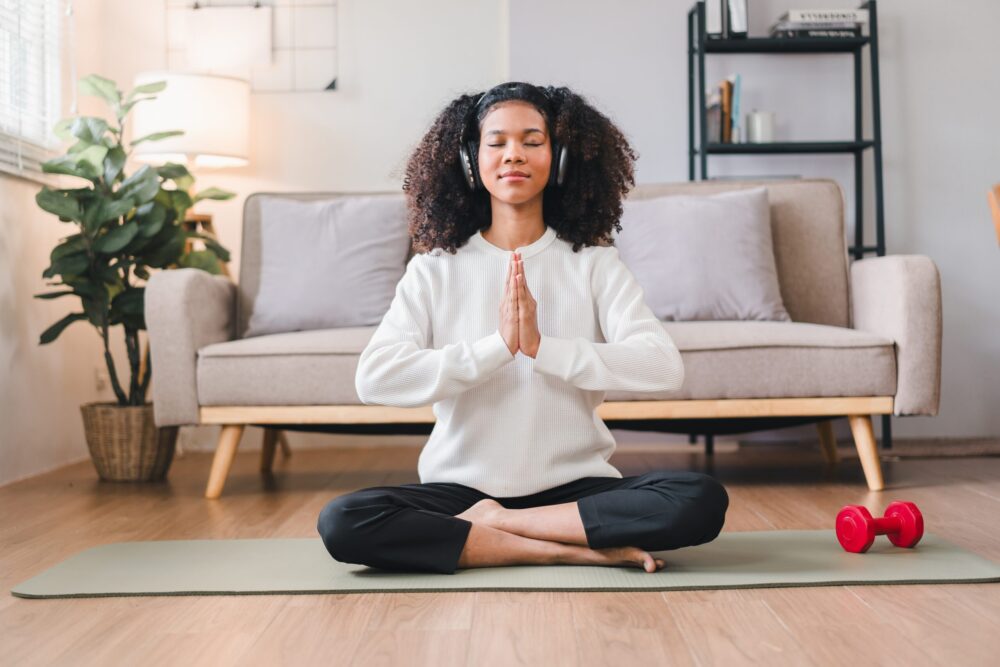
When it comes to weight loss, yoga and Pilates rarely top anyone’s list of go to workouts. Many people assume they simply are not intense enough to move the needle on the scale and compared to running or high-intensity interval training, that assumption is not entirely wrong.
On average, both practices burn roughly 200 to 300 calories per hour, which falls well short of higher intensity options. Framing misses a larger picture, a calorie deficit whether achieved through eating less, moving more, or a combination of both remains the foundation of weight loss. What yoga and Pilates do well, is quietly support that deficit in ways that are easy to overlook.
Both practices help reduce stress, which in turn can dial down hunger cravings, emotional eating, and the kind of bingeing that tends to undo progress. They also naturally encourage more mindful eating and healthier food choices, nudging people toward behaviors that make a calorie deficit easier to sustain.
How these two workouts differ in approach
Pilates and yoga share some common ground both build strength, improve muscle tone, and support overall fitness but they operate quite differently.
Pilates is highly core focused and precise. It relies on small, controlled repetitive movements designed to build core strength and tone muscle throughout the body. When resistance equipment like a Reformer is added, it becomes moderately effective at building lean muscle, which can give metabolism a measurable boost over time.
Yoga lives on a wider spectrum. On one end, fast-paced power yoga styles can elevate the heart rate and build real strength. On the other, slower restorative formats target nervous system regulation, stress reduction, and recovery all of which influence hormones, sleep quality, and the kind of long term consistency that weight loss actually requires.
The key distinction, Pilates leans more toward physical precision and strength, while yoga leans more toward the behavioral and hormonal factors that make healthy habits stick.
Why Pilates has a slight edge for body composition
Neither workout is engineered for calorie torching, but Pilates carries a modest advantage when it comes to building muscle. Its emphasis on precision, alignment, and multi muscle engagement especially with core stabilization woven through every movement makes it a low impact but effective tool for improving body composition.
It is not meant to replicate a gym strength session or a HIIT class. Its value lies in what it does consistently well, improving posture, movement quality, and the kind of functional strength that supports an active lifestyle.
What science says about long term results
Here is where both practices converge on something important and research backed. A 2025 study published in the journal Sensors found that adherence to physical activity goals is among the strongest predictors of long term weight loss success. Not intensity. Not calorie burn per session. Consistency.
The better question is not which practice burns more, but which one someone will actually keep doing. Yoga has a particular ability to keep people coming back precisely because it does not depend on pushing to extremes.
How to build them into a realistic routine
Because neither Pilates nor yoga is designed to carry a weight loss program on its own, pairing them with other movement is the most effective approach. Current guidelines recommend adults aim for 150 to 300 minutes of moderate aerobic activity per week, along with two muscle strengthening sessions.
Within that framework, high-intensity yoga styles like power yoga can count toward aerobic minutes, Pilates sessions can satisfy strength training goals particularly for those who prefer low impact options and gentler yoga formats serve well as active recovery between harder efforts.
Together, the two practices become less about maximizing calorie burn and more about building a sustainable routine that supports weight loss over the long haul. And for most people, that sustainability is where the real results live.