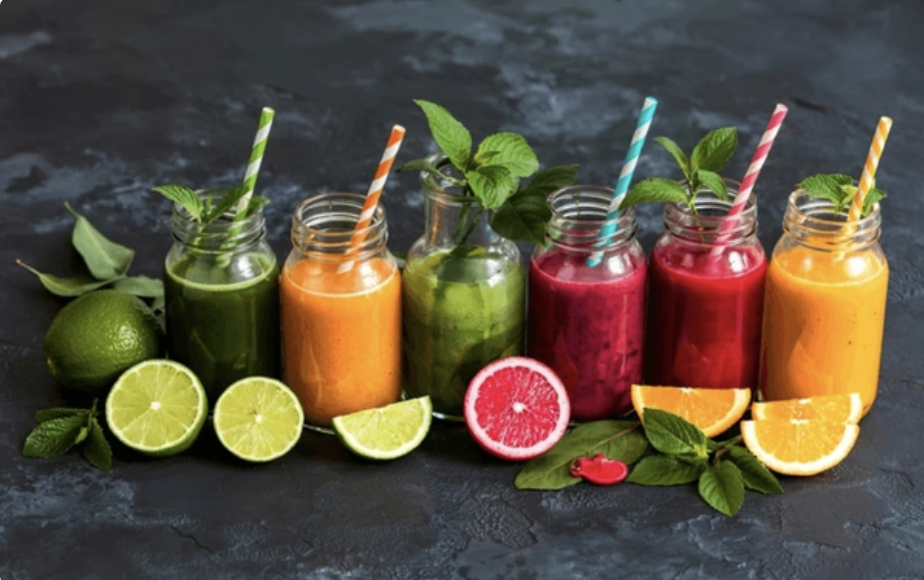
Not all fruit is created equal, at least not when it comes to how you consume it. A new study published in the journal Frontiers in Nutrition found that the form in which people eat fruit matters significantly for health outcomes, with smoothie drinkers faring considerably better than juice drinkers on nearly every measure examined.
The research analyzed 443 participants grouped by their primary form of fruit consumption, including those who drank fruit juice, ate whole fruit, drank smoothies or consumed little fruit at all. What emerged was a consistent pattern that researchers say warrants a closer look at how dietary guidelines treat different forms of fruit.
What the research found
Among all four groups, smoothie drinkers showed the most favorable health profile. They had the lowest rates of hypertension at 19 percent, high cholesterol at 20 percent and diabetes at 8 percent. They also averaged fewer than three physician visits per year, compared to roughly five and a half in the low-fruit reference group and nearly five among juice drinkers. Body mass index in the smoothie group fell within the normal range, while juice drinkers and low-fruit consumers averaged in the overweight range.
Fruit juice drinkers presented the starkest contrast. After adjusting for other risk factors, the odds of diabetes in that group were more than 14 times higher than in the low-fruit reference group. Rates of prescription medication use were more than doubled, and sleep quality and energy levels were the lowest of any group studied.
Whole fruit consumers fell between the two extremes, showing meaningful health improvements over the juice and low-fruit groups but not matching the advantages seen in smoothie drinkers.
Why smoothies may have an edge
Researchers point to several biological mechanisms that could explain why blended fruit outperforms juice. When fruit is blended rather than juiced, the cellular structure of the pulp is broken down without removing fiber, which supports digestion, promotes satiety and may help regulate blood sugar more effectively than juice. Higher concentrations of micronutrients including vitamin C and folate in smoothies may also enhance antioxidant activity in ways that support cardiovascular health.
Fruit juice, by contrast, has been associated in prior research with faster sugar absorption, lower satiety and, in some studies, elevated rates of hyperglycemia. The current study reinforces those concerns, particularly for juice that is not 100 percent fruit-based, though even pure fruit juice drinkers showed worse health outcomes than smoothie and whole fruit consumers.
Important caveats in the data
The researchers are careful to note significant limitations. The study is cross-sectional, meaning it identifies associations rather than cause and effect. The smoothie group also happened to exercise more and smoke and drink less than other groups, meaning the health advantages observed could reflect broader lifestyle differences rather than smoothie consumption alone. The study relied on self-reported data and did not measure the specific types or quantities of fruit consumed, both of which could influence the results.
There is also the possibility of reverse causation, where people who are already healthier make different food choices rather than food choices making people healthier.
What it means for dietary guidelines
Despite those caveats, the findings have practical implications for how public health frameworks approach fruit. Current dietary guidelines in the United States, including the widely followed DASH approach for managing hypertension, do not meaningfully distinguish between different forms of fruit consumption. The authors argue that the evidence now supports a more nuanced approach, one that specifically recognizes smoothies as a distinct and potentially more beneficial form of fruit intake.
Longer-term studies with more precise measurements will be needed before formal policy changes are warranted. But for now the evidence leans clearly in one direction.