Oats and quinoa show up on the same approved lists, get recommended by the same nutritionists, and sit in the same aisle at the grocery store. That proximity can make them feel interchangeable. They are not.
Both are complex carbohydrate sources with solid nutritional credentials, but what each one delivers to the body differs in ways that matter depending on your diet, your health goals, and what you are missing. Understanding those differences is more useful than declaring one superior to the other.
Quinoa leads on protein but not by a wide margin
Per 40-gram serving, quinoa provides approximately 5.64 grams of protein compared to roughly 5 grams in rolled oats. That gap is real but narrow, and it becomes more meaningful in the context of plant-based eating, where every gram of protein from whole food sources adds up across the day.
What sets quinoa apart more significantly is its amino acid profile. It contains all nine essential amino acids, which is uncommon for a plant food and is why it is frequently described as a complete protein. Some researchers note that certain amino acids including lysine, methionine, and valine appear in lower concentrations than the threshold required for a true complete protein designation, making ‘nearly complete’ a more precise description. Either way, quinoa offers a more comprehensive protein package than most grains.
That said, neither oats nor quinoa should carry the full weight of anyone’s protein needs. Lentils, tofu, tempeh, and legumes all deliver significantly more protein per serving and belong in the same rotation.
Oats pull ahead on fiber
A half-cup serving of rolled oats contains about 4 grams of fiber. The same amount of quinoa provides around 2.8 grams. For a category where most people are already falling short of recommended daily intake, that difference is worth paying attention to.
Oats are particularly rich in a soluble fiber called beta-glucan, which has a well-documented relationship with heart health. Beta-glucan has been shown to help lower LDL cholesterol and support healthy blood sugar levels after meals. That specific fiber profile gives oats a functional advantage that goes beyond the raw fiber number.
Iron content tips slightly toward quinoa
A half-cup of dry quinoa covers about 10% of the recommended daily iron intake. Oats come in just behind at 9%. The gap is small, but iron deficiency is widespread enough that even incremental differences matter, particularly for people eating plant-forward diets.
The catch is that both grains contain non-heme iron, the form found in plant foods, which the body absorbs less efficiently than heme iron from animal sources. The body absorbs roughly 25% of heme iron and closer to 17% of non-heme iron. Pairing either grain with a source of vitamin C, such as citrus, bell peppers, or tomatoes, can meaningfully improve absorption. For people who eat fish or poultry, combining those with quinoa also helps.
Magnesium is where quinoa quietly stands out
Beyond protein and iron, quinoa delivers 78.8 milligrams of magnesium per serving, covering about 18.5% of the daily recommended value. Oats provide 50.4 milligrams, or around 12% of the daily value. Magnesium supports muscle function, nerve signaling, and energy metabolism, and most adults do not get enough of it consistently.
That margin between the two grains on magnesium is larger than the differences in protein or iron and makes quinoa a more mineral-dense option overall.
Taste and texture shape how each grain fits into a meal
Oats cook into a soft, mild, creamy base that works well for breakfast bowls, overnight preparations, and baked goods. Their neutral flavor makes them easy to build around with fruit, nuts, or spices without competition.
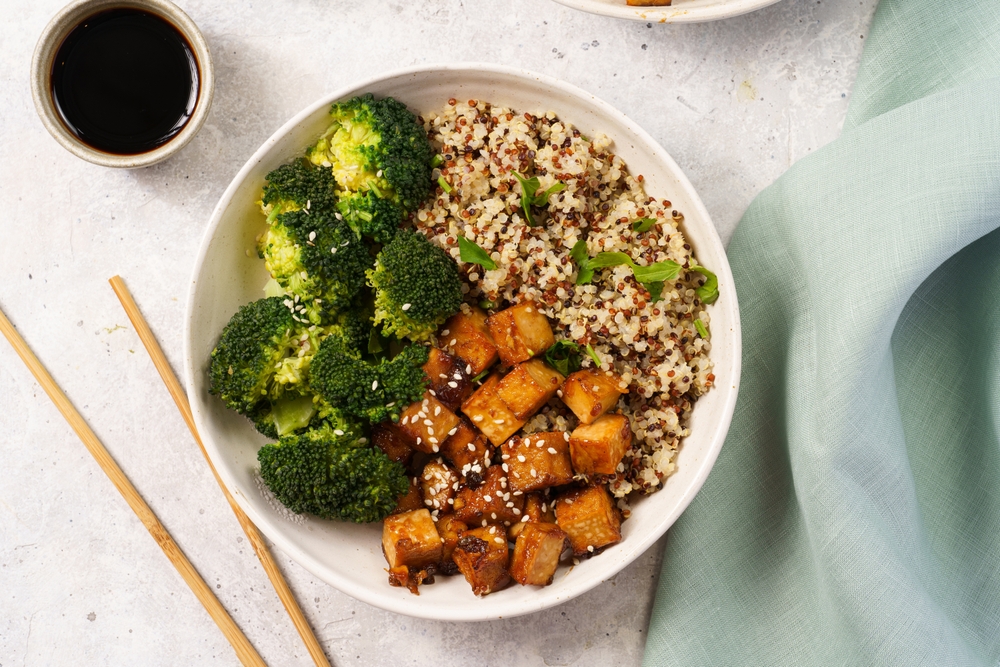
Quinoa has a slightly nutty flavor and a light, fluffy texture after cooking. It holds up well in grain bowls, salads, soups, and savory side dishes in a way that oats do not. The two grains rarely compete for the same spot in a meal, which makes combining both across the week a natural and practical approach.
What to take away from the comparison
Quinoa edges ahead on protein, iron, and magnesium. Oats win on fiber and bring a specific cardiovascular benefit through beta-glucan. Calories and fat content across both grains are nearly identical, with oats at 150 calories and 2.5 grams of fat per serving, and quinoa at 147 calories and 2.4 grams.
Choosing between them on any given day is less important than including both regularly. They cover different nutritional ground, and a diet that rotates through varied whole grain sources will consistently outperform one built around a single staple, no matter how nutritious that staple happens to be.