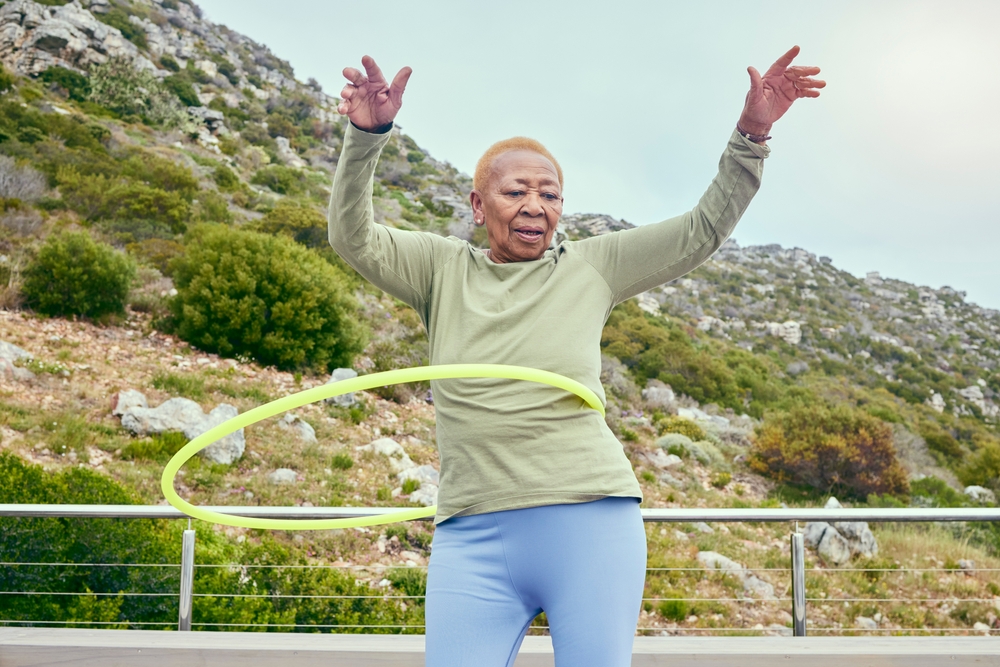
There is something quietly radical about a woman in her seventies spinning a hula hoop outdoors, arms raised, moving with the kind of physical activity that makes the clock seem irrelevant to her body. It is not performance. It is practice — and the science has been catching up to what she already knows. The single most accessible thing a person can do to extend both the length and quality of their life is also the least complicated: stay in motion.
Research spanning decades and more than 173,000 participants has consistently reached the same conclusion. Regular physical activity is linked to increases in life expectancy ranging from less than a year to nearly seven additional years, depending on consistency and intensity. For older adults, the benefits go far beyond living longer. Activity protects the brain, strengthens the heart, preserves muscle, stabilizes mood, and dramatically reduces the risk of the chronic diseases that cut lives short and steal independence long before the end ever arrives.
What the body loses without activity
After age 30, adults begin losing between three and eight percent of their muscle mass per decade. Bones gradually become more brittle. Balance declines. The cardiovascular system grows less efficient at managing blood pressure and circulation. None of these changes are inevitable — but without consistent physical activity, they compound quietly and quickly. By the time the effects become visible, years of preventable decline have already accumulated.
Sedentary behavior is not simply the absence of movement. Research published in 2025 found that individuals in the lowest physical activity groups showed measurably reduced life expectancy across every measure studied, with the pattern most pronounced among those who were already dealing with chronic conditions. The least active adults, the data showed, gain the most from even modest increases in daily movement — a 10-minute brisk walk added to a sedentary routine produced meaningful improvements in health outcomes. The barrier to entry for change is far lower than most people assume.
How activity fights the diseases that hit hardest
The communities that carry the heaviest burden of chronic disease — where hypertension, Type 2 diabetes, heart disease, and obesity converge at rates that outpace national averages — are also the communities where physical activity levels tend to be lowest. That is not a coincidence, and it is not a character flaw. It reflects environments where safe spaces to move are scarce, where time is consumed by survival, and where the cultural message that rest equals success has deep roots.
But the body does not negotiate with circumstance. Regular activity lowers blood pressure, reduces circulating blood sugar, strengthens the heart muscle, improves cholesterol ratios, and reduces systemic inflammation — all of which are direct risk factors for the diseases doing the most damage. A 2025 review in the Scandinavian Journal of Medicine and Science in Sports confirmed that exercise targets the cardiorespiratory, vascular, nervous, and skeletal muscle systems simultaneously, making it the closest thing medicine has to a universal intervention for aging bodies.
Movement for the mind, not just the body
Physical activity’s relationship with mental health is just as well established as its physical benefits, and for aging adults navigating grief, isolation, or the slow erosion of independence, that relationship matters enormously. Regular movement reduces anxiety, lifts depression, and has been shown to lower the risk of cognitive decline and dementia. The brain, like the body, responds to being used — and activity is one of the most reliable ways to keep it sharp.
For older women in particular, the stakes are especially high. Women outlive men on average, which means they spend more years navigating the physical and emotional terrain of aging. Maintaining an active lifestyle through those years is directly linked to better quality of life, greater independence, and a significantly reduced risk of the falls and fractures that can mark a turning point in an older adult’s health trajectory.
Starting where you are, not where you think you should be
None of this requires a gym membership, a personal trainer, or a carefully curated workout routine. The research is consistent on this point: any activity is better than none, and the best kind of physical activity is the kind a person will actually do. Walking, dancing, swimming, stretching, gardening, hula hooping on a balcony with the mountains behind you — all of it counts. All of it adds up.
The World Health Organization recommends at least 150 minutes of moderate-intensity activity per week for adults, which breaks down to about 22 minutes a day. That is a floor, not a ceiling — and for those who have been largely sedentary, even half of that represents a meaningful shift. The body responds quickly to being moved. Energy improves. Sleep deepens. Mood lifts. And over time, the cumulative effect of consistent activity becomes something that no prescription can replicate: a longer, fuller, more capable life lived entirely on your own terms.