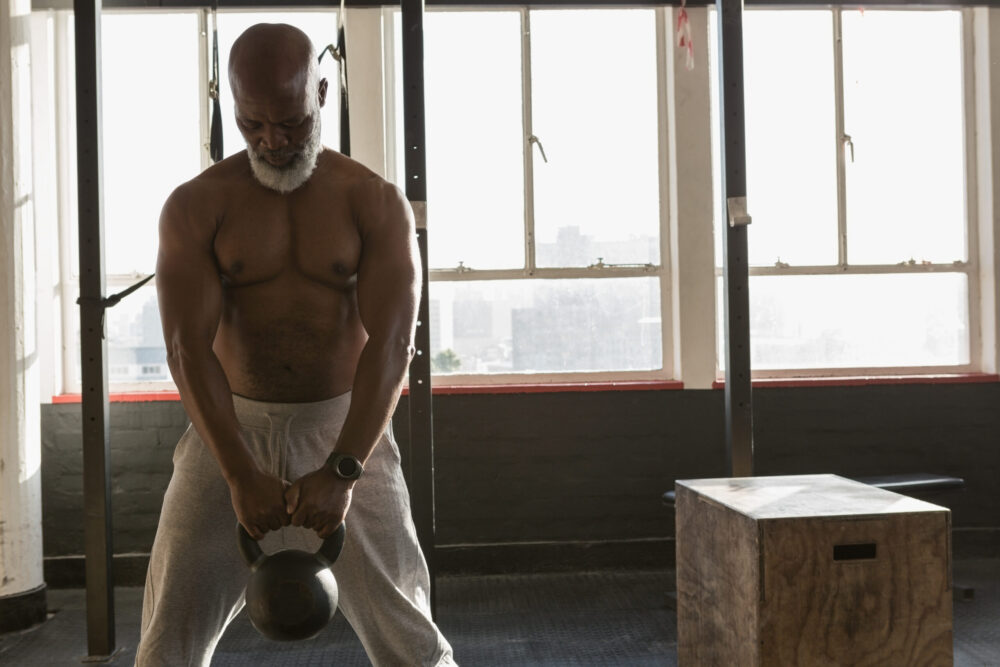
If you have ever wished you could get more done in less time at the gym, the kettlebell swing may be exactly what your routine has been missing. Unlike isolation exercises that zero in on one or two muscle groups, this single movement recruits up to 15 muscles simultaneously from the core and glutes to the shoulders and calves making it one of the most time efficient exercises available to anyone with a kettlebell and a bit of floor space.
For comparison, lunges are excellent for targeting the quadriceps and glutes, and planks have long been a go to for building core stability. But the kettlebell swing does all of that and more in one fluid, powerful motion.
What the kettlebell swing actually does
At its core, the kettlebell swing is a hip hinge movement. The idea is to load the hamstrings and glutes by pushing the hips back, then drive them forward explosively to send the kettlebell swinging upward to about chest height. The arms guide the bell but are not the source of the power the hips are.
One of the most effective exercises for strengthening the hamstrings, glutes, lower back, and core. Beyond building raw strength, the movement teaches the body a fundamental pattern that carries over into nearly every other exercise and daily activity.
How to do it correctly
Stand with feet shoulder width apart and the kettlebell about an arm’s length in front of you.
Keep the spine neutral, pull the shoulder blades back and down, and sit into a slight squat to grip the handle.
Pull the kettlebell back between the legs, keeping it closer to the hips than the knees.
Drive the hips forward, allowing the bell to swing up to chest level as you stand tall.
Keep arms relaxed but straight, squeeze the glutes, and lock out the knees at the top.
Let the kettlebell fall back naturally, hinging at the hips as it passes the thighs.
Repeat the movement with control.
The most common mistake people make is accidentally squatting the kettlebell rather than hinging at the hip. When that happens, the hips drop, the chest rises, and the mechanics of the swing fall apart entirely. Relaxing the shoulders and letting the power come from the hips not the arms or the lower back is the key to doing this movement safely and effectively.
Choosing the right weight
A good starting point is a kettlebell that is roughly 30% of your body weight. It should feel challenging but manageable enough to maintain clean form throughout each rep. Going too light is one of the most common errors beginners make, a kettlebell that is too easy to lift will not generate the hip drive needed to get the full benefit of the movement.
Why it belongs in your routine
The benefits of the kettlebell swing go well beyond aesthetics. The explosive nature of the movement develops power, which becomes increasingly important with age. The ability to move quickly to catch yourself from tripping, rise from a chair, or climb stairs without strain depends on this quality, and the kettlebell swing trains it directly.
Each swing also places a healthy mechanical load on the bones, stimulating the body to produce more bone cells and improve density over time. The heart rate climbs quickly too, making it an effective cardiovascular option for those who would rather skip a walk or jog.
Grip strength is another often overlooked benefit. Research has linked grip strength to longevity, and regularly swinging a kettlebell builds it naturally. As a warm up, the movement activates the nervous system and fires up the posterior chain faster than most alternatives.
It looks deceptively straightforward. A few sessions with a coach or trainer to dial in the mechanics early can make a significant difference in both safety and long term results.