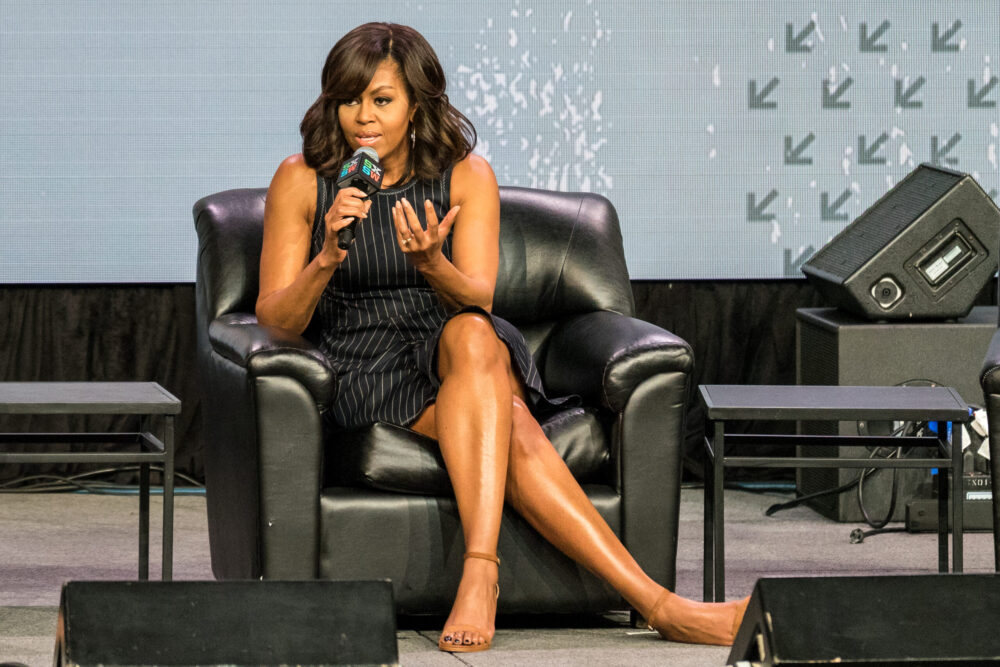
Michelle Obama has never shied away from difficult conversations, but her latest sit down with tennis icon Serena Williams reached new levels of raw honesty. During a live taping of Obama’s podcast, the two women shared deeply personal accounts of their struggles with infertility, the weight of miscarriage, and why they believe women are too often left in the dark about their own reproductive health.
The conversation drew from Obama’s bestselling memoir, Becoming, in which she first revealed the challenges she and former President Barack Obama faced while trying to conceive their daughters, Malia and Sasha. What many readers may not have fully absorbed is just how isolating that experience was. Obama described how infertility felt like a personal failure a quiet grief that she carried largely alone at the time, before she found her way to in vitro fertilization, or IVF.
The pain behind the pregnancies
Obama and Williams, who have both become mothers and public figures celebrated in part for their strength, made clear that their journeys to motherhood were anything but seamless. Obama suffered a miscarriage before eventually turning to IVF, a path that brought both hope and heartbreak before her daughters arrived.
Williams, who shares two daughters with her husband Alexis Ohanian, echoed the emotional toll that infertility and pregnancy loss can take. Both women noted that these experiences are far more common than most people realize and far less talked about. The silence around miscarriage and fertility struggles, they agreed, does real damage. Women internalize their pain and assume they are alone in it, when in reality, millions face the same road.
A health crisis affecting Black women
The conversation took on an added urgency when the focus turned to the specific challenges Black women face. According to the National Women’s Law Center, Black women are nearly twice as likely to experience infertility compared to Hispanic and non Hispanic white women. Conditions such as fibroids and pelvic inflammatory disease, which disproportionately affect Black women, are among the leading contributors to that disparity.
Obama pointed to a broader failure in the medical system one where women, and particularly Black women, are not given adequate information about their bodies. She called for younger women to be educated early about their reproductive options, including egg freezing, which she described as a tool that can take meaningful pressure off women who are not yet ready for motherhood but want to preserve the possibility.
Empowering the next generation with knowledge
Williams went further, saying she actively encourages friends of childbearing age to look into egg freezing, crediting the option with relieving anxiety she had carried about her own timeline. For both women, the message was the same: knowledge is not just power it is protection.
Williams also touched on the dangers she faced during childbirth, including a life threatening complication that put her recovery in serious jeopardy. She credited her mother’s presence and support as a stabilizing force throughout her career and her path to motherhood, noting that her mother was courtside for milestone victories including a Grand Slam win while Williams was pregnant.
Why this conversation matters
What made the exchange between Obama and Williams so resonant was not just their celebrity, but their willingness to frame deeply personal experiences as part of a larger public health conversation. Infertility is still treated as something to be handled privately, and for many Black women, that silence is compounded by systemic inequities in healthcare access.
By speaking openly, both women are pushing back against a culture that too often tells women and Black women especially to endure quietly. Their message is a clear one: these conversations need to happen earlier, louder, and with far more support behind them. Women deserve better information, better care, and the reassurance that they are not alone in what they face.