A 13% survival rate and no reliable early warning — here’s what everyone needs to know now.
Pancreatic cancer does not announce itself. It grows quietly, tucked behind the stomach in one of the most inaccessible corners of the abdomen — and by the time most people learn it is there, it has already done devastating damage. That brutal reality is why pancreatic cancer remains one of the most feared diagnoses in medicine, and why it continues to demand urgent attention.
In 2026, an estimated 67,530 people will be diagnosed with pancreatic cancer, and approximately 52,740 are expected to die from the disease — a margin between new cases and deaths that is unlike almost any other cancer. The five-year relative survival rate sits at just 13%, making pancreatic cancer the only major cancer with a survival rate below 20%. That number has not moved in three consecutive years.
Why Pancreatic Cancer Is So Hard to Catch
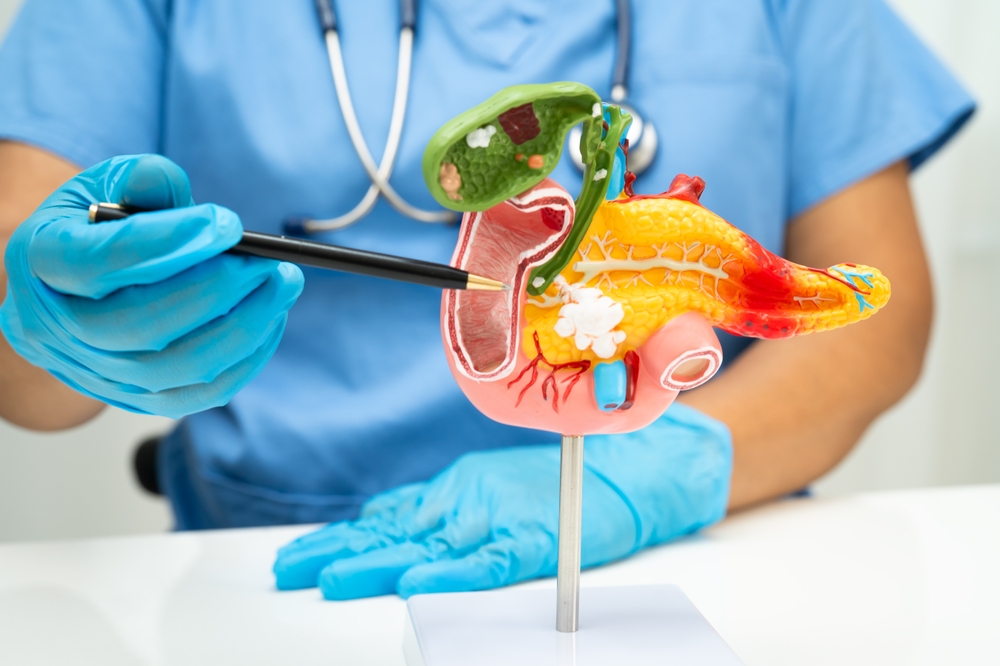
The pancreas is a small, elongated gland that manages both digestion and blood sugar regulation. Because of where it sits — deep in the abdomen, shielded by other organs — tumors growing on or within it can expand for months or even years before triggering symptoms noticeable enough to send someone to a doctor.
Approximately 80 to 85 percent of pancreatic cancer cases are diagnosed at an advanced stage, when the cancer has already spread beyond the pancreas. This late detection is the central reason survival rates remain so low. By the time symptoms like persistent abdominal pain radiating to the back, unexpected weight loss, or painless jaundice appear, the window for curative treatment has often closed.
For the small percentage of patients — roughly 15 percent — who are diagnosed while the disease is still localized, the five-year survival rate jumps to 44 percent. That gap between early and late detection is one of the most dramatic in all of oncology, and it underscores how critical early awareness truly is.
Pancreatic Cancer Risk Factors Worth Knowing
Pancreatic cancer does not discriminate entirely, but certain patterns emerge clearly in the data. The disease is most frequently diagnosed among people between the ages of 65 and 74, and it is slightly more common in men than in women.
Smoking is among the most significant modifiable risk factors — people who smoke face roughly twice the risk of developing pancreatic cancer compared to those who have never smoked, and an estimated 25 percent of all cases are thought to be linked to cigarette use. Excess body weight, long-term type 2 diabetes, and chronic pancreatitis also elevate risk. About 10 percent of pancreatic cancers are inherited through a genetic variant, while the remaining 90 percent are not tied to family history.
Knowing these factors matters, not because they guarantee a diagnosis, but because they can guide conversations with a physician before symptoms ever begin.
Pancreatic Cancer and the Push for New Treatments
For years, research into pancreatic cancer treatment felt like it was running in place. Standard chemotherapy regimens extended lives by months, not years, and the disease’s molecular complexity made it notoriously difficult to target. But 2025 and 2026 have brought a meaningful shift in tone.
The RAS gene, which is mutated in more than 90 percent of pancreatic cancers, was long considered untreatable — but a major phase 3 clinical trial called RASOLUTE 302, testing an investigational drug called daraxonrasib, recently completed enrollment, with results expected to be announced in 2026. If the data holds, it could represent the most significant development in pancreatic cancer treatment in decades.
Daraxonrasib has shown enough early promise that the FDA allowed its maker, Revolution Medicines, to expand access to patients ahead of formal approval. One patient who spent 13 months on the drug without any tumor growth described the experience as transformative compared to the rigors of chemotherapy — before her cancer ultimately progressed to a new site.
Researchers at the 2026 American Society of Clinical Oncology Gastrointestinal Cancers Symposium highlighted additional targeted therapies under investigation, including novel KRAS G12D inhibitors tested both alone and in combination with standard chemotherapy regimens.
Pancreatic Cancer Demands Attention Now
The numbers surrounding pancreatic cancer are sobering, but they are not the whole story. Years of sustained research investment and collaboration are beginning to converge in meaningful ways, with several potentially practice-changing phase 3 trials expected to launch in 2026 for patients with previously untreated metastatic disease.
What the data cannot capture is the human cost of delayed awareness. Pancreatic cancer moves faster than most people expect, which is exactly why understanding its warning signs — however subtle — is not something to put off. Unexplained back pain, new-onset diabetes without obvious cause, significant unintended weight loss, or a persistent yellowing of the skin all warrant a conversation with a doctor.
Pancreatic cancer does not wait. Neither should the people who might be at risk.