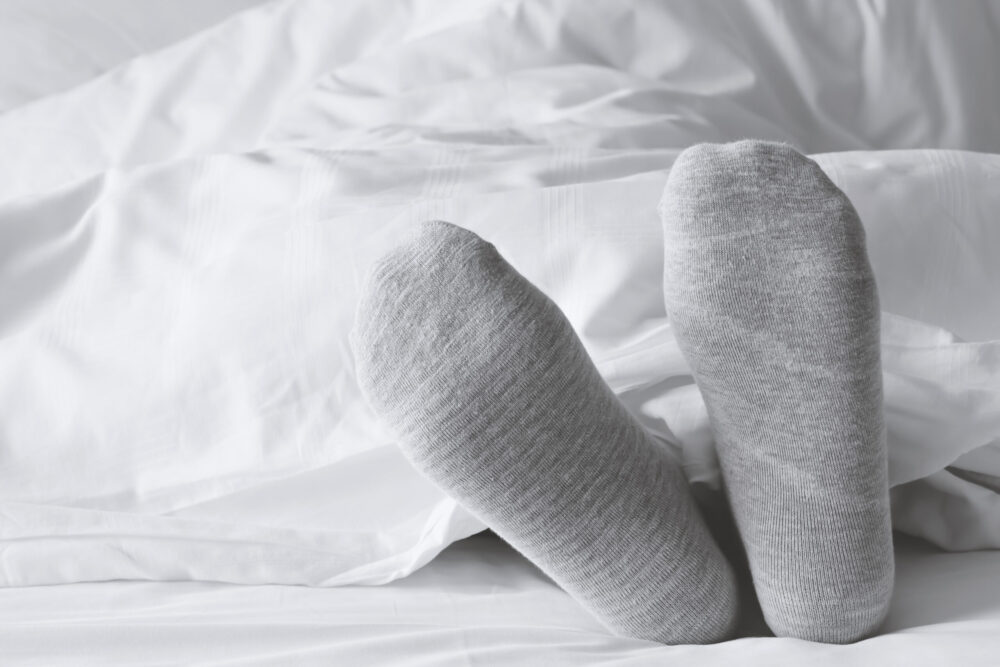
It may sound like a small, inconsequential bedtime choice socks on or socks off but doctors say the decision could actually affect how quickly you fall asleep, how your skin looks and feels, and even your overall foot health. While plenty of people fall firmly in the barefoot-at-bedtime camp, medical experts argue there are real, science-backed reasons to reconsider pulling on a pair before climbing under the covers.
That said, sleeping in socks is not the right call for everyone. Certain health conditions make it a habit worth skipping altogether, and even for those who do choose to wear them, the type of sock matters more than most people realize.
You might fall asleep faster than you think
One of the more compelling reasons to try sleeping with socks on has to do with the body’s natural temperature regulation. When the feet are warmed, the body initiates a cooling cycle that helps signal to the brain that it is time to sleep, research has shown that people who warm their feet before bed fall asleep roughly 15 minutes faster than those with cold extremities. For anyone who has spent time lying awake in the dark staring at the ceiling, that is a meaningful difference. Your skin can actually benefit overnight
Beyond sleep speed, socks offer a low effort way to care for the skin on your feet. Keeping socks on overnight helps the feet retain moisture and reduces dryness. For people dealing with cracked or rough heels, pairing the habit with a deep moisturizer applied before bed. The socks then act as a seal, locking in hydration through the night and allowing the skin more time to absorb the treatment. It is one of the simplest at home foot care routines available, and it costs almost nothing to try.
Not everyone should be doing this
Here is where the guidance gets more nuanced. For people who are prone to athlete’s foot or recurring toenail infections, sleeping in socks can do more harm than good. Fungi thrive in warm, moist, dark environments exactly the conditions that socks create and introducing those conditions overnight can make existing fungal issues significantly worse.
People with poor circulation, including those living with peripheral arterial disease, diabetes, or those who smoke, are also advised to avoid this habit. That swelling can cause socks to tighten around the foot during sleep, restricting blood flow in ways that range from uncomfortable to genuinely harmful.
The type of sock you choose matters a lot
For those who get the green light from their health profile, the next step is choosing the right pair. Tight fitting socks are a problem regardless of who is wearing them, as they can impair circulation, cause skin irritation, or lead to swelling. Loose fitting socks made from natural fibers such as cotton or cashmere, both of which allow airflow while still providing warmth.
Socks with tight elastic bands at the top should be avoided entirely, as they can create a tourniquet like effect that cuts off blood flow to and from the feet during the night. Length is another consideration, knee high socks can compress an important nerve on the outside of the knee, potentially causing numbness or pain that travels down the leg and into the foot. The safest option, is a loose sock that sits no higher than a few inches above the ankle.
A few things worth looking for
When shopping for socks designed with sleep in mind, prioritize these four features, a loose, non binding fit around the ankle and toes, natural, breathable materials like cotton, bamboo, or cashmere, no thick or rigid elastic band at the top, and a length that falls well below the knee. Diabetic socks and wide fit options sold at most major retailers tend to hit all of these marks, and many are available for well under $30 for a multi pack.
The bottom line, according to the doctors consulted, is that sleeping with socks on is neither a strange quirk nor a universal must. It is simply a habit with real potential benefits if you approach it with the right pair and a clear picture of your own health needs.