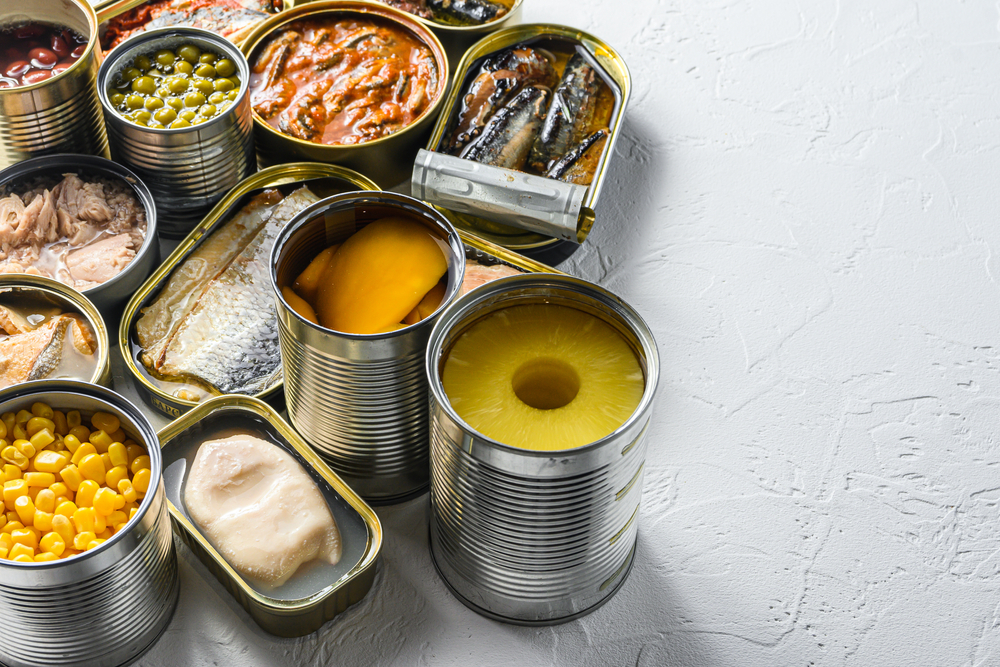
Canned food is one of the most reliable items in a household pantry, but the dates printed on the cans mislead a significant number of people into throwing out food that is still perfectly safe. Those dates are quality indicators, not safety cutoffs. A can that has passed its best-by date is not automatically dangerous. A can that has been dented along a seam or stored in a humid cabinet may be, regardless of what the label says.
Understanding the difference between those two scenarios is the most practical thing anyone managing a pantry can know about canned food.
The dates on cans tell you about flavor, not safety
Manufacturers print best-by and use-by dates to communicate when a product is expected to be at its peak in terms of taste and texture. Once that date passes, quality may gradually decline. The food does not suddenly become unsafe at midnight on the printed date.
A sealed can stored in appropriate conditions can remain safe to eat well beyond what the label suggests. The printed date is a manufacturer’s quality estimate, not a hard expiration in the way most people interpret the term. That distinction matters most for households trying to reduce food waste or manage a long-term pantry.
High-acid and low-acid foods age on different timelines
Not all canned goods have the same shelf life, and the difference comes down to acidity. High-acid foods, including canned fruits, tomatoes, pickles, and sauerkraut, typically maintain quality for 12 to 18 months. The acid in these products reacts with the interior lining of the can over time, gradually affecting taste and texture even when the food remains technically safe.
Low-acid foods hold up considerably longer. Canned meats, poultry, vegetables, stews, and soups generally maintain quality for two to five years because the lower acidity produces less reaction with the can lining. Commercially canned foods overall fall somewhere in the range of 18 months to five years depending on type and storage conditions.
Home-canned foods operate under different rules. Because the canning process is less controlled than commercial production, food safety experts recommend consuming home-canned goods within one year.
Where and how cans are stored changes their safety profile
Temperature, light, and moisture all affect how well canned food holds up over time. Cans stored near a stove, in direct sunlight, or in a humid area like under a sink or in a damp garage deteriorate faster and are more vulnerable to rust and seal damage.
The most effective pantry setup keeps cans in a cool, dry, and dark location. Rotating stock so that older cans are used before newer ones reduces the chance of anything sitting long enough for quality to meaningfully decline. Freezing canned goods is not a safe storage method. Liquids expand when frozen, which can break the seal and create conditions where bacteria can enter.
Physical signs are the most reliable way to identify an unsafe can
The printed date is the least informative safety signal on a can. The physical condition of the can tells a more reliable story.
Bulging or swollen ends indicate gas buildup inside, which is a sign of bacterial activity. Deep dents along the seams are a concern because the seam is where the can’s structural integrity is most critical and where bacteria are most likely to enter if the seal is compromised. Heavy rust that does not wipe off, leaks, or sticky residue on the outside of a can are all reasons to discard it without opening.
Once a can is open, foam or liquid that spurts out, foul odors, or unusual colors inside the can are signs that something has gone wrong. None of those cans should be tasted to confirm the problem. Foodborne illness from spoiled canned food can produce nausea, vomiting, stomach cramps, and diarrhea, and in the case of botulism, the consequences can be severe.
When the physical condition of a can is in any doubt, discarding it is the right call.