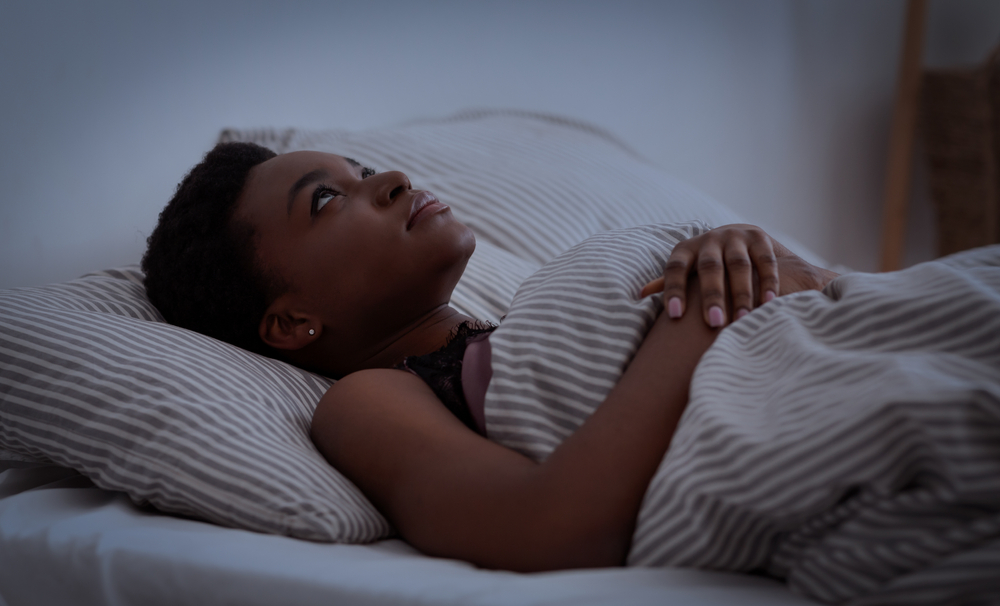
The habits that wreck your sleep are usually the ones you barely notice, like late afternoon coffee, a warm bedroom, a nightcap or one more scroll in bed. Fixing them doesn’t take a prescription. It takes better timing, a cooler room and consistency. For Black Americans, the stakes are higher. In 2024, 40.2% of Black adults got six hours of sleep or less, compared with 28.9% of white adults, according to the CDC.
That gap isn’t only about habits. Researchers have found that the sleep gap between Black and white Americans is widest among women and among people with middle and high incomes. That points to stress and heavy workloads, not just bad choices. Still, habits are the part you can control tonight, and seven are worth changing.
1. Is scrolling in bed keeping you awake?
Often, yes. Screen light tells your brain it is still daytime and delays melatonin, the hormone that helps you fall asleep. What you watch matters too, since an intense video or a heated group chat keeps your mind switched on. Spend the last hour before bed with a book, a dim lamp or something to listen to instead.
2. How late is too late for caffeine?
It’s earlier than most people think. For many adults, caffeine’s half life is around five hours, and it runs longer for some people. That means much of a 3 p.m. coffee can still be working at bedtime. Move your last cup to late morning or noon and see what changes within a few days.
3. Do sleep habits like a regular schedule matter that much?
A regular schedule matters more than almost anything else. Your internal clock runs on consistency. Waking at 7 a.m. all week and 11 a.m. on weekends is a bit like flying across time zones every Saturday. A steady wake time, even on your days off, is one of the most effective sleep habits you can build.
4. What temperature helps you sleep?
It’s cooler than most bedrooms. Your core body temperature has to drop for deep sleep to happen. Many sleep experts recommend about 65 degrees Fahrenheit, give or take a few degrees. Lowering the thermostat or running a fan before bed can help on its own.
5. Does a nightcap help or hurt sleep?
It hurts your sleep habits. Alcohol can help you fall asleep faster, but it cuts into REM sleep, the stage tied to emotional processing and memory. It also tends to break up your sleep later in the night. Falling asleep fast is not the same as getting real rest.
6. Is working out at night bad for sleep?
It depends on how hard and how late. Moderate evening exercise doesn’t seem to hurt most people’s sleep. Very intense workouts that end within about an hour of bedtime can keep your heart rate and body temperature up. If you train hard, try to finish earlier in the evening.
7. Should the bedroom be for sleep only?
As much as possible. Working, eating and binge watching in bed teach your brain to link that space with being awake. When your bed is only for sleep, getting into it becomes a sleep cue on its own.
What is the biggest takeaway?
Small changes add up. Pick one or two of these, like a steady wake time and an earlier coffee cutoff, and give them two weeks. If you still can’t sleep, snore loudly or wake up exhausted after a full night, talk to a doctor. Sleep apnea and insomnia are common, treatable and often missed.