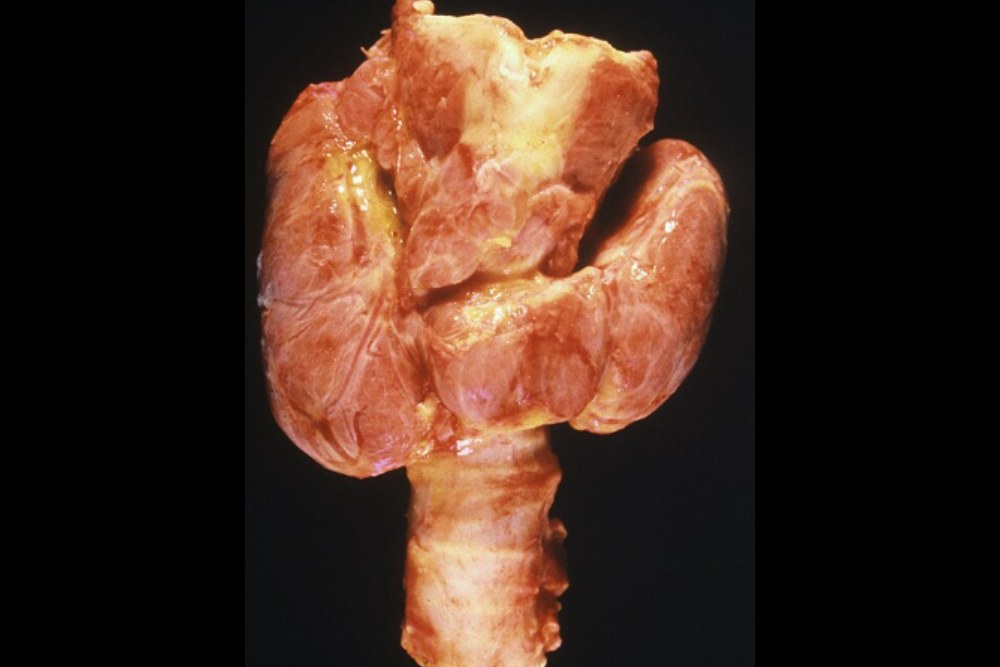
A swelling in the neck can send anyone straight to a search engine, and thyroid enlargement, known clinically as goitre, is one of the most common reasons people end up there. Doctors say the vast majority of cases turn out to be benign, but distinguishing a harmless swelling from an early cancer requires careful evaluation, since the two can look remarkably similar at first glance.
Goitre simply describes any enlargement of the thyroid gland, whether it comes from a single lump, several nodules scattered throughout the gland, or a broader swelling that affects the whole organ. Around the world, the most common driver is iodine deficiency, though the opposite problem, iodine excess, shows up in regions where diets are heavy in seaweed and fish. Certain medications, including long term lithium use, and foods from the cabbage family have also been linked to goitre, as has heavy smoking, which raises the risk of developing multiple nodules.
How common thyroid nodules really are
Thyroid nodules are far more common than most people realize. Studies suggest that palpable nodules or visible goitre show up in as many as seven percent of adults living in areas with adequate iodine intake. When doctors look more closely using imaging, the numbers climb even higher. Ultrasound scans pick up nodules in roughly two thirds of patients examined, while CT and MRI scans of the neck find them in about 15 percent of cases, and even routine PET CT scans catch incidental nodules one to two percent of the time.
In the United Kingdom, thyroid cancer was diagnosed in 4,760 people in 2022, accounting for about 1% of all new cancer diagnoses that year. That number has been climbing steadily, with cases rising 70% over the past decade, a trend doctors partly attribute to better detection rather than a true surge in disease. Among people who bring a thyroid nodule to a doctor’s attention, only about five to six percent turn out to be cancerous, which underscores why careful screening matters so much.
What doctors look for when evaluating a swollen thyroid
Most goitres cause no symptoms at all and are discovered by chance, whether a patient notices a lump themselves, a doctor feels it during an exam, or it shows up incidentally on a scan ordered for something unrelated. Nodules can appear at any age in either sex, but doctors pay closer attention when they show up in men or in patients at either end of the age spectrum, since those cases carry a higher likelihood of aggressive disease. A lump that grows noticeably within a matter of weeks is another red flag doctors take seriously.
Diagnosis typically starts with blood tests measuring thyroid stimulating hormone along with the thyroid hormones triiodothyronine and thyroxine. If autoimmune thyroid disease is suspected, doctors may also check for thyroid antibodies, and if medullary thyroid cancer is a concern, they test for calcitonin and carcinoembryonic antigen. High resolution ultrasound and a needle biopsy known as fine needle aspiration cytology remain the gold standard tools for figuring out whether a nodule needs further action.
Treatment ranges from watchful waiting to surgery
For most people with a benign, symptom free goitre, treatment is not necessary at all. Doctors generally intervene only when the gland is overactive, when it is large enough to press on nearby structures like the windpipe, or occasionally for cosmetic reasons. A newer option, thermal ablation, has been gaining traction as a non surgical way to shrink troublesome nodules in carefully selected patients.
When cancer is confirmed, treatment becomes a team effort involving surgeons, endocrinologists and oncologists. For the most common form, differentiated thyroid cancer, that usually means surgery, sometimes followed by radioactive iodine therapy and hormone suppression tailored to how aggressive the cancer appears. Advanced or treatment resistant cases increasingly benefit from newer targeted drug therapies, and researchers are now using molecular biomarkers to help identify which nodules are truly dangerous, guiding both prognosis and treatment with more precision than ever before.