A warm bath on its own can ease muscle tension, reduce stress, and support better sleep. But the ingredients added to that water can either amplify those benefits or quietly work against your skin and overall health. Some popular bath additives are genuinely therapeutic. Others disrupt the body’s natural balance, trigger irritation, or cause allergic reactions. The difference often comes down to knowing which products have science behind them and which rely more on marketing than results.
Anyone with specific skin conditions, sensitivities, or health concerns should check with a physician or dermatologist before introducing new additives to their bath routine.
The best bath ingredients for a therapeutic soak
Epsom salt
One of the most well-supported additives, Epsom salt dissolves in water to release magnesium and sulfate ions that are believed to ease muscle soreness, reduce inflammation, and support stress relief. Adding roughly one and a quarter cups to a full tub is a commonly recommended amount, with products containing pure magnesium sulfate being the preferred option. Anyone experiencing active skin inflammation, a rash, open wounds, or a skin infection should skip this until those conditions resolve.
Lavender oil
Among essential oils, lavender is one of the few considered safe and beneficial for soaking. Its scent promotes relaxation and eases anxiety, while early research points to antiseptic and anti-inflammatory properties that may support skin healing. Because essential oils are highly concentrated, lavender should always be diluted with a carrier oil such as jojoba before being added to the bath water. Around 10 to 12 drops of the diluted mixture per session is a reasonable starting point.
Baking soda
Baking soda brings mild anti-inflammatory and pH-balancing properties to a soak, making it a practical option for those dealing with eczema or general skin irritation. It can also neutralize odors. Adding a quarter cup to the water is typically enough to relieve itching, and two tablespoons can be used safely in an infant’s tub to address diaper rash.
Colloidal oatmeal
Oats have been used for generations to calm irritated skin, and colloidal oatmeal in particular has a long track record with conditions like eczema and psoriasis. It soothes inflammation, combats itchiness, and leaves skin feeling more moisturized. One cup added to bath water is generally sufficient for a meaningful effect.
Bath additives that do more harm than good
Bath bombs
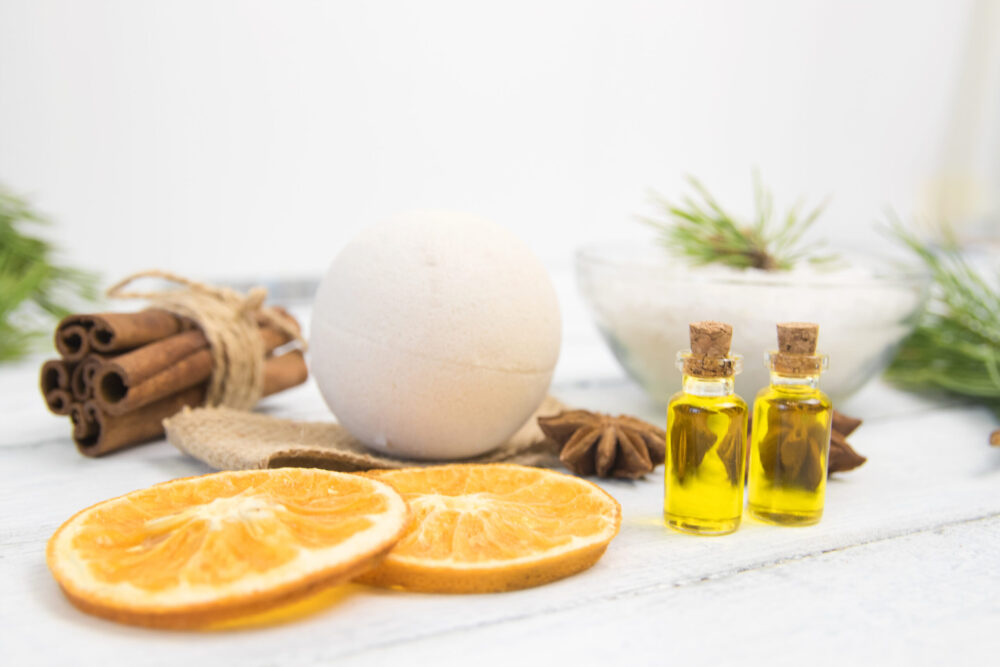
Despite their popularity, bath bombs frequently contain ingredients that do more harm than good. Artificial fragrances, synthetic dyes, and chemical additives that create fizz and color can irritate the skin, trigger allergic reactions, and disrupt the natural balance of vaginal microflora. Glitter versions carry an additional irritation risk from the difficulty of removing particles from skin. The visual appeal rarely justifies the ingredient list.
Tea tree oil
Unlike lavender, tea tree oil is too harsh and concentrated for direct use in bath water. Because oil and water do not mix, it tends to float on the surface rather than dispersing, meaning skin comes into contact with an undiluted concentration of a potent substance. This can cause significant irritation and, in some individuals, trigger an allergic skin reaction known as contact dermatitis.
Heavily fragranced bubble products
Bubbles in themselves are not harmful, but many conventional formulas contain chemical fragrances and artificial dyes that irritate sensitive skin and can worsen conditions like eczema and psoriasis. Products labeled as unscented are not always safer, as they may contain masking chemicals. Fragrance-free options are the more reliable choice, and a gentle body wash can produce a similar lather without the same irritation risk.