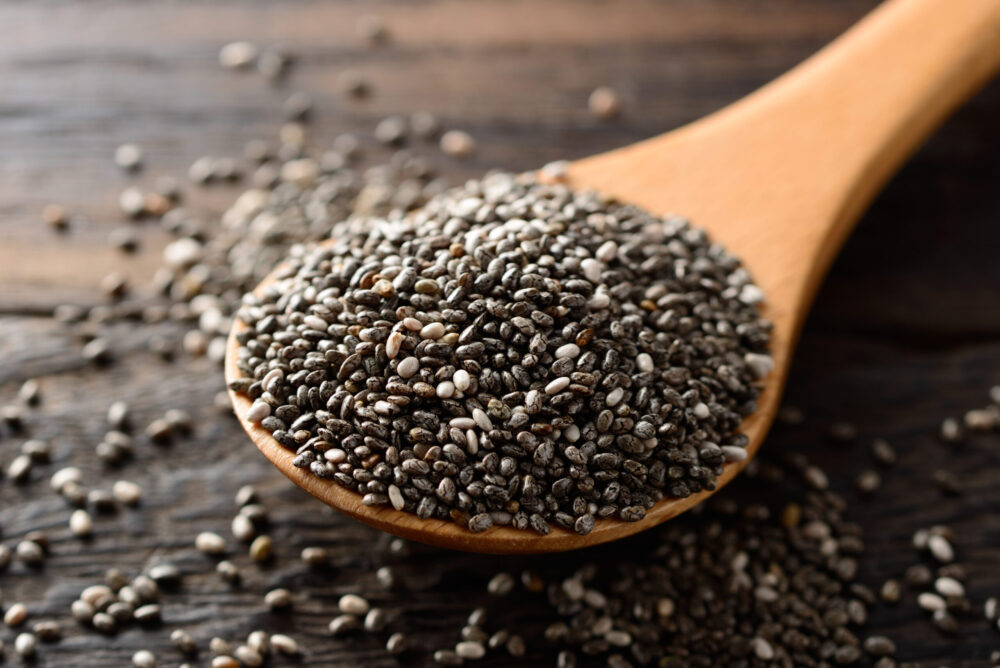
Chia seeds are not a trend. They have been a dietary staple in Central American cultures for centuries, and the nutritional profile that made them valuable then holds up under modern analysis. A single two-tablespoon serving delivers roughly 10 grams of fiber, four grams of protein, five grams of omega-3 fatty acids and meaningful amounts of calcium, magnesium and phosphorus. For something that weighs less than an ounce, that is a dense return.
The omega-3 content comes primarily in the form of alpha-linolenic acid, a plant-based fatty acid associated with cardiovascular and anti-inflammatory benefits in the research literature. The fiber split between soluble and insoluble types mirrors what makes other high-fiber foods useful, supporting digestion, moderating blood sugar response after meals and contributing to satiety. The antioxidant content, including chlorogenic acid and quercetin, adds a layer of oxidative protection that is well documented in published nutritional research.
Chia pudding is the most forgiving place to start
The most straightforward way to use chia seeds is also the one that requires the least effort. Combining two tablespoons of chia seeds with half to three quarters of a cup of milk or unsweetened yogurt and leaving the mixture in the refrigerator overnight produces a thick, gel-like pudding by morning. The gelling happens because chia seeds absorb up to ten times their weight in liquid, a property driven by their soluble fiber content.
The base is neutral enough to work with almost any topping. Fresh fruit, a spoonful of nut butter, a handful of granola or a drizzle of honey all build on the same foundation without requiring any additional preparation.
Smoothies and overnight oats are the lowest-friction options
For anyone who already makes smoothies or overnight oats regularly, chia seeds require almost no adjustment to the existing routine. One tablespoon blended into a smoothie adds fiber and protein without changing the flavor. The seeds act as a natural thickener, which reduces the need for banana or other starchy ingredients to achieve the right consistency.
In overnight oats, the combination of half a cup of rolled oats, one tablespoon of chia seeds and three quarters of a cup of milk produces a breakfast that is higher in fiber and more filling than oats alone. The chia seeds absorb the same liquid the oats do overnight, so the texture integrates cleanly.
Chia jam is worth making once
Combining crushed berries with a tablespoon of chia seeds and letting the mixture sit for twenty minutes produces a spreadable jam without pectin, added sugar or cooking. The seeds absorb the fruit liquid and thicken it naturally. The result works on toast, stirred into yogurt or layered into a parfait, and it delivers the anti-inflammatory polyphenols from the berries alongside the fiber from the seeds in a format that keeps for several days in the refrigerator.
Savory applications most people skip
Chia seeds do not have to go into sweet dishes. Blended dry with dried herbs, garlic powder and onion flakes, they make a crunchy topping for grain bowls, roasted vegetables, avocado toast or eggs. The seeds add texture without softening the way breadcrumbs do, and the flavor is neutral enough that the herbs carry the seasoning. It is a small addition that increases the fiber and mineral content of a savory meal without changing what the dish fundamentally is.
The practical case for keeping them on hand
Chia seeds are shelf-stable for up to two years when stored in a sealed container away from heat and light. They do not require refrigeration, grinding or soaking before use, unlike flaxseeds, which need to be ground for the nutrients to be bioavailable. That combination of nutritional density and storage convenience is genuinely uncommon in whole foods, and it makes chia seeds one of the more practical items to keep stocked in a kitchen that prioritizes nutrition without a lot of daily effort.