Why fingertip changes deserve more medical attention than they get
Nail health changes are easy to dismiss. A ridge that was not there six months ago, a slight discoloration at the tip, a plate that has become brittle or unusually thin, all of these are easy to attribute to aging, to a new hand cream, to the weather, or to the last set of acrylics. That habit of attribution, instinctive and usually harmless, occasionally causes people to miss something worth investigating considerably sooner than they do.
This living structure is produced continuously by the matrix at its base, and it is exquisitely sensitive to the nutritional, circulatory, hormonal, and immunological conditions of the body growing it. Clinicians who examine this tissue routinely know that they can surface evidence of iron deficiency, thyroid dysfunction, psoriasis, liver disease, cardiovascular insufficiency, and in rare cases early malignancy, before these conditions have produced symptoms obvious enough to prompt a medical visit through any other route.
Why discoloration is not always a cosmetic issue
Color changes in the plate and underlying bed carry some of the most information-dense signals available through simple visual examination. Pale or white nails, where the healthy pinkish hue of good blood supply is absent or diminished, can reflect anemia, liver disease, or circulatory insufficiency. The color change is produced by the same mechanism that makes a person’s face look pale in illness, reduced perfusion of the tissue that lies beneath a translucent surface.
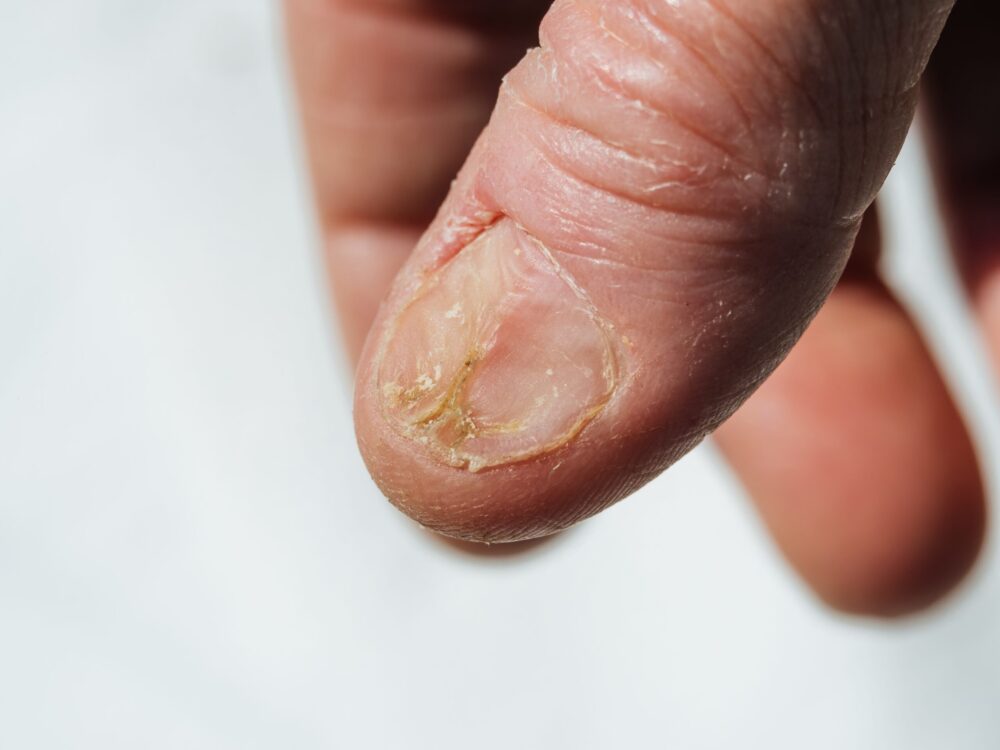
A yellow appearance is most frequently caused by fungal infection, which is common, treatable, and often ignored far longer than it should be. Less frequently, yellow nails appear in association with lymphatic system disorders or chronic respiratory conditions. Green or black discoloration typically reflects bacterial colonization of the nail bed following some form of trauma that allowed entry beneath the plate.
Vertical dark streaks running from the matrix to the free edge require particular clinical attention. In people without naturally darker nail pigmentation, a new or changing longitudinal dark band warrants dermatological evaluation, as a small proportion represent subungual melanoma, a form of skin cancer with a considerably better prognosis when identified early rather than late.
Why structural shifts tell their own story
Small depressions scattered across the plate surface, known clinically as pitting, are one of the most reliable visible signs of psoriasis. It frequently appears before skin plaques develop, making a careful nail examination a potential tool for earlier identification of a systemic inflammatory condition that carries implications well beyond the skin.
Horizontal grooves that cross the full width of the plate, known as Beau’s lines, form when the matrix temporarily halts production in response to significant physiological stress. Severe illness, major surgery, chemotherapy, or marked nutritional deficiency can all produce them. Because nails grow at a predictable rate, the position of a Beau’s line can be used to estimate the approximate timing of the disrupting event.
Spoon-shaped nails, where the edges curve upward rather than following the gentle natural arc of the fingertip, are associated with iron-deficiency anemia and sometimes with hemochromatosis. Clubbing, the broadening of the fingertip with a convex arc of the nail over the tip, is associated with chronic low oxygen states related to lung or cardiac conditions.
Why protection is simpler than most products suggest
The industry generates significant revenue from products claiming to strengthen, restore, or repair damaged keratin. Most of what actually determines the condition of this tissue comes from beneath the surface. Hydration, protein adequacy, iron status, thyroid function, and circulatory health all shape what the matrix produces before any topical product has a chance to interact with it.
External habits matter in a supporting role. Limiting prolonged water exposure, wearing gloves for cleaning and chemical work, and using acetone-based removal with patience rather than peeling gel or acrylic products are the practical steps that protect nail integrity from outside damage. Any persistent change, particularly one accompanied by discomfort, bleeding, or spread to adjacent digits, is worth a conversation with a dermatologist rather than another product trial.