Science-backed reasons why letting your kid pick up a controller might be the smartest parenting move you make this year.
For years, gaming has carried the stigma of being the enemy of productivity, social skills, and healthy development in children. Parents were warned to limit screen time, hide the controllers, and redirect their kids toward more worthwhile activities. But a growing wave of research is flipping that narrative — and fast. Gaming, when approached intentionally, is emerging as a powerful tool for children’s mental well-being.
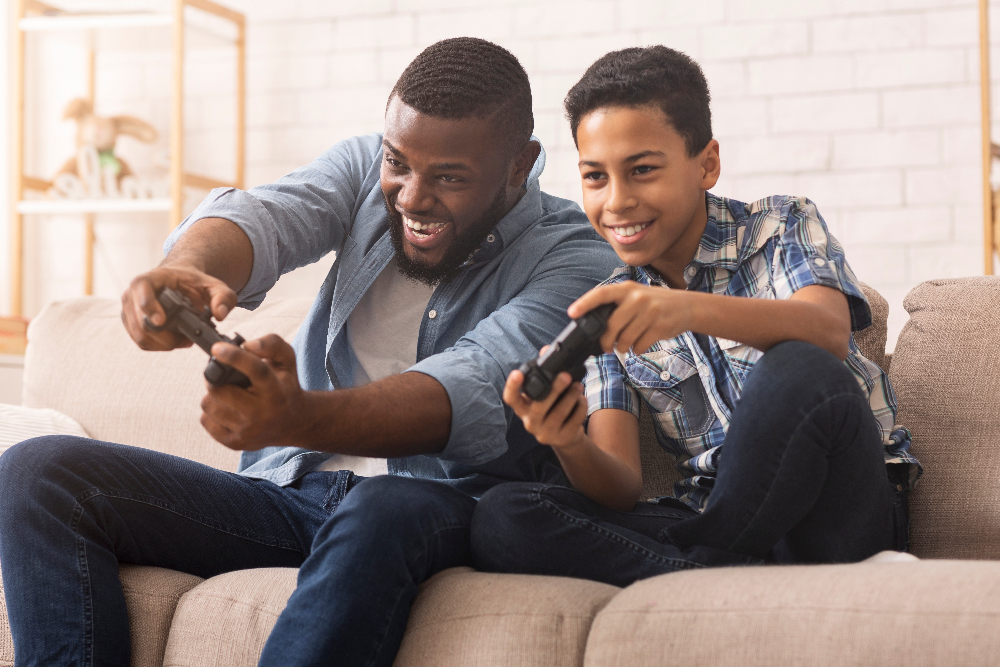
The image of a parent and child laughing over a shared controller is no longer just heartwarming — it is quietly revolutionary. Gaming environments, particularly those shared between a parent and child, are proving to be fertile ground for emotional growth, resilience, and connection.
Gaming and the Brain— What Research Actually Shows
Neuroscientists and child psychologists have spent the last decade piecing together how interactive digital play shapes young minds. The findings are striking. Children who engage in regular sessions demonstrate stronger problem-solving abilities, improved attention spans, and higher levels of emotional regulation. The brain, it turns out, loves a good challenge — and gaming delivers exactly that.
Unlike passive screen consumption, this kind of play demands active participation. Kids must plan, adapt, fail, try again, and ultimately succeed. That cycle — of effort, setback, and eventual reward — mirrors the kind of resilience-building experiences that mental health professionals actively encourage in young people.
The Hidden Social Power of Gaming Together
One of the most underrated benefits of interactive play is what happens between players — especially between a parent and child. Shared play creates natural moments of communication, teamwork, and laughter. It strips away the formality of serious talks and replaces it with something far more effective— genuine connection over a common goal.
Children who play with their parents report feeling more understood, more supported, and more open to discussing life’s harder topics. The session becomes a safe space — one built not on lectures, but on shared experience. Consider what co-op moments can unlock
- Strengthened trust between parent and child through collaborative play
- Natural conversations that flow without pressure or agenda
- Healthy modeling of how to handle frustration and failure
- A consistent ritual that anchors family bonding time
- Reduced feelings of loneliness and social anxiety in children
Gaming as Emotional Regulation Practice
Every parent has watched a child lose a game — and lose it emotionally right along with it. But here is the thing— that moment of frustration is not a red flag. It is an opportunity. Gaming provides a low-stakes environment where kids can practice managing big emotions repeatedly and safely.
Child therapists have begun incorporating game-based frameworks into their sessions, recognizing that the gaming world gives children permission to feel without consequence. Losing a round, regrouping, and trying again is emotional literacy in action — just disguised as entertainment.
Setting Boundaries That Make Gaming Work
None of this means handing a child a device and walking away. The mental health benefits of gaming are most pronounced when boundaries are clear and involvement is intentional. Experts recommend a few core principles for parents navigating this space
- Set consistent time limits — 60 to 90 minutes on school nights is widely cited as a healthy range
- Choose age-appropriate games that encourage cooperation, not aggression
- Play alongside your child whenever possible, at least a few times a week
- Use gaming sessions as a springboard for conversation, not a replacement for it
Gaming Is Not the Problem — Isolation Is
The real threat to a child’s mental health has never been gaming itself — it is isolation. When it becomes a way to withdraw from the world entirely, that is when warning signs emerge. But when it invites connection, whether with a parent, a sibling, or a trusted friend, it functions as a bridge rather than a barrier.
In an era where children face unprecedented levels of anxiety, academic pressure, and social comparison, it offers something increasingly rare— a space where failure is safe, effort is rewarded, and joy is immediate. That is not something to take away. That is something to build on.
The controller, it turns out, might just be one of the most underrated parenting tools of this generation.