A common nighttime habit may be worth reconsidering, especially for people who spend much of their day indoors.
Research published in Nature Mental Health found that adults exposed to greater amounts of light at night had higher odds of experiencing several psychiatric conditions, including depression. The study involved 86,772 adults and found that those with the highest nighttime light exposure had about 30% higher odds of major depression compared with those exposed to less light at night.
The research also identified a potentially important contrast. People who experienced greater exposure to light during the daytime had about 20% lower odds of major depression.
The findings suggest that when the brain encounters light could matter as much as how much light it receives overall.
Your body clock responds to light
Light is one of the body’s most important environmental cues for maintaining its circadian rhythm, the internal cycle that helps regulate sleep, wakefulness and other biological processes.
Natural daylight helps reinforce that rhythm, while darkness signals to the body that it is time to prepare for sleep. Modern lifestyles, however, can blur the distinction between daytime and nighttime.
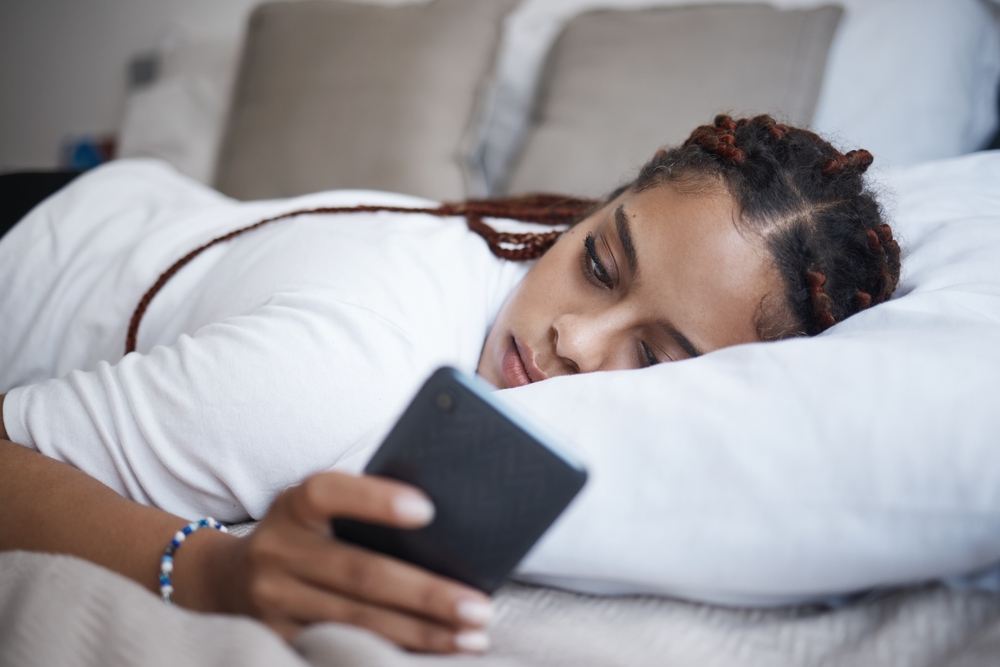
Many people spend most of their day inside buildings, where artificial lighting may be considerably dimmer than outdoor daylight. At night, the situation can reverse as indoor lighting, televisions, smartphones and other electronic devices expose people to more light than their bodies would naturally encounter after sunset.
The researchers found that higher nighttime light exposure was associated with more than depression. The pattern was also observed in relation to anxiety, post traumatic stress disorder, bipolar disorder, psychosis and self harm.
Greater daytime light exposure, meanwhile, was associated with lower odds of several psychiatric outcomes.
The findings do not prove cause and effect
Despite the notable differences, the study does not establish that nighttime light directly causes depression or other mental health conditions.
The research was cross sectional, meaning the investigators examined associations between participants light exposure and health outcomes rather than following people over time to determine whether one factor caused another.
That distinction is important because other factors could contribute to the results.
The participants also had an average age of 62.4 years. Because the study population was largely older adults, the findings may not apply in exactly the same way to younger people.
Researchers accounted for several potentially relevant factors, including shift work, sleep patterns, whether participants lived in urban or rural areas, and aspects of cardiometabolic health. Even after those considerations, the relationship between light exposure and psychiatric outcomes remained apparent.
Still, further research would be needed to establish how changes in nighttime lighting might affect mental health over time.
Daytime brightness and nighttime darkness may help
The practical message from the research is less about eliminating light completely and more about creating a stronger distinction between day and night.
Health guidance from the National Heart, Lung, and Blood Institute emphasizes managing light exposure as part of addressing circadian rhythm concerns. That can include getting more natural light during the day and limiting bright artificial light from screens and electronics at night.
Melatonin, a hormone involved in sleep regulation, is produced in response to darkness. Exposure to light during the nighttime hours can interfere with that process.
For people trying to establish a more consistent sleep routine, making the bedroom darker may therefore be one relatively simple environmental change.
A darker bedroom could support better sleep
Light entering through windows can make it harder to maintain a consistently dark sleeping environment. Streetlights, vehicle headlights and early morning sunlight can all contribute to unwanted nighttime or early morning exposure.
Blackout curtains or shades can help limit that light without requiring people to make major changes to their routines.
Automated window shades can provide another option by allowing people to schedule when the bedroom becomes darker and when natural light enters in the morning. Some systems can be programmed according to specific times or adjusted around sunrise and sunset.
The goal is not to eliminate every source of light from daily life. Instead, it is to establish a clearer pattern in which daytime is associated with brighter surroundings and nighttime is associated with progressively less light.
Light exposure may also affect the body overnight
Research beyond the Nature Mental Health study has examined how nighttime light can affect physical health during sleep.
A 2022 study published in Proceedings of the National Academy of Sciences found that spending a single night sleeping under moderate indoor lighting was associated with a higher nighttime heart rate and reduced insulin sensitivity the following morning.
Those findings add to broader research examining the relationship between nighttime environmental conditions, sleep and the body’s biological processes.
Taken together, the research points to the importance of maintaining a consistent light dark cycle.
Getting outside during daylight hours, reducing unnecessary bright light in the evening and keeping the bedroom dark during sleep are relatively straightforward ways to create that contrast.
The latest findings do not mean nighttime light is a direct cause of depression. They do, however, add to evidence that the timing of light exposure may be an important part of maintaining healthy circadian rhythms and supporting overall well being.