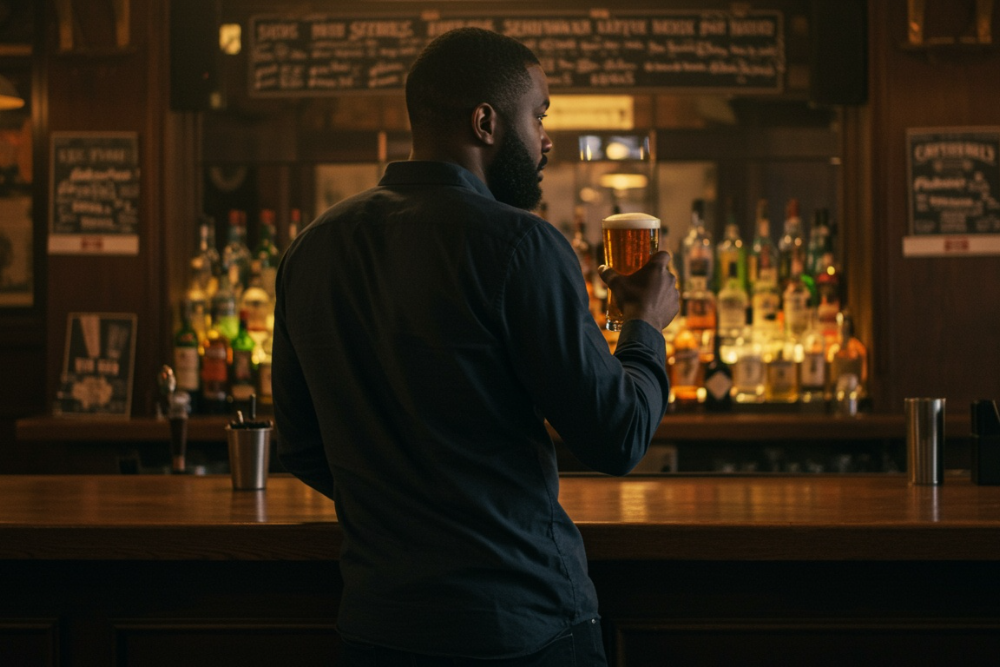
There is something undeniably satisfying about cracking open a cold beer after a long, draining day. The hiss of the cap, the first sip — it feels like exhaling. For millions of men, that moment at the bar or on the couch is a ritual, a reward, a release. But what if that ritual is quietly working against the very peace of mind it claims to deliver?
The relationship between beer and mental health is more nuanced than most people realize — and understanding it might be one of the most powerful things a man can do for himself.
What Beer Actually Does to the Brain
Beer is a depressant. That is not a moral judgment — it is biology. Alcohol slows down the central nervous system, which is exactly why that first drink feels like it melts the stress away. But the brain adapts fast. Over time, it begins to rely on that external chemical signal to feel calm, making it harder to reach that same sense of ease without it.
Here is what happens inside the brain with regular consumption
- Dopamine levels spike initially, creating a feeling of pleasure and reward
- Serotonin — the mood-stabilizing chemical — gradually depletes with frequent use
- Sleep cycles are disrupted, even after just one or two drinks
- Anxiety levels rise the morning after, a phenomenon sometimes called hangxiety
The more a man reaches for beer to unwind, the more his brain forgets how to unwind on its own. That is not weakness — that is chemistry.
The Silent Pressure Men Carry
There is a reason so many men find themselves at a bar after a hard week. The pressure to hold it together, to be strong, to not burden others — it is exhausting. Beer becomes a socially acceptable way to decompress without having to say a word about what is actually going on inside.
But silence has a cost. When beer becomes the primary tool for emotional regulation, the real issues — stress, grief, loneliness, burnout — never actually get addressed. They just get postponed, one pint at a time.
This is not about shame. This is about awareness. Knowing why the hand reaches for the bottle is the first step toward real mental wellness.
Mindful Drinking Is a Form of Self-Respect
Here is the good news — and there genuinely is good news. Choosing to drink mindfully is one of the most quietly powerful acts of self-care a man can practice. It does not mean giving up beer entirely. It means being intentional about it.
Mindful drinking looks like this
- Drinking because you enjoy the taste, not because you need to feel numb
- Setting a personal limit before the night begins — and honoring it
- Noticing how beer affects your mood the next day and adjusting your habits
- Replacing one or two weekly drinks with something that genuinely recharges you
Men who practice mindful drinking report better sleep, lower anxiety, sharper focus, and stronger emotional resilience. It does not disappear from their lives — it just stops running the show.
What to Reach for Instead
Cutting back on beer does not have to feel like deprivation. The goal is to replace the ritual, not just remove it. Some alternatives that actually work
- A long walk or workout to burn off stress hormones naturally
- A non-alcoholic craft beer — the category has exploded and the options are genuinely good now
- A phone call with someone who gets it
- Journaling, even just three sentences about how the day went
The point is not perfection. The point is progress — small, steady, self-directed progress.
Beer and the Bigger Picture
A cold beer is not the enemy. Enjoyed consciously and in moderation, it can be part of a full, joyful life. The problem is never really the beer itself — it is what the beer is being asked to carry. When it becomes the solution to stress, loneliness, or unexpressed emotion, it will always fall short.
Mental wellness for men does not always look like therapy or meditation. Sometimes it starts with something as simple as pausing before the second beer and asking — what do I actually need right now?
That pause is everything.