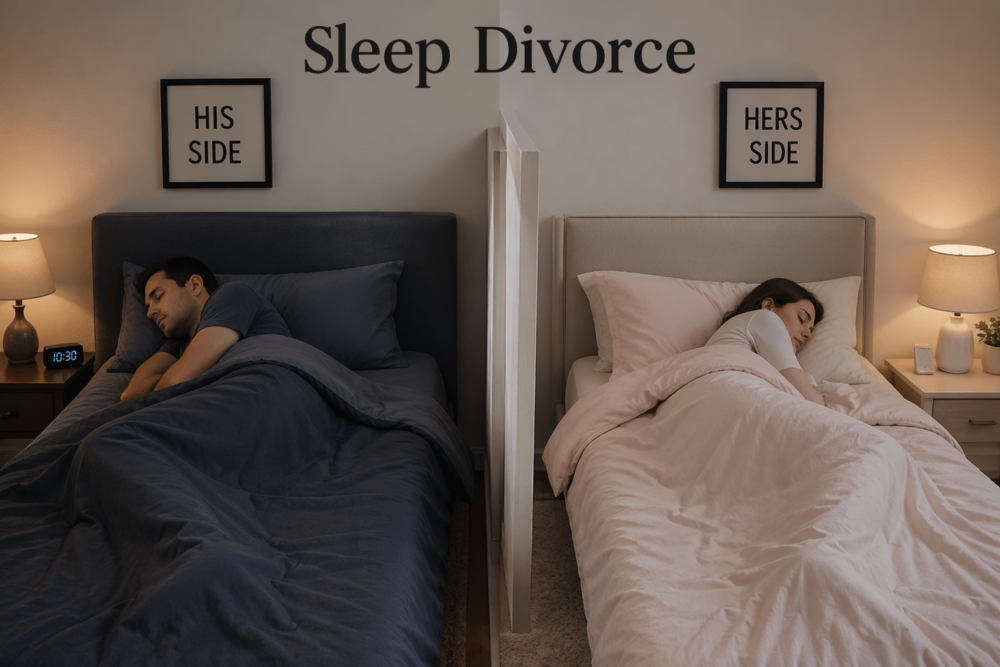
Sleep divorce, the practice of couples deliberately choosing to sleep apart on a regular or permanent basis, is gaining traction in a cultural moment that is increasingly willing to question the assumptions built into romantic partnership. For generations the shared bed has functioned as a symbol of closeness and commitment, so the idea of opting out of it has carried an implicit suggestion that something is wrong. Therapists and sleep researchers are pushing back on that assumption with growing conviction, arguing that for many couples, sleeping apart is not a sign of distance but one of the most intentional investments a relationship can make.
The arrangement is more common than most people realize. Surveys conducted in recent years suggest that a significant and rising proportion of couples sleep separately at least part of the time, and that number appears to be climbing as awareness of sleep health has grown alongside a broader cultural willingness to have honest conversations about what works in relationships versus what simply looks right from the outside.
What poor sleep is actually doing to relationships
The mechanics of how shared sleep affects relationships are worth understanding clearly. A sleep divorce arrangement, when considered honestly, often begins with one or both partners realizing that sleep deprivation is one of the most well-documented drivers of emotional dysregulation, reducing a person’s capacity for empathy, patience, and calm communication. When one partner snores, moves frequently, runs hot, or keeps different hours, the other absorbs the consequences of that incompatibility night after night. Over time the accumulated fatigue changes how both people show up in the relationship, not because they care less but because their nervous systems are depleted.
Research on sleep and relationships consistently finds that people who sleep poorly are less emotionally responsive to their partners, more likely to escalate conflict, and less capable of the kind of repair conversations that keep relationships healthy after disagreements. The irony is that the very proximity meant to signal love can erode the emotional resources that make love feel sustainable.
What sleep divorce does to intimacy and why therapists approve
The most common concern couples raise about sleeping apart is that it will reduce intimacy. Relationship therapists tend to gently challenge that assumption by asking what kind of intimacy is actually being served by a shared bed that neither person is sleeping well in. Physical closeness and emotional warmth are genuinely important, but they do not require unconsciousness to exist. Many couples who transition to separate sleeping arrangements report that the quality of their time together improves because both people are rested, regulated, and genuinely present.
Intentionality becomes the key variable. Couples who sleep apart and still prioritize physical affection, shared routines, and deliberate connection tend to describe the arrangement as strengthening rather than distancing. The bed stops being the default site of togetherness and becomes one of many choices they make about how to be close, which can itself be a meaningful shift in how partners relate to each other.
How to raise the sleep divorce conversation with your partner
Raising the idea of sleeping apart requires care, particularly for partners who may hear it as rejection. Therapists recommend framing the conversation around sleep quality and shared wellbeing rather than around the other person’s habits, making clear that the goal is to show up better for each other rather than to create distance.
Starting with a trial period can reduce the pressure on both sides, giving the arrangement time to demonstrate its effects before either person commits to it as a permanent change. Many couples find that even a few nights of genuinely restorative sleep shifts the emotional tone of the relationship enough to make the case on its own terms. Sleep divorce, it turns out, may have very little to do with divorce and a great deal to do with choosing each other more deliberately.