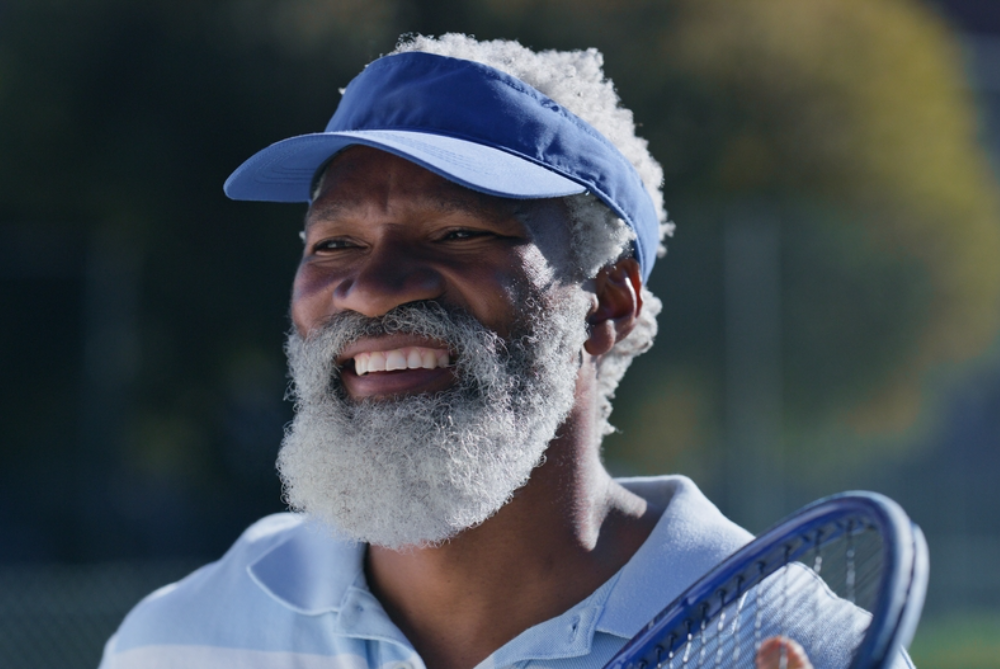
Research shows tennis outperforms every other sport when it comes to living longer
Why tennis keeps winning the longevity race
Of all the ways to stay active as you get older, tennis may be the one worth taking most seriously. Research from the Copenhagen City Heart Study — a long-term observational study that tracked more than 8,500 adults for up to 25 years — found that recreational tennis players outlived sedentary individuals by an average of 9.7 years. That number is not just impressive on its own. It leads every other sport in the study. Swimming extended life expectancy by 3.4 years, jogging by 3.2 years, and badminton by 6.2 years. Tennis came out on top by a significant margin.
Harvard researchers and sports medicine experts have pointed to the same pattern. Tennis blends physical demand with cognitive challenge and consistent social interaction — a combination that few other activities can replicate, and one that appears to be uniquely powerful for long-term health.
Tennis works the body and the brain at the same time
Part of what makes tennis so effective is how much it demands from the body all at once. A single match combines aerobic endurance with repeated bursts of high-intensity movement, lateral footwork, explosive sprinting, and overhead reaching. The full-body nature of the sport means that players are building cardiovascular fitness, muscular strength, and coordination simultaneously.
The cognitive load is equally important. Tennis requires constant tactical thinking — reading an opponent, anticipating shot placement, adjusting strategy mid-rally. Research suggests that this kind of sustained mental engagement may stimulate the formation of new neural connections, supporting brain health well into older age.
Studies have also linked regular tennis participation to lower body fat percentage, reduced risk of cardiovascular disease, and improved bone density — benefits that become increasingly significant for adults over 45.
The social factor most people overlook
One of the most underappreciated reasons tennis promotes longevity is simply that it requires another person. Unlike running, cycling, or lifting weights, the sport is inherently social. Players show up at a scheduled time, interact with an opponent or partner, and often belong to a club or regular group that meets consistently.
That social structure matters more than most people realize. Social isolation has been linked to a 50% increased risk of dementia, and strong community ties are associated with lower rates of depression, anxiety, and early death. For older adults especially, the built-in social component of the sport that provides a reliable remedy to one of the most serious health threats of aging — loneliness.
The sense of belonging that comes from a regular tennis community may be one of the most powerful drivers of the sport’s longevity benefit, one that no solitary workout can replicate.
Tennis is a sport you can actually keep playing
What separates tennis from many high-impact activities is its accessibility across the lifespan. Unlike contact sports or heavy weightlifting, the sport can be adapted and enjoyed from youth well into older age. The intensity is adjustable, the format is flexible, and the barrier to entry remains low relative to the health returns.
For older adults looking for a single activity that addresses physical fitness, mental sharpness, and social connection all at once, tennis offers something close to a complete solution. The research does not suggest you need to play at a high level or log hours every day. Recreational play, pursued consistently, appears to be enough to move the needle in a meaningful way.
For anyone who has been considering picking up a racket — or dusting one off — the evidence makes a compelling case that it is time to get back on the court.