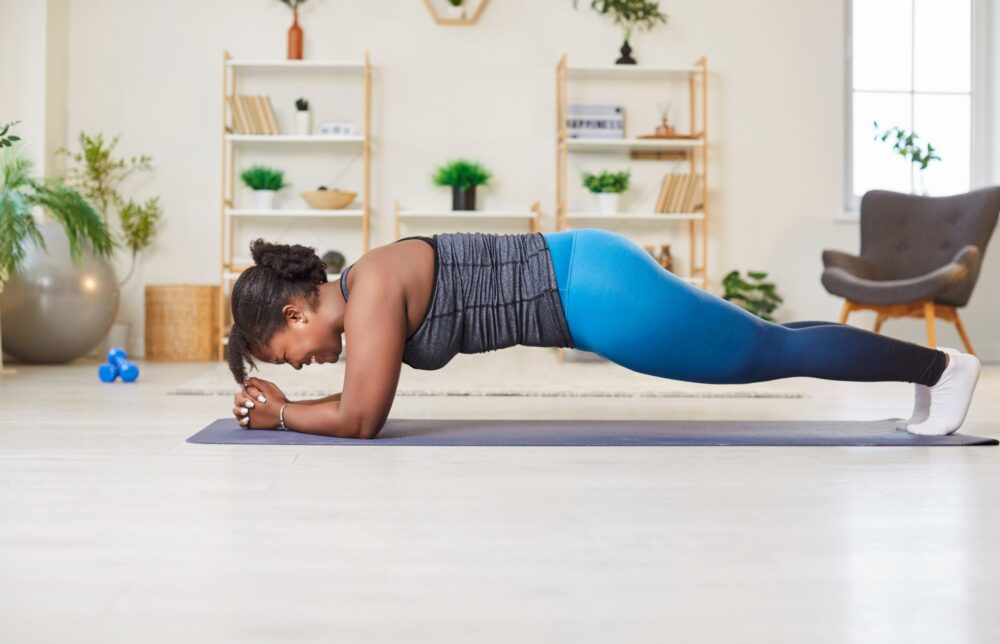
A new study suggests that spending just 10 minutes a day doing specific floor exercises could meaningfully improve how the body moves even without a single squat or step. The Japanese study found that a short, low load routine done lying on the back improved balance, agility and flexibility in just two weeks no equipment needed.
Researchers, including scientists at the Tokyo University of Agriculture and Technology, found that a short, structured routine performed lying flat on the back helped participants improve standing balance, side to side agility and trunk flexibility. The findings were published in April in the peer reviewed journal PLOS One.
The routine was performed daily over two weeks and was specifically designed to connect core stability with lower body coordination two functions that, when working well together, support everyday movement and reduce injury risk.
What the exercises actually involved
The program was built around three core elements, activating the abdominal muscles, performing a bridge like movement to link the trunk and lower limbs, and doing coordination exercises focused on the toes and ankles. All of it was done in a face up, lying down position, a deliberate design choice that the authors noted makes the routine more stable and less physically demanding than standing workouts.
The study included two separate experiments. In the first, 17 healthy young men completed the routine and were compared against a control period. In the second, 22 young adults were evaluated before and after the program using an agility task to measure real world movement changes.
Researchers emphasized that proper technique especially toe and ankle positioning plays a key role in unlocking the intended benefits. They also suggested performing the routine in the morning as a way to activate the body’s coordination and balance systems at the start of the day.
What improved and what didn’t
Not every fitness marker responded to the program. Grip strength, standing long jump distance and 50-meter sprint times showed no significant gains. The improvements were concentrated in movement control and neuromuscular coordination, rather than raw power or explosive ability.
That distinction matters, according to outside experts. Two weeks is simply not long enough to build muscle a point the data confirmed. What changed instead was coordination, which reflects neurological adaptation rather than physical growth.
Weiss also cautioned that some of the short term improvements could be attributed to participants becoming more familiar with the tests themselves, since healthy young adults tend to adapt quickly to new motor tasks.
Still, he acknowledged a real practical value in the approach: performing the routine while lying down removes the risk of falling, making it accessible to people who may be unsteady on their feet. The fact that it requires no equipment adds to its appeal as a low barrier starting point.
Who this is and isn’t for
The researchers were careful to frame their results as early stage evidence. The study had notable limitations: small sample sizes, a short two week window, no control group in the second experiment and participants who were predominantly healthy young men. Whether the results would hold for older adults, or translate into real world outcomes like fewer falls, remains an open question.
The authors said the routine is better understood as a supplemental tool rather than a replacement for a full body fitness program, and they called for further research in older populations and rehabilitation settings.
Anyone with existing injuries or balance issues is encouraged to consult a doctor or physical therapist before attempting the routine. The personal story behind the research
The study also carries a personal dimension. One of its authors, had previously treated for knee and back problems.