How hitting the court with your child does more than build jump shots — it builds futures
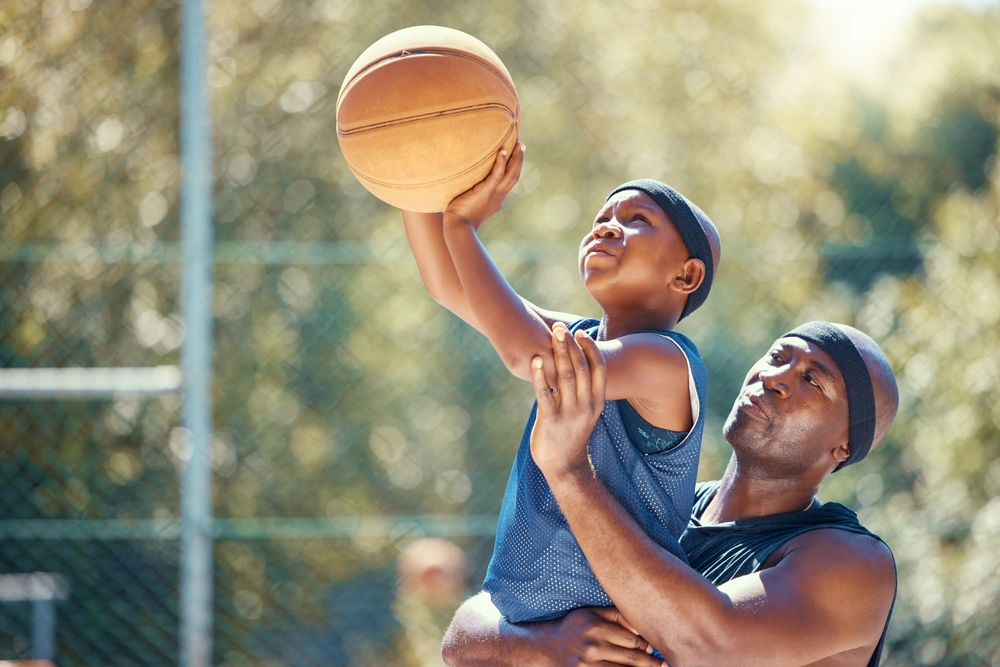
There is a particular kind of magic that happens on an outdoor basketball court when a father lifts his son toward a hoop just out of reach. The child strains. The father steadies. Neither is thinking about calories burned or cardiovascular health. They are simply playing — and that, researchers and coaches say, may be the most powerful fitness intervention available to families today.
The image is iconic, almost universal— a parent and child sharing a ball, sharing a moment, sharing a language that requires no words. But beneath the joy lies a growing body of evidence suggesting that fathers who engage in regular physical play with their children are shaping more than memories. They are shaping bodies, minds, and lifestyles that last a lifetime.
Why the Court Is the Best Classroom
Movement is medicine — that much is well established. But the context of that movement matters enormously. Studies in pediatric health consistently show that children are far more likely to sustain physical activity habits when those habits are modeled and shared by a parent, particularly fathers, who tend to engage in more vigorous, roughhousing-style play.
Basketball, in particular, offers a rare combination of aerobic endurance, coordination, agility, and fast-twitch muscle development — all wrapped in a format that feels like fun rather than a workout. A single hour of recreational play can burn between 400 and 600 calories for an adult, while children benefit from improved motor skills, balance, and spatial awareness.
For the father, the gains are equally compelling. Research from the Journal of Physical Activity and Health found that dads who exercise with their children log more total weekly activity than those who exercise alone — a phenomenon experts call the co-participation effect.
The Father Factor in Childhood Fitness
What makes paternal involvement particularly powerful? Experts point to a few key dynamics
- Fathers typically encourage risk-taking during play, pushing children to try harder, jump higher, and recover from failure — building physical confidence alongside athletic skill.
- Children with active fathers are significantly less likely to be sedentary as teenagers, with one longitudinal study noting a 40 percent reduction in screen time among kids whose dads were consistent play partners.
- The emotional bond formed during physical activity releases oxytocin in both parent and child, reducing stress hormones and creating a positive association with exercise that can last decades.
Fitness Starts With Five Minutes
The barrier to entry is lower than most fathers think. You do not need a gym membership, a trainer, or even a full-sized court. What you need is a ball, some open space, and the willingness to show up — even imperfectly.
Health professionals recommend starting small— ten minutes of shooting around, a short game of one-on-one, or simply passing the ball back and forth. Consistency, they emphasize, matters far more than intensity. A child who sees their father lace up sneakers three times a week internalizes a message about the value of movement that no health class can replicate.
The outdoor setting adds another layer of benefit. Natural light exposure supports vitamin D production and regulates sleep cycles, while the irregular terrain of outdoor courts activates stabilizing muscles that treadmills and gym floors do not reach.
Building a Fatherhood Fitness Routine
The most effective father-child fitness routines share a few common traits. They are regular without being rigid, competitive without being discouraging, and — most critically — they are driven by the child’s enthusiasm as much as the parent’s intention. The goal is never to produce an athlete. The goal is to produce someone who loves to move.
Some families commit to weekend court sessions as a standing tradition. Others weave physical play into everyday life — walking to the park, shooting hoops after dinner, challenging each other to a sprint. The ritual itself becomes the reward.
And on those golden afternoons when a father lifts his child toward a basket they cannot yet reach on their own? That is not just a layup. That is a lesson in what it feels like to be supported — and it lands long after the ball drops through the net.