Core strength influences far more than how a stomach looks. A strong core supports posture, protects the lower back, and improves balance and power in nearly every other movement, from lifting groceries to running a mile, and even from simply standing up out of a chair without strain. Building a strong core does not require endless crunches, just a handful of well chosen exercises performed consistently and with good form.
1. Plank holds build a stable foundation
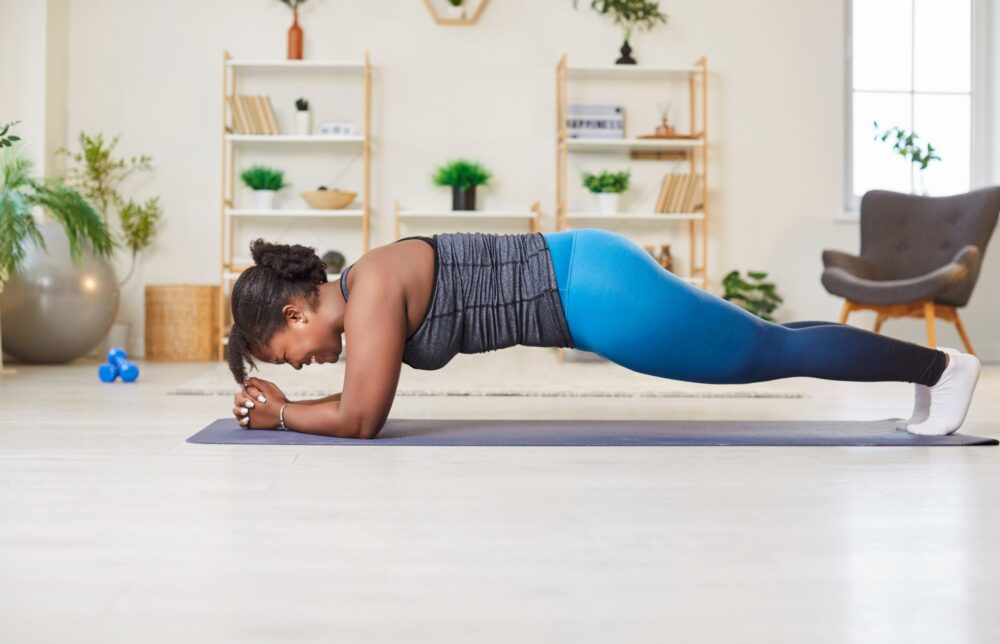
The plank remains one of the most efficient ways to train stability rather than just strength. Starting face down, rise onto the forearms and toes, keeping the body in a straight line from head to heels while bracing the abdominal muscles as if preparing for a light punch. Holding this position for twenty to forty five seconds, without letting the hips sag or rise, trains the deep stabilizing muscles that support the spine throughout daily movement.
2. Dead bugs teach control under motion
Lying on the back with arms reaching toward the ceiling and knees bent at ninety degrees, slowly lower one arm and the opposite leg toward the floor while keeping the lower back pressed down, then return and switch sides. This slow, controlled motion trains the ability to keep the core stable even while the limbs are moving, a skill that carries directly into everyday activity and most other exercises.
3. Bird dogs strengthen the whole trunk
Starting on hands and knees, extend one arm forward and the opposite leg backward at the same time, keeping the hips level and avoiding any twist through the torso. Holding briefly before switching sides builds coordination between the front and back of the core, which supports better posture during long periods of sitting or standing.
4. Russian twists add rotational strength
Sitting with knees bent and torso leaning back slightly, rotate the torso from side to side, tapping the ground beside the hips with both hands together. This rotational movement trains core muscles that a straightforward plank or crunch cannot reach, and rotational strength matters for everything from swinging a golf club to simply turning to grab something off a shelf.
5. Hollow body holds build deep endurance
Lying flat on the back, press the lower back into the floor while lifting the shoulders and legs slightly off the ground, holding the position while breathing steadily. This shape trains endurance in the deep core muscles that keep the spine supported, and even a short daily hold builds noticeable strength over a few weeks.
Putting a routine together
Two or three sessions each week, combining a few of these exercises into a short fifteen minute circuit, is enough to build meaningful strength over time without requiring a gym membership or equipment. Starting with shorter holds and fewer repetitions and gradually increasing duration as strength improves helps avoid strain while still making steady progress.
Good form always matters more than speed or repetition count. Keeping the lower back pressed toward the floor during floor based movements, breathing steadily rather than holding the breath, and stopping before form breaks down all help these exercises build real strength rather than just fatigue. Pairing this kind of core training with regular cardio and a balanced diet rounds out a routine that supports overall fitness rather than isolating a single area of the body.
Progress in core strength tends to show up gradually, often through better posture and less lower back discomfort before any visible change appears in the mirror. Staying consistent, even with short sessions squeezed into a busy week, tends to matter far more than occasional long workouts done only when motivation strikes.