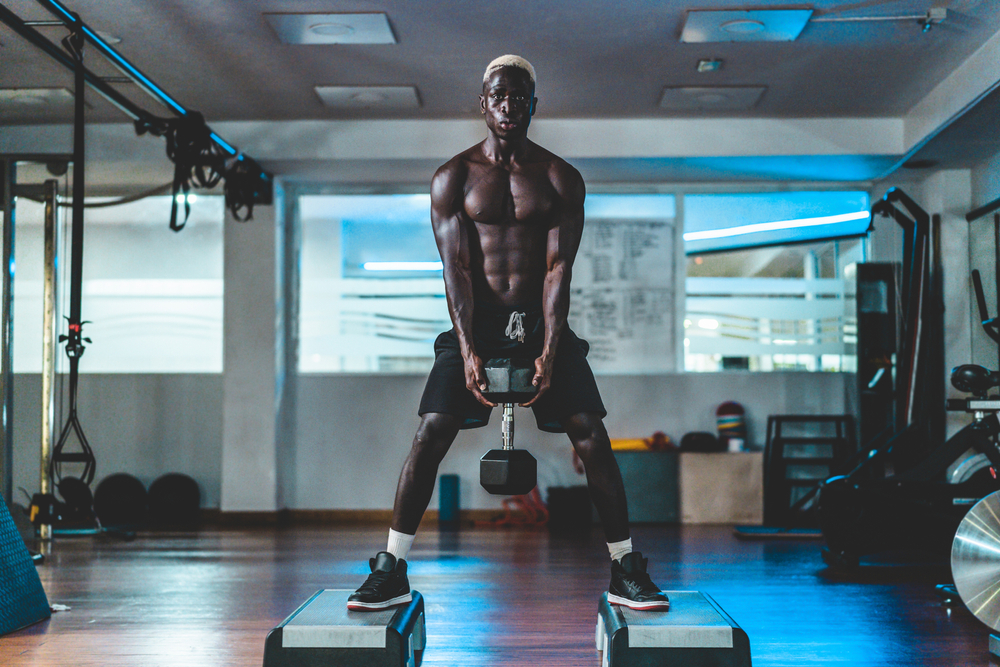
When it comes to building a thicker upper back, few exercises isolate the trapezius muscles as effectively as the dumbbell shrug. It is a simple movement on the surface, but the details matter and most people are getting at least one thing wrong. Done correctly, a few controlled sets will produce a deep burn that travels from the shoulders up into the neck. Done incorrectly, the same movement can waste your effort or leave you nursing an injury.
Dumbbell shrugs is highly effective for targeting the upper trapezius, improving neck and shoulder stability and correcting poor posture. Whether you are chasing a stronger physique or trying to undo the effects of hours spent hunched over a screen, this exercise earns its place in most training programs.
Step by step form guide
Getting the movement right starts before the dumbbells even leave your sides. Here is how to perform a proper dumbbell shrug from start to finish.
Begin by standing tall with your feet shoulder-width apart, holding a dumbbell in each hand at your sides with your palms facing inward. Keep your arms straight, engage your core and maintain a neutral spine with your chest upright. From there, shrug your shoulders directly upward toward your ears no bending at the elbows, no rolling the shoulders forward or back. Pause at the top for one to two seconds to maximize muscle contraction, then lower the dumbbells slowly and under control back to the starting position. Aim for three to four sets of 10 to 15 reps, with 60 to 90 seconds of rest between sets.
If you are new to the movement, start lighter than you think you need to. Smooth, controlled reps will always produce better results than loading up the weight and relying on momentum.
What muscles dumbbell shrugs work
The upper trapezius is the primary target, but several other muscles are engaged throughout the movement. The levator scapulae, located along the side and back of the neck, assists in elevating the shoulder blades and supports neck stability. The middle trapezius and rhomboids do not drive the movement, but they help stabilize the shoulder blades during both the lifting and lowering phases. The forearms and grip muscles also get a meaningful workout from simply holding the dumbbells, particularly during higher-rep sets.
Research supports shrugs as an effective isolation exercise for the upper traps, making them especially useful for hypertrophy-focused training or for anyone looking to improve posture without burning out from heavier compound lifts like deadlifts or rows.
5 benefits worth knowing about
Building thicker, stronger traps is the most obvious payoff, but dumbbell shrugs deliver several additional benefits that make them worth including in a well rounded program.
Posture improvement is one of the more underappreciated benefits. Strengthening the upper traps helps counteract the forward head position and rounded shoulders that often develop from prolonged sitting and screen time a problem that research confirms is widespread.
Better neck and shoulder stability comes with consistent trap training. Stronger traps improve joint integrity and control, which can reduce strain during upper-body lifts and help maintain proper positioning under heavy loads.
Grip strength gains are a natural byproduct of holding heavy dumbbells through multiple sets. Over time, that improved grip carries over to deadlifts, rows and farmer’s carries.
Stronger compound lift performance follows from more powerful traps. Better scapular control translates directly to improved mechanics in pull-ups, rows and overhead movements.
Targeted hypertrophy is achievable without the systemic fatigue that comes from heavier pulling exercises, making shrugs a smart addition to any upper-back or shoulder session.
4 common mistakes to stop making
Rolling the shoulders is the most frequent error. Circling them forward or backward adds unnecessary stress to the shoulder joint and actually reduces activation of the upper traps. The motion should travel straight up and straight down nothing more.
Going too heavy leads to jerky, uncontrolled reps that shift tension away from the traps and increase the risk of wrist and shoulder strain.
Neglecting neck posture Allowing the neck to drift out of alignment during the movement can lead to cervical strain.
Skipping the pause at the top is a missed opportunity. That one-to-two-second hold at peak contraction is what separates a productive rep from one that barely registers in the target muscle.
The principle that applies to almost every resistance exercise applies here too: a weight you can control through a full range of motion will always build more muscle and cause fewer injuries than one that requires momentum to move.