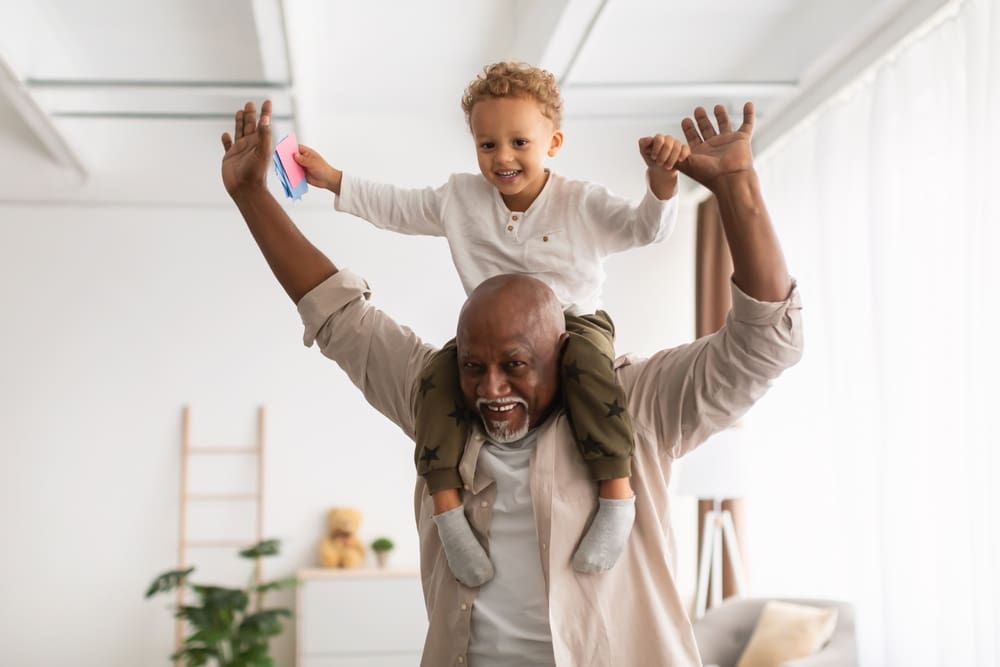
Grandparents may play a far more important role in children’s emotional development than modern family life tends to acknowledge. With a large share of American teenagers reporting ongoing sadness or hopelessness, one child psychologist believes the decline of extended family involvement has quietly contributed to what public health officials have described as an ongoing crisis in youth mental health.
A clinical psychology professor with decades of experience treating families argues that children were never meant to grow up with as little extended family support as many households have today. Drawing on years of clinical work alongside neuroscience and child development research, he makes the case that grandparents can meaningfully help families navigate many of today’s parenting challenges, offering something that busy, isolated households often struggle to provide on their own.
Why a sense of purpose matters for children
According to this research, modern culture has increasingly emphasized individual achievement over community and connection, and that shift may be eroding kindness and emotional closeness in children’s lives. Intense pressure to achieve has been linked to higher rates of anxiety, depression and substance use, particularly in high achieving communities, suggesting that personal accomplishment alone is a fragile foundation for a child’s motivation.
Helping others, by contrast, has been associated with stronger self esteem, lower rates of depression, better school engagement, improved immune function and even longer life expectancy. Encouraging children early on to think about kindness, empathy and other people’s feelings appears to build a deeper sense of meaning, one that may matter just as much as academic performance. Grandparents, with their extra time and patience, are often well positioned to model this kind of thinking in everyday moments that busy parents may struggle to fit into a packed schedule.
How grandparents support emotional health
Beyond the practical help many grandparents already provide, researchers describe their emotional contribution using the idea of small, meaningful moments, brief instances of encouragement, attention and understanding that strengthen a child’s ability to cope with stress over time.
A child’s confidence that someone will listen and understand them appears to be one of the strongest protective factors against the emotional challenges of growing up. What children seem to need most is someone who helps them feel less alone, who shows them that problems can be solved and relationships repaired, and who reminds them that difficult feelings eventually pass. Shared play, genuine enthusiasm for a child’s interests, and simple enjoyable time together all appear to reinforce that sense of security, and grandparents are frequently the ones with the time and willingness to offer exactly that kind of steady presence.
The hidden cost of too much criticism
One of the most common issues showing up in clinical work is not too much praise but too much criticism. Frequent criticism does not appear to motivate children toward greater effort. Instead, it tends to breed resentment and defiance while undermining a child’s initiative altogether.
At the same time, not all praise carries equal value. Drawing on well established research around growth mindset, the recommendation is to praise effort and learning rather than innate ability or talent, since that distinction shapes how children respond to setbacks later in life. A grandparent’s more relaxed, less high stakes relationship with a child can make this kind of encouragement feel more natural and less pressured.
Building confidence through everyday conversation
Raising children inevitably involves managing difficult moments, and one useful approach involves inviting children into collaborative problem solving rather than relying primarily on punishment. Giving kids the chance to reset and try again, rather than facing immediate consequences, tends to build cooperation more effectively over time.
Ultimately, helping children thrive seems to depend less on teaching specific skills and more on consistent conversation, emotional support and a stable sense of confidence. When children feel that foundation, they tend to work harder, recover more quickly from setbacks, show greater kindness toward others and pursue their interests with more enthusiasm. That foundation, many researchers argue, is exactly where grandparents can offer something uniquely valuable, adding a steady presence that reinforces what parents alone cannot always provide.