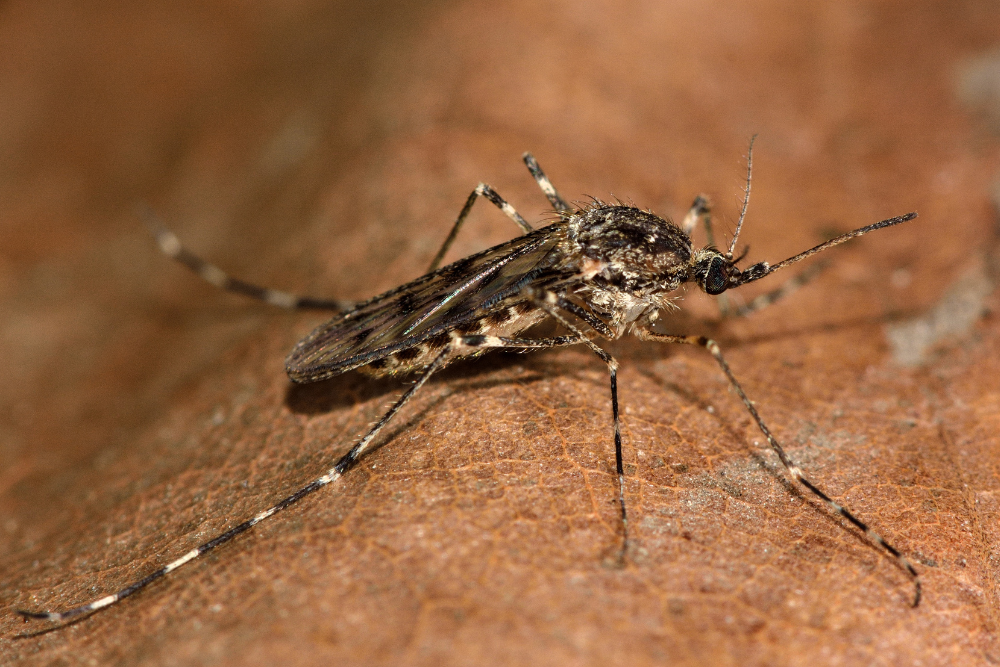
or decades, DEET has been the most trusted name in mosquito repellent. It worked, it was widely available, and the explanation for why was straightforward enough. Mosquitoes found the smell unpleasant, and so they stayed away. A new study out of Virginia Tech suggests that explanation was incomplete, and that at least one mosquito species has been quietly learning to work around it.
The species in question is Aedes aegypti, a mosquito responsible for transmitting yellow fever, dengue, Zika, and chikungunya. It is already one of the more studied insects in public health because of the range of diseases it carries. What researchers found is that it is also capable of something that changes the risk calculation for anyone who relies on DEET as their primary defense.
What the mosquito learned about DEET
The research team used a conditioning method modeled on associative learning, similar in structure to the experiments Ivan Pavlov ran with dogs more than a century ago. Mosquitoes were placed behind a mesh barrier with a warm blood source nearby. Once they began feeding, the smell of DEET was introduced. The process was repeated across multiple sessions.
After enough repetitions, over 60% of the trained mosquitoes attempted to feed when exposed to the smell of DEET alone. The trained mosquitoes moved toward DEET-treated human skin. The untrained mosquitoes avoided it. The difference between the two groups was not biology. It was experience.
That finding reframes how researchers think about DEET. The repellent does not simply mask a human’s scent or make the skin uninviting at a chemical level. The mosquito brain processes the smell, weighs it against prior experience, and makes a decision. When that prior experience includes a successful meal, the repellent can become a cue rather than a deterrent.
Why reapplication matters more than dosage
The practical consequence of this research is about timing. The study’s authors do not suggest abandoning DEET. What they do suggest is that how you apply it matters as much as whether you apply it.
When DEET concentrations fade on the skin or on treated clothing, mosquitoes may encounter a weakened version of the scent at the same moment they manage to feed. Over repeated exposures, that pattern can produce the same learned association the lab experiments demonstrated. A high initial dose that tapers off over several hours may actually create better conditions for conditioning than a moderate dose applied more frequently.
Reapplying at regular intervals keeps concentrations consistent and reduces the window during which mosquitoes can form associations between the fading scent and a meal.
The bigger picture for mosquito control
Clément Vinauger, the Virginia Tech researcher who led the study, has argued for years that understanding mosquito sensory biology is more productive than testing random substances for repellent properties. This research supports that position. If mosquitoes can learn, then any repellent strategy built solely on chemical avoidance has a ceiling.
The World Health Organization estimates that mosquito-borne diseases affect hundreds of millions of people annually, with the burden concentrated in tropical and subtropical regions. There are more than 200 mosquito species in the United States alone, and as global temperatures shift, the range of disease-carrying species is expanding.
DEET remains the standard. It works. But the conditions under which it works are narrower than the label implies, and Aedes aegypti has had longer to figure that out than most people realize.