For many Black Americans navigating an especially heavy emotional season, a licensed psychologist says the most transformative step forward may not be found in self help it may be found in each other, a collective weight that keeps growing.
Mental Health Awareness Month arrives this May against a backdrop of compounding grief. From ongoing conversations around racial violence to the recent gutting of the Voting Rights Act, Black communities across the country are absorbing blow after blow with little room to breathe.
Dr. Raquel Martin, a licensed psychologist and professor based in Nashville, Tennessee, says the cumulative toll is undeniable. April alone was particularly painful, she noted, marked by a relentless cycle of headlines detailing Black femicide that left both Black women and the men who love them feeling devastated and powerless.
For many, the weight isn’t just emotional it’s existential.
More than half of Black adults never seek therapy
The numbers paint a sobering picture. Roughly one in five Black Americans experiences mental illness, yet more than half of Black adults who may benefit from therapy never pursue it. Systemic barriers to care remain deeply entrenched, but Dr. Martin points to another gap that often goes unaddressed: the absence of genuine community.
This year, the National Alliance on Mental Illness chose community as the central theme of Mental Health Awareness Month, recognizing it as an essential source of support and empowerment a decision that aligns closely with what Dr. Martin has been advocating for years.
Therapy, she emphasizes, does not hold a monopoly on healing. Whether someone finds their path through spirituality, professional counseling, or civic engagement, she believes that path will always be lined with other people.
Why isolation makes everything harder
For Black Americans, the daily performance of code-switching and masking adjusting one’s identity, language, and behavior to navigate predominantly white spaces can be quietly exhausting. Even the most disciplined wellness routines can fall short when there is no safe space to simply exist without editing yourself.
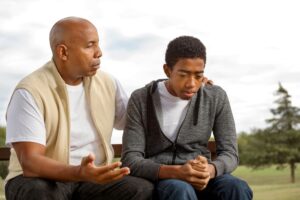
Dr. Martin describes isolation as one of the most corrosive forces in Black mental health, compounding pain by making people feel not only that they are struggling, but that they are struggling alone. When that isolation breaks when someone finally steps into a room full of people who genuinely understand something shifts in the body and the mind.
In spaces built with the Black experience at the center, the full weight of microaggressions, overt racism, and grief over current events can be spoken out loud, acknowledged, and shared. That shared recognition, she says, creates a foundation stable enough to actually begin processing difficult emotions.
Community doesn’t have to look one specific way
Dr. Martin is deliberate in pointing out that community is not a one size fits all concept. It can be found in a church pew, at an NAACP chapter meeting, inside a book club, on a tennis court, or at an Urban League event. It can begin as simply as showing up to a class aligned with your interests and being open to the people you meet there.
The goal is connection with those who share a common mindset or curiosity because within that connection, people gain not only belonging but access to the knowledge, skills, and care of everyone around them.
Social media, when approached with the same discernment one would apply to protecting sensitive personal information, can also be a meaningful entry point. Dr. Martin, who has built a substantial platform through social media and her podcast, sees digital community as especially valuable for Black Americans who face geographic or financial barriers to in-person care.
Activism as a mental health prescription
Offline, Dr. Martin prescribes activism with the same seriousness she prescribes coping skills. For those experiencing hopelessness and a loss of agency feelings she says are widespread right now organizing alongside others or joining movements already doing meaningful work can restore a critical sense of power.
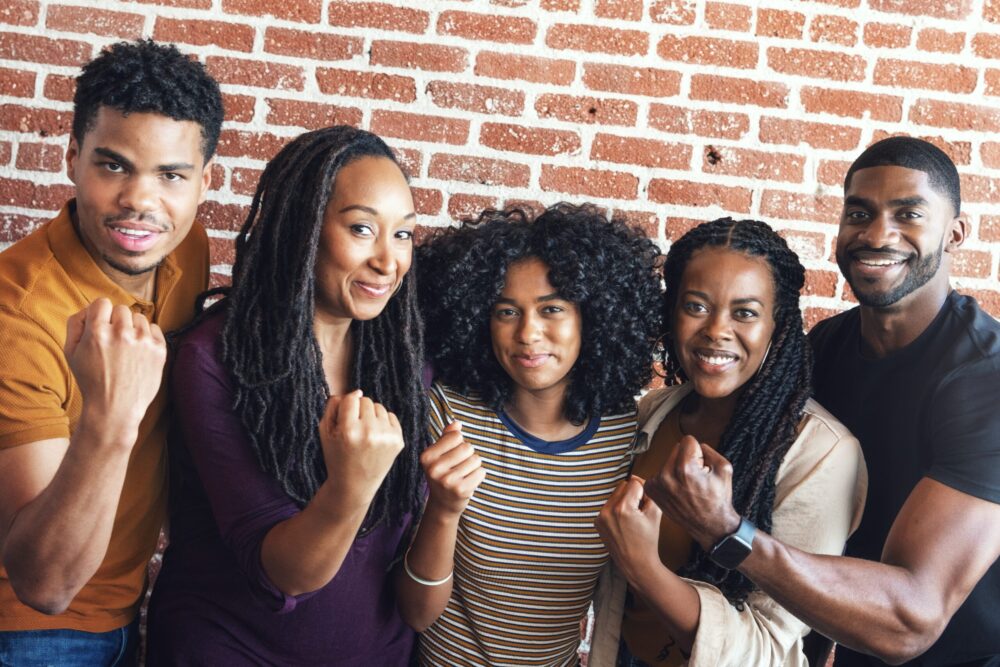
Beyond the processing of pain, community also becomes a source of joy. It is where people feel free enough to be fully themselves, where friendships deepen into chosen family, and where unexpected doors open a connection at a sporting event who becomes a trusted presence in your child’s life, or someone who helps you see your own worth more clearly.
Dr. Martin roots her advocacy in a foundational truth about Black culture: it is, at its core, collectivist. And in a moment when systems continue to fail, that collective bond remains one of the most enduring resources Black Americans have always had.