Hair loss affects women across every decade of life, yet it remains one of the most misunderstood and undertreated conditions in women’s health. The causes are not singular. They are layered, shifting with age, hormonal status, genetics, and overall metabolic health in ways that make a one-size-fits-all explanation not just incomplete but potentially misleading. Understanding why hair falls out requires looking at what happens inside the follicle itself, and how the body’s hormonal landscape shapes that process from adolescence onward.
How hormones first shape the follicle
Hair growth follows a cyclical pattern divided into three phases: active growth, a brief transitional period, and a resting phase before the hair sheds. Disruptions at any point in this cycle can lead to noticeable thinning or shedding. During puberty, rising androgen levels transform fine, barely visible hairs into the coarser, pigmented strands that grow in hormonally sensitive areas of the body. In some adolescents, those same androgens begin affecting scalp follicles in ways that can trigger early pattern hair loss, a condition more commonly associated with adulthood.
Hair loss through pregnancy and the postpartum period
Pregnancy creates a temporary hormonal environment that actually benefits hair. Elevated estrogen and progesterone extend the active growth phase, reducing shedding and giving many women the experience of noticeably fuller hair. That effect reverses sharply after delivery. As hormone levels drop, a significant portion of follicles shift simultaneously into the resting phase, leading to the sudden shedding many new mothers notice between two and five months postpartum. This pattern is well recognized, generally self-limiting, and tied directly to the hormonal withdrawal that follows childbirth rather than any underlying disease.
Adulthood and the slow progression of hair loss
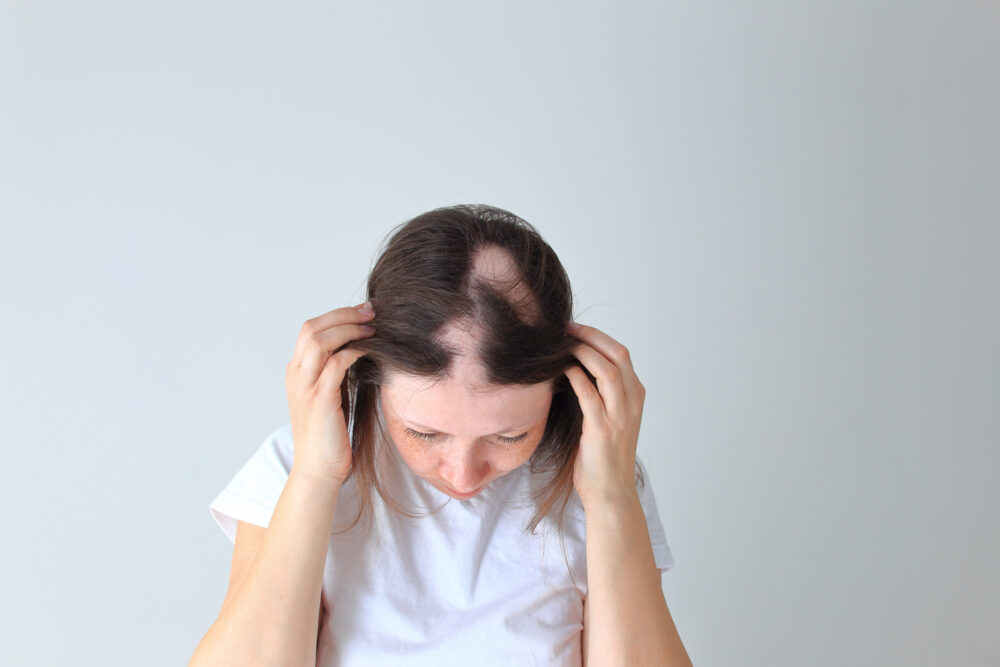
Female pattern hair loss is the most common hair loss condition affecting women globally and can begin as early as the teenage years, though it becomes more prevalent with age. The mechanism involves the gradual miniaturization of hair follicles, which produce progressively thinner and shorter strands over time until they can no longer sustain visible hair growth. The condition tends to present as diffuse thinning across the top and front of the scalp rather than the receding hairline more typical in men.
The role of androgens in this process is established but nuanced. Some women develop the condition without elevated androgen levels at all, suggesting that genetic susceptibility and other biological pathways contribute independently. Conditions including polycystic ovarian syndrome, insulin resistance, and obesity appear to increase risk in some patients, while emerging research points to signaling pathways involved in follicle regeneration and stem cell activity as additional factors. Treatment approaches range from topical therapies that stimulate follicle activity to oral medications that interfere with androgen pathways, with treatment selection guided by the individual patient’s hormonal profile and reproductive considerations.
Hair loss Menopause and the shifting hormonal ratio
Menopause brings another significant hormonal transition that affects up to half of all women in the form of hair thinning, reduced volume, and texture changes. The primary driver is the steep decline in estrogen, which normally supports the active growth phase of the hair cycle by promoting cell proliferation and ensuring the follicle receives adequate nutrients. As estrogen falls, the growth phase shortens and shedding increases.
What compounds the picture during menopause is not just the loss of estrogen but the resulting shift in the ratio between estrogen and androgen levels. Even as total androgen production declines with age, the relative influence of androgens on follicles increases when estrogen is no longer present to counterbalance them. Additional factors including reduced scalp circulation, oxidative stress, and changes in nutrient availability further compromise follicle health during this period. Hormone-based therapies can stabilize some of these changes in certain patients, though evidence specifically supporting improvement in scalp hair remains limited. Topical treatments continue to serve as a widely used option for extending the growth phase and slowing further thinning.
Recognizing hair loss as a lifelong and layered condition
Hair loss in women is not a single condition with a single cause. It is a reflection of the body’s hormonal architecture at each stage of life, shaped by genetics, metabolism, and the cumulative effects of biological change. Recognizing that complexity is the first step toward more personalized and effective care across a woman’s lifetime.