Most young adults already know the drill when it comes to taking care of themselves therapy for mental health, cardio and strength training for the body, a balanced diet for the heart. But there is one part of the body that rarely makes the list: the ears. that oversight can come with lasting consequences.
There are small, entirely preventable measures young people could be taking that would protect them from permanent hearing loss and tinnitus, a condition marked by persistent ringing in the ears.
Some degree of hearing loss does come naturally with age. Changes in the inner and middle ear, as well as along the neural pathways between the ear and the brain, can all contribute to what is known as presbycusis, or age related hearing loss. Genetics, conditions like high blood pressure and diabetes, and certain medications including some used in chemotherapy can also play a role, according to the National Institutes of Health.
While age-related hearing loss remains difficult to prevent, noise-induced hearing loss is a different story. An estimated 17% of adults between the ages of 20 and 69 have already sustained permanent hearing damage from excessive noise exposure, per the Centers for Disease Control and Prevention.
The consequences go beyond the ears. Research has linked poor hearing to worse cognitive functioning, and a 2022 study of more than 168,000 participants identified hearing impairment as the single greatest modifiable risk factor for dementia a correlation worth taking seriously even if causation has not been established.
Here are 4 steps to start protecting your hearing today.
Wear ear protection in loud environments
Hearing protection is not just for construction workers. Whether attending a music festival, riding a motorcycle, or mowing the lawn, earplugs can make a meaningful difference. Without them, even a single loud event can trigger temporary tinnitus or a short-term shift in hearing thresholds that shows up on a hearing test right after exposure.
Sporting events can cause hearing damage in as little as 15 minutes, and nightclubs or concerts can harm the ears in just five minutes. The louder the environment and the longer the exposure, the greater the risk.
For music lovers concerned about sound quality, specialized earplugs designed for concerts such as those from brands like Loop and Eargasm allow music to come through clearly at a lower, safer volume. Standard foam earplugs from the hardware store work well in other loud settings, provided they are inserted correctly, roll the plug thin between your fingers, pull the top of the ear up to straighten the canal, and push the plug in as far as is comfortable.
Use a decibel meter app
Before assuming a space is safe for your ears, consider downloading a decibel meter app. Decibel X to measure the actual sound level around you. Apple Watch users can also enable Environmental Sound Levels within the Health app to track noise exposure over time.
The CDC advises keeping ambient noise below 70 decibels to avoid long term hearing damage. Having a real-time reading makes it easier to know when to reach for earplugs.
Stop using cotton swabs in your ears
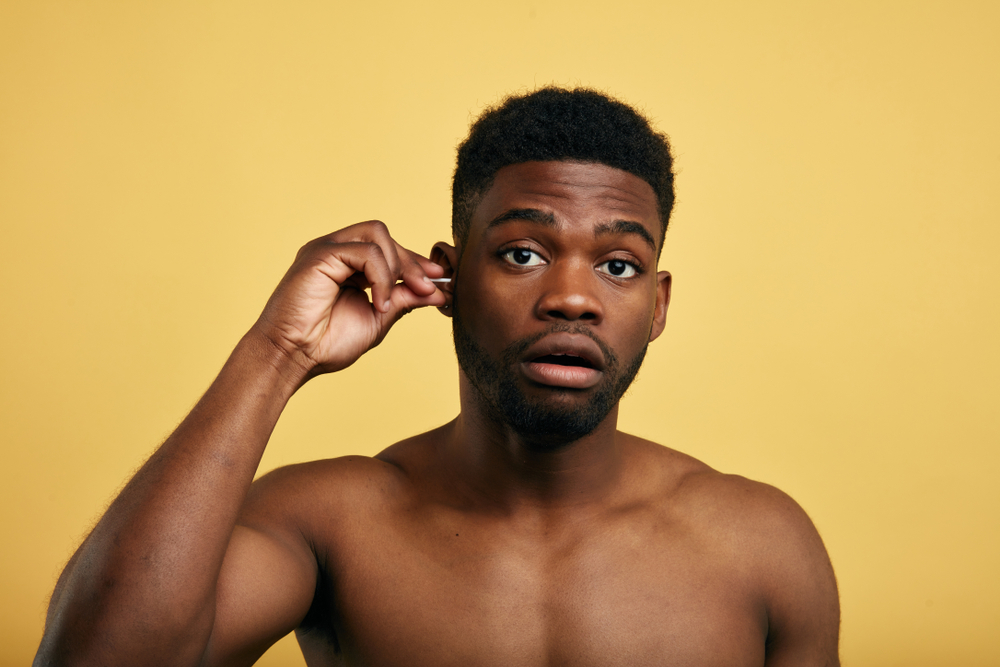
It feels like basic hygiene, but using cotton swabs inside the ear canal is one of the most common mistakes people make. The ear is actually self cleaning the skin inside the canal is uniquely designed to move and push debris outward on its own.
Inserting a swab does not clean the canal, it pushes wax deeper in. Over time, this can cause a buildup of impacted wax that temporarily blocks the canal and reduces hearing. Ear wax itself serves important functions: it keeps skin hydrated, protects the eardrum, prevents itching, and acts as a natural antimicrobial barrier.
If wax is visible at the outer edge of the canal, it is generally safe to gently wipe it away with a tissue wrapped around a finger without going deeper. For anything beyond that, a visit to an audiologist is the right move.
Schedule regular hearing checkups
Hearing exams are rarely part of a standard wellness routine, but they should be. The American Speech Language Hearing Association recommends adults get a hearing screening once every decade, increasing to every three years after age 50 or more frequently for those with known risk factors.
Anyone experiencing signs of hearing trouble difficulty following conversations, ringing in the ears, a noticeable difference between how each ear hears, or frequent dizziness should see an audiologist regardless of age. The same applies to people who regularly attend loud events or have noisy hobbies.
An audiologist can also fit patients with custom earplugs that offer a more comfortable, better-sealing alternative to store bought versions a worthwhile investment for anyone serious about long-term ear health.