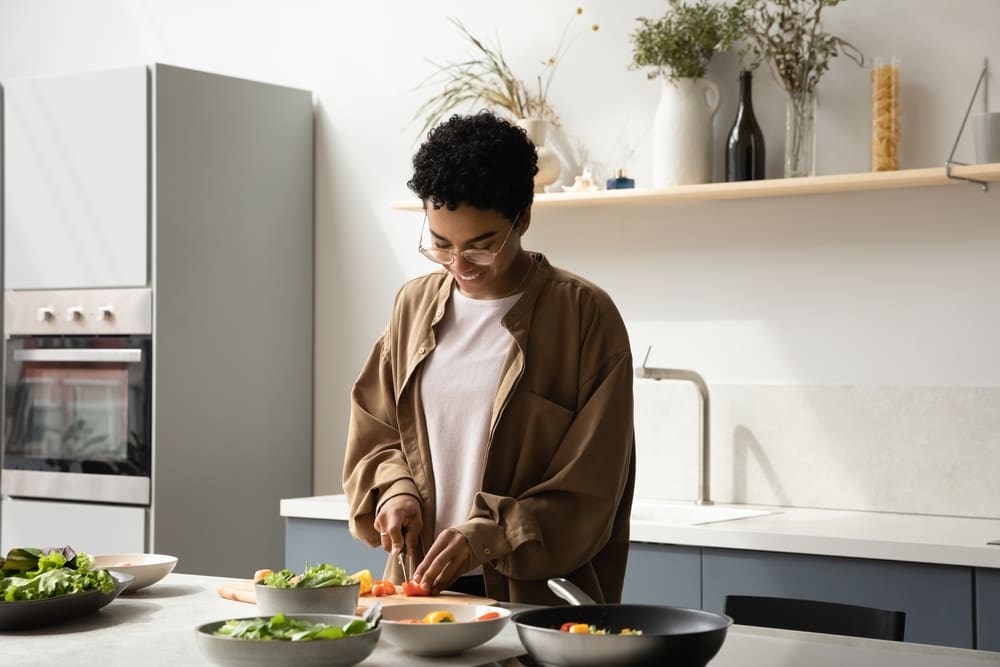
Most people who want to be cooking more at home are not held back by a lack of recipes. They are held back by not knowing where to begin. Monique Richard, a registered dietitian nutritionist and owner of Nutrition-In-Sight, works with clients at exactly that starting point, and her advice is more accessible than most people expect.
Start with what you can already do
Richard’s approach begins with an honest inventory of existing skills rather than an ambitious list of new ones. Her method involves identifying the simplest things a person already knows how to do in a kitchen and building outward from there. Someone who can boil water has a foundation to work from. That foundation expands through repetition and small additions, not through attempting complicated techniques before the basics feel comfortable.
Working with a registered dietitian nutritionist can accelerate that process, particularly for people managing chronic conditions, dealing with decreased appetite, or navigating specific dietary needs. A professional can shape a plan around what a person actually enjoys eating, which makes consistency far more likely than a generic meal plan would.
Build a short list of repeatable meals
One of the most practical pieces of advice Richard offers is to develop a small rotation of simple meals that can be made once or twice a week without much thought. Sheet pan vegetables paired with a protein like salmon, cod or tilapia require minimal preparation and very little active cooking time. A vegetable and protein stir-fry follows the same logic. An omelet or egg scramble loaded with vegetables and herbs, served alongside whole grains, covers breakfast or a light dinner with one pan.
The goal is not variety in the early stages. It is comfort and repetition. Once a handful of dishes feel automatic, adding new ones becomes much less daunting.
Use shortcuts without apology
Home cooking does not require building every meal from scratch, and Richard is direct about that. Pre-chopped vegetables, frozen produce, rotisserie chicken and canned beans are all legitimate tools for reducing the time and effort involved in getting a meal on the table. Frozen produce in particular retains its nutritional value well, making it a practical substitute for fresh ingredients on busy days.
Some meals do not require any cooking at all. A yogurt parfait with frozen berries and nuts, a bowl of cereal with fresh fruit, or a smoothie made with frozen fruit and protein powder can all serve as nutritious options that take minutes to prepare. Removing the expectation that a home-cooked meal must involve heat or significant effort makes it easier to maintain the habit on the days when energy is low.
It is never too late to develop new skills
Richard points to online cooking videos, community extension programs and local culinary classes as accessible ways to build knowledge at any age. Cooking is one of the few activities that simultaneously engages the mind, develops a practical skill and produces a direct benefit to physical health. The financial savings of eating at home add up quickly as well.
The barrier most people face is not ability. It is the belief that they need to be further along before they start. Richard’s message to those clients is consistent: begin with what you have, repeat it until it feels easy, and expand from there. The kitchen becomes less intimidating the more time you spend in it.