First aid is the immediate care provided to someone experiencing a medical emergency before professional help arrives. Its purpose is to stabilize the person’s condition, reduce pain and injury, prevent infection, and in serious situations, preserve life. The window between an emergency occurring and medical professionals taking over is often where outcomes are determined, and the actions taken during that window matter more than most people realize.
The ABC framework
Every first aid response starts with the same three priorities, known as ABC. The first is airway, ensuring the person’s airway is open and clearing it if not, either by repositioning the head or removing an obstruction. The second is breathing, checking whether the person is breathing and initiating CPR if they are not. The third is circulation, monitoring the pulse and signs of a heartbeat and continuing CPR if necessary. This sequence applies across most emergency scenarios and provides a structured starting point when the situation feels overwhelming.
Controlling severe bleeding
The immediate goal with serious bleeding is to slow and stop it. Before touching any wound, gloves should be worn to reduce infection risk for both the injured person and the person helping. Visible debris near the wound can be carefully removed, though aggressive cleaning should be avoided. Firm, steady pressure applied with a clean cloth and maintained until bleeding slows is the most effective approach. Having the injured person lie down reduces the risk of fainting and helps direct blood flow to vital organs.
Responding to choking
When someone is choking, the first step is to encourage them to cough, which can sometimes dislodge the obstruction on its own. If coughing does not clear the airway, abdominal thrusts, sometimes called the Heimlich maneuver, are the next step, with chest compressions used as an alternative for infants or people for whom abdominal thrusts are not appropriate. Firm back blows between the shoulder blades can also help move a blockage. These measures continue until the obstruction clears or professional help takes over.
Heart attack response
Recognizing a heart attack and acting quickly significantly improves survival outcomes. If the person is conscious and not allergic, aspirin helps reduce clotting. Nitroglycerin can be administered if it has been previously prescribed by a healthcare provider. If the person stops breathing, CPR should be started immediately. Monitoring pulse and breathing while waiting for emergency services is important throughout.
Eye emergencies and poisoning
Chemical exposure to the eye requires immediate flushing with clean water, followed by prompt medical attention. Objects lodged in the eye should not be removed by a bystander, and the eye should not be bandaged. A cold compress without pressure can provide some relief while waiting for professional care.
With suspected poisoning, assessing the person’s condition and identifying the substance if possible helps emergency responders act faster. The person should be moved away from the source of the toxic material. CPR is appropriate if breathing has stopped and the responder is trained to perform it. Inducing vomiting should not be attempted without direct guidance from a medical professional, as it can cause additional harm depending on the substance involved.
What belongs in a first aid kit
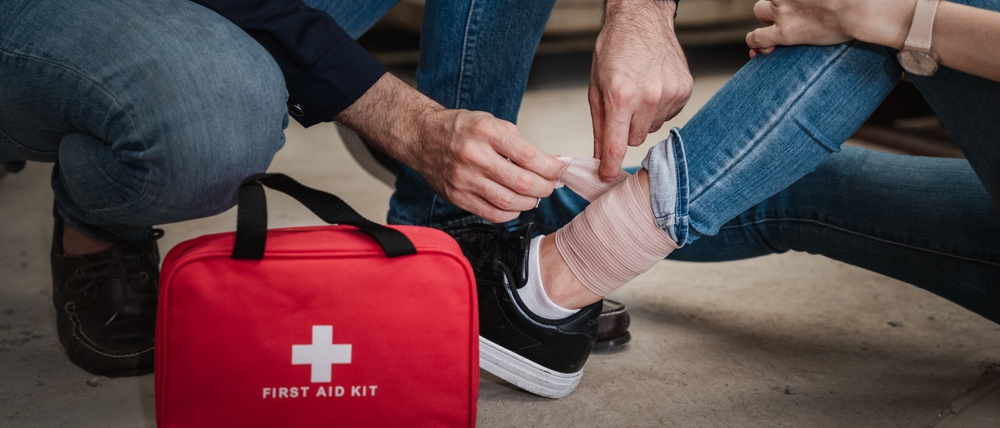
A well-stocked kit should be kept at home and ideally in vehicles and workplaces. The essentials include plasters in multiple sizes, sterile dressings, sterile eye dressings, antiseptic solution, sterile gloves, paracetamol, a thermometer, alcohol wipes, anti-inflammatory cream, aspirin, and a basic first aid reference guide. Inhalers for people with known respiratory conditions are also a useful addition where relevant.
Keeping the kit stocked and knowing where it is before anything goes wrong is as important as what is inside it.
Training makes the difference
Reading about first aid and being trained to deliver it are not the same thing. Formal first aid training builds the muscle memory and decision-making speed that reading alone does not. Many organizations offer accessible courses that cover the core scenarios. For the situations most likely to arise in daily life, that preparation is among the most practically valuable investments a person can make.