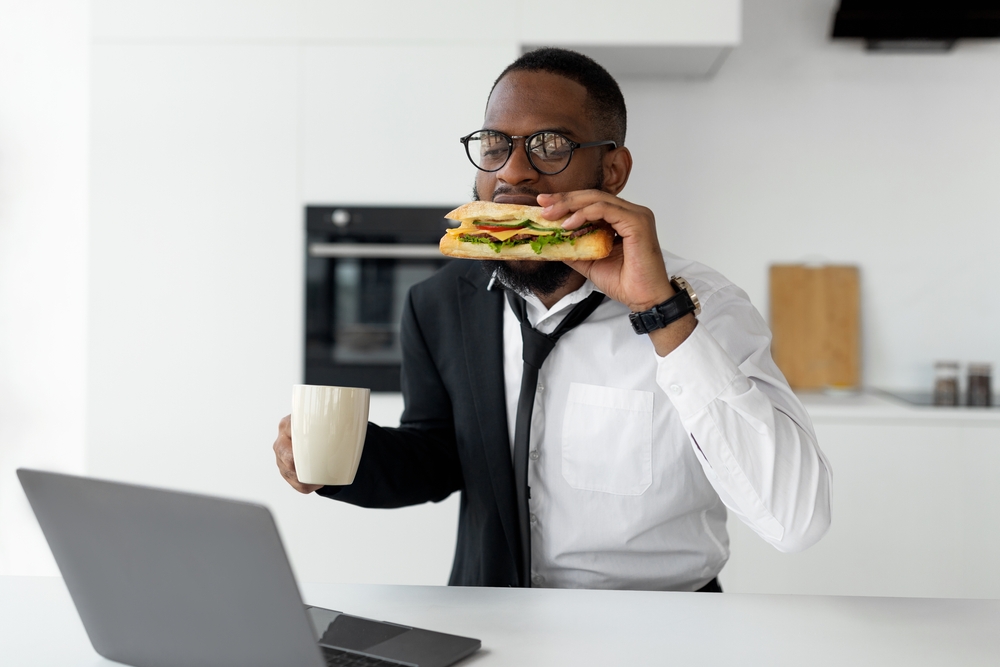
That rushed sandwich in front of a glowing screen feels harmless — but the daily habit of distracted eating is quietly taking a serious toll on your body and mind.
The laptop is open. The emails are piling up. The sandwich is half-gone, the coffee is going cold, and lunch just became a five-minute afterthought squeezed between back-to-back obligations. Sound familiar? For millions of working professionals, this is not an occasional slip — it is the daily routine.
Eating at the desk has become so normalized that most people do not even register it as a problem. It feels productive. It feels necessary. But the reality is that eating while distracted, rushed, and stressed is one of the quietest threats to long-term health — and the consequences compound silently over months and years.
What Eating at Your Desk Does to the Body
The body was not designed to digest food while under cognitive and emotional stress. When the brain is locked onto a screen and the nervous system is in work mode, the digestive process is actively compromised. Blood flow prioritizes the brain and muscles — not the gut — which means nutrients are absorbed less efficiently and discomfort becomes the norm.
Here is what happens physically when meals are consistently spent at a desk
- Bloating and indigestion — rushed eating introduces excess air and reduces digestive enzyme activity
- Overeating — distracted eaters consume significantly more calories because the brain never registers fullness properly
- Poor nutrient absorption — stress hormones interfere with the gut’s ability to process vitamins and minerals
- Increased cortisol — eating in a stressed state elevates the body’s primary stress hormone
- Weakened gut microbiome — chronic stress disrupts the bacterial balance essential for immunity and mood
None of these effects are dramatic in isolation. Together, over time, they quietly chip away at health in ways that are easy to blame on everything except the lunch break that never actually happened.
The Hidden Cost of Eating Through the Workday
Physical digestion is only half the story. The mental and emotional cost of never truly stepping away from work — even to eat — is a health issue that professionals consistently underestimate.
Meal breaks are not just about food. They are about mental recovery. The brain needs regular intervals of disengagement to maintain focus, regulate mood, and sustain creative thinking throughout the day. Skipping a real lunch break does not make the afternoon more productive — it makes it slower, flatter, and more error-prone.
Chronic desk eating is also closely linked to
- Higher rates of workplace burnout
- Elevated anxiety and irritability by end of day
- Disrupted sleep patterns from poor digestion at night
- Reduced motivation and lower overall job satisfaction
- Long-term weight gain from habitual mindless eating
The desk is for working. When it also becomes the dining table, the bedroom, and the only place a person spends their waking hours — something essential gets lost.
Smarter Eating Habits That Protect Your Health
Fixing this does not require a radical lifestyle change. It requires treating mealtime as non-negotiable — a protected window in the day that belongs to the body, not the inbox.
Practical shifts that make a measurable difference
- Step away from the screen entirely — even ten minutes of screen-free eating resets the nervous system
- Eat slowly and chew thoroughly — digestion begins in the mouth; rushing it creates problems downstream
- Go outside if possible — natural light and fresh air during a meal break amplify recovery
- Avoid checking the phone — scrolling during meals is just desk eating with a different device
- Schedule lunch like a meeting — block the time, protect it, and treat canceling it as a last resort
Professionals who take real meal breaks report better afternoon focus, improved mood, and stronger overall health — not despite stepping away from work, but because of it.
Your Desk Will Still Be There After Lunch
The emails are not going anywhere. The deadlines will still exist in thirty minutes. But the body only gets one chance to properly process each meal — and what happens in that window shapes energy levels, gut health, mental clarity, and long-term vitality in ways that no productivity hack can compensate for.
Put the sandwich down. Close the laptop. Step away — even briefly — and commit to eating like it matters. Because it absolutely does.