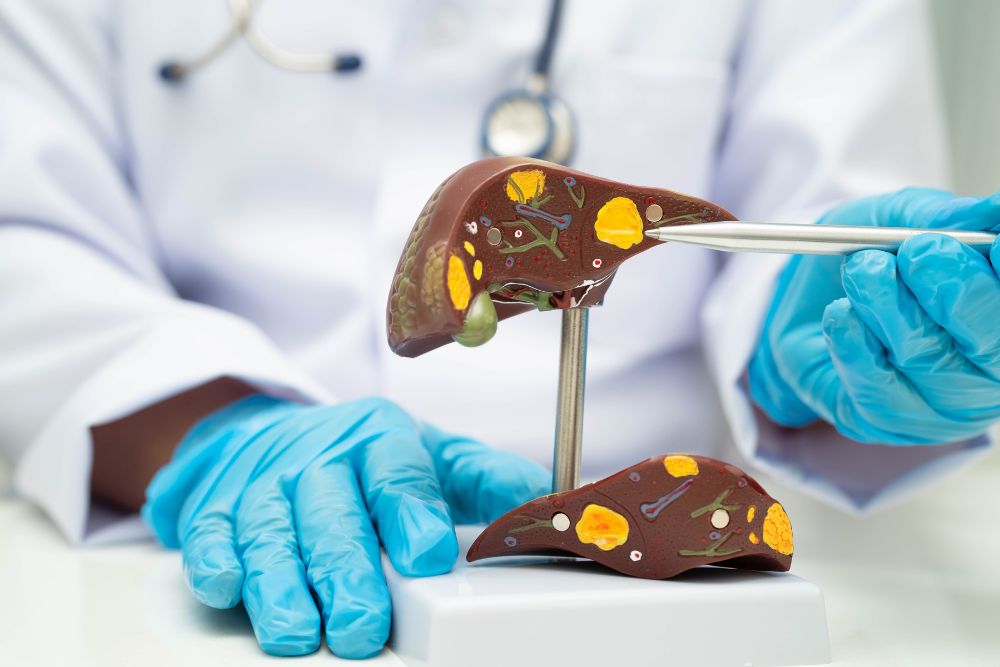
Liver cancer diagnosis doesn’t come with a single treatment path. What a patient receives depends on several converging factors — how far the disease has progressed, the size and number of tumors, and how well the liver itself is functioning. Two patients with the same diagnosis can end up with entirely different treatment plans, and both can be medically appropriate.
Treatment decisions are typically made by a multidisciplinary team that includes surgeons, oncologists, hepatologists, and radiologists reviewing the case together. The goal at each stage is different. Early-stage treatment aims to eliminate the cancer. Later-stage treatment aims to slow it, manage symptoms, and protect quality of life.
Curative treatments for early-stage liver cancer
When liver cancer is caught early and the disease is contained, surgery offers the most direct path to eliminating it. A hepatectomy, which involves surgically removing the portion of the liver containing the tumor, is the preferred option when the tumor is localized and the rest of the liver is functioning well enough to compensate after resection. The liver’s capacity to regenerate makes partial removal viable in ways that wouldn’t be possible with other organs.
A liver transplant is considered when tumors are small but the surrounding liver tissue is heavily scarred from cirrhosis. Replacing the entire liver removes both the cancer and the damaged tissue it developed in, which addresses two problems simultaneously. Transplant candidates are evaluated against specific criteria, and organ availability affects timing.
Ablation therapy offers a third option for patients who aren’t surgical candidates. Procedures using radiofrequency or microwave energy apply concentrated heat to destroy tumor tissue without removing it. Cryoablation works on the same principle but uses extreme cold instead. These are minimally invasive and can be effective for smaller tumors in accessible locations.
Treatments for locally advanced liver cancer
When the cancer has grown beyond what surgery can address but hasn’t spread to distant organs, tumor-directed procedures become the primary approach. Transarterial chemoembolization, known as TACE, targets the blood supply feeding the tumor. By blocking that supply and delivering chemotherapy directly to the site, TACE works to starve the tumor while limiting systemic exposure to the drug.
Radiation therapy is another option at this stage. High-energy beams directed at the tumor can kill cancer cells or reduce tumor size. Radioembolization, a form of internal radiation, delivers radioactive particles through the bloodstream to reach the tumor from within. Both approaches aim to control local disease progression rather than cure it outright.
Systemic treatments for advanced liver cancer
When liver cancer has spread or can no longer be managed locally, systemic therapies enter the picture. Targeted therapy medications like Sorafenib and Lenvatinib work by blocking the specific proteins and blood vessel growth that liver cancer depends on to spread. They don’t eliminate the cancer, but they can significantly slow its progression.
Immunotherapy takes a different approach. Drugs like Atezolizumab and Pembrolizumab work by stimulating the immune system to identify and attack cancer cells. Immunotherapy has become an increasingly significant part of advanced liver cancer treatment over the past decade, with several regimens now included in standard oncology guidelines.
Palliative care as part of liver cancer treatment
Palliative care is not a last resort. It is specialized medical support focused on managing symptoms, reducing treatment side effects, and maintaining quality of life. It can run alongside curative or disease-controlling treatments at any stage, and research has consistently shown that patients who receive it early report better outcomes and greater comfort throughout treatment.
Every liver cancer case is different. The National Cancer Institute and major oncology centers including UT MD Anderson, Mayo Clinic, and the Cleveland Clinic all maintain detailed treatment guidance. A hepatologist or oncology specialist remains the most reliable source for decisions specific to an individual diagnosis.