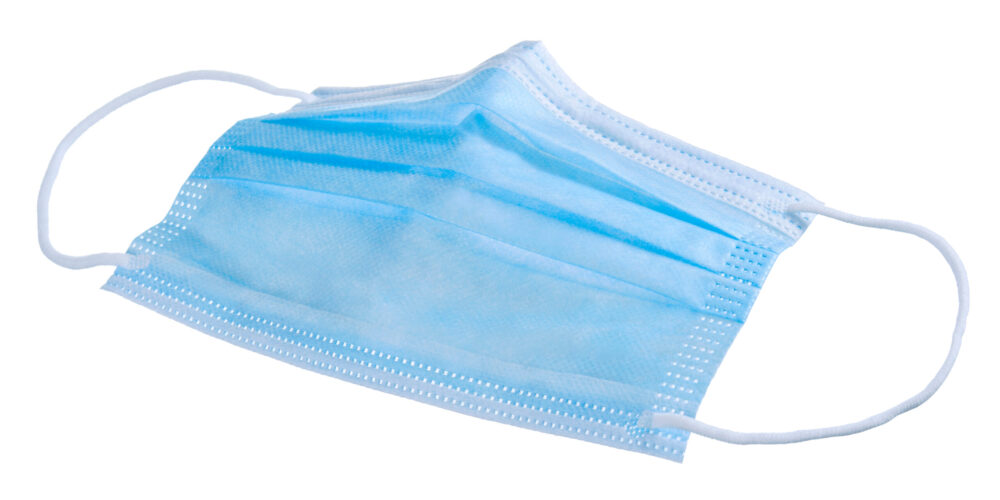
Reusable antimicrobial masks were celebrated as a smarter, greener alternative to disposable face coverings. They were marketed as longer lasting, better performing, and kinder to the planet. But new research is complicating that story in ways that are difficult to ignore.
A study published in the journal Environment and Health finds that washable masks containing metal nanoparticles release measurable amounts of toxic metals into water during both regular washing and prolonged water exposure. The findings raise serious questions about what happens to those metals once they leave the laundry and enter the broader water system.
Masks, metal nanoparticles and what gets left behind in the water
The masks at the center of the research were the kind marketed with antimicrobial claims, products that became widely popular during and after the pandemic era. Many contain silver, copper, or platinum nanoparticles, tiny particles prized for their ability to inhibit bacterial and viral activity on fabric surfaces.
What the research reveals is that those same particles do not stay put. When the masks are washed or submerged in water, they begin shedding both ionic metals and nanoparticles into the surrounding liquid. The process is accelerated when detergent is involved, which is exactly the condition that occurs during a standard laundry cycle.
Researchers tested three categories of masks, each marketed around a different primary metal. The results showed wide variability in how much each type released, but the overall pattern was consistent. Masks shed metals. They do it every time they are washed. And some of the concentrations involved are significant enough to exceed established safety thresholds for drinking water and industrial wastewater.
Silver was among the most heavily released metals in the masks designed around it, with large fractions of total silver content leaching out over a 72-hour period. Copper followed a similar pattern across multiple mask types, including some where copper was not even the labeled active ingredient. Beyond the intentionally added metals, the masks also contained traces of other substances including chromium, nickel, lead, and antimony, all of which were found to leach into water under testing conditions.
Why this matters for aquatic life and human health
The environmental implications of these findings extend well beyond any individual washing machine. Metal nanoparticles that enter wastewater systems can move through aquatic environments, accumulate in organisms, and travel up the food chain. Silver and copper, at the concentrations modeled in the study, exceed toxicity thresholds for algae, which form the base of many aquatic ecosystems. Disrupting that foundation can have cascading effects that reach far beyond the water itself.
What makes the situation more complex is that the metals rarely act in isolation. Some of the substances detected are known to interact with each other in ways that amplify their individual toxicity. Nickel, for instance, may heighten the harmful effects of both chromium and copper when they appear together. The combined presence of multiple metals in a single leachate creates a risk profile that is harder to model and potentially more serious than any single contaminant alone.
There is also a labeling problem woven through the findings. In several cases, the metal prominently featured in a mask’s marketing was either undetectable or present at negligible levels. Other metals not mentioned anywhere on the packaging were found in meaningful concentrations. That gap between what is advertised and what is actually inside raises questions about transparency and consumer protection that regulators have not yet fully addressed.
The case for stronger rules around mask disposal and manufacturing
The study makes clear that the environmental cost of reusable antimicrobial masks has been largely invisible until now. Most attention around mask waste has focused on disposable products clogging landfills and waterways. The reusable variety, assumed to be the responsible choice, has escaped meaningful scrutiny.
Addressing the problem will require action on multiple fronts. Clearer labeling that discloses metal content and release risks would give consumers more information to work with. End-of-life disposal guidelines specific to metal-containing textiles could reduce the amount of contamination reaching water systems. And manufacturing standards that limit the use of unintentionally introduced metals would help ensure that what ends up in a mask is only what is supposed to be there.