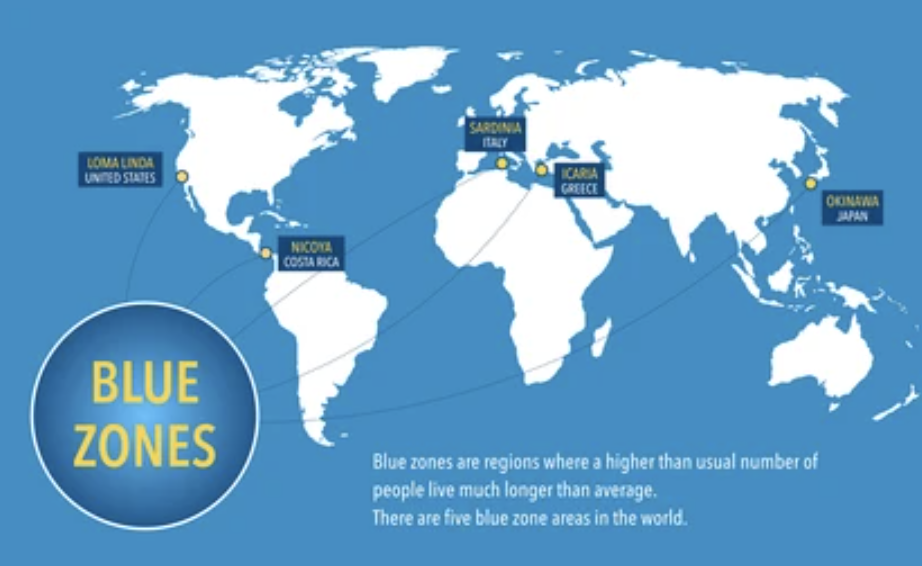
Blue zone communities are the places on earth where living to 100 is not a remarkable outlier but a reasonable expectation. Sardinia in Italy, Okinawa in Japan, Nicoya in Costa Rica, Ikaria in Greece, and Loma Linda in California have each been studied extensively by researchers trying to understand what separates people who thrive into their second century from everyone else who quietly checks out decades earlier. The findings have always been fascinating. The most recent and comprehensive analysis of blue zone data is making them actionable in ways that previous research had not fully achieved.
A landmark synthesis of blue zone research published recently examined behavioral, dietary, social, and environmental data across all five communities and identified the five daily habits with the strongest and most consistent association with exceptional longevity. Crucially, genetics was found to account for only approximately 20 percent of longevity outcomes in these populations. The remaining 80 percent is behavior. That is either the most motivating or most inconvenient statistic you will encounter today, depending on your current habits.
Blue zone habit one: moving naturally throughout the day
The people living longest in blue zone communities are not marathon runners or gym enthusiasts. They are people whose daily environments require consistent, moderate physical movement as a structural feature rather than a scheduled event. Sardinian shepherds walk miles daily as part of their work. Okinawan elders maintain gardens that require daily physical engagement. Ikarian communities are built on terrain that makes every errand a gentle workout.
The longevity research is clear that this pattern of natural, frequent, low-intensity movement produces better health outcomes than equivalent volumes of structured exercise interspersed with prolonged sitting. The body responds to movement frequency rather than movement intensity, and blue zone lifestyles deliver frequency automatically.
Blue zone habit two: eating to 80 percent fullness
Okinawans practice a cultural principle called hara hachi bu, which means eating until you are 80 percent full rather than continuing until satiety signals arrive. Because satiety signals lag behind actual fullness by approximately 20 minutes, stopping before they arrive produces a meaningful chronic caloric moderation that, over decades, produces dramatically different metabolic outcomes.
Research examining this practice found that blue zone populations consuming diets with this cultural moderation principle showed consistently lower rates of obesity, type 2 diabetes, and metabolic syndrome than comparable populations without the practice, independent of what they were eating.
Blue zone habit three: plant-forward eating with minimal processed food
Across all five blue zone communities, the dietary common thread is a predominantly plant-based diet built around legumes, whole grains, vegetables, fruits, and nuts, with animal products consumed sparingly and processed food absent almost entirely. The research does not support strict veganism as the longevity mechanism. It supports the displacement of ultra-processed food and excess animal protein with whole plant foods as the dietary pattern most consistently associated with longevity outcomes.
Blue zone habit four: belonging to a community with purpose
Social connection and a sense of purpose are not soft variables in the blue zone research. They are among the strongest predictors of longevity outcomes across all five communities. Okinawan elders describe ikigai, which translates roughly as reason for being, as a daily orienting force. Sardinian and Ikarian communities maintain multigenerational social structures where elders remain central and purposeful rather than peripheral and dependent.
Research confirms that adults with strong social belonging and clear personal purpose show mortality risk profiles comparable to those of non-smokers versus smokers, a magnitude of effect that places community and purpose in the same clinical conversation as diet and exercise.
Blue zone habit five: managing stress through built-in daily rituals
Every blue zone community has culturally embedded stress-reduction practices that occur daily without requiring deliberate scheduling. Ikarians take afternoon naps. Seventh-day Adventists in Loma Linda observe a weekly sabbath. Sardinians gather for social connection each evening. The research found that these practices reduce chronic cortisol elevation in ways that accumulate into meaningful cardiovascular and immune health advantages over a lifetime.