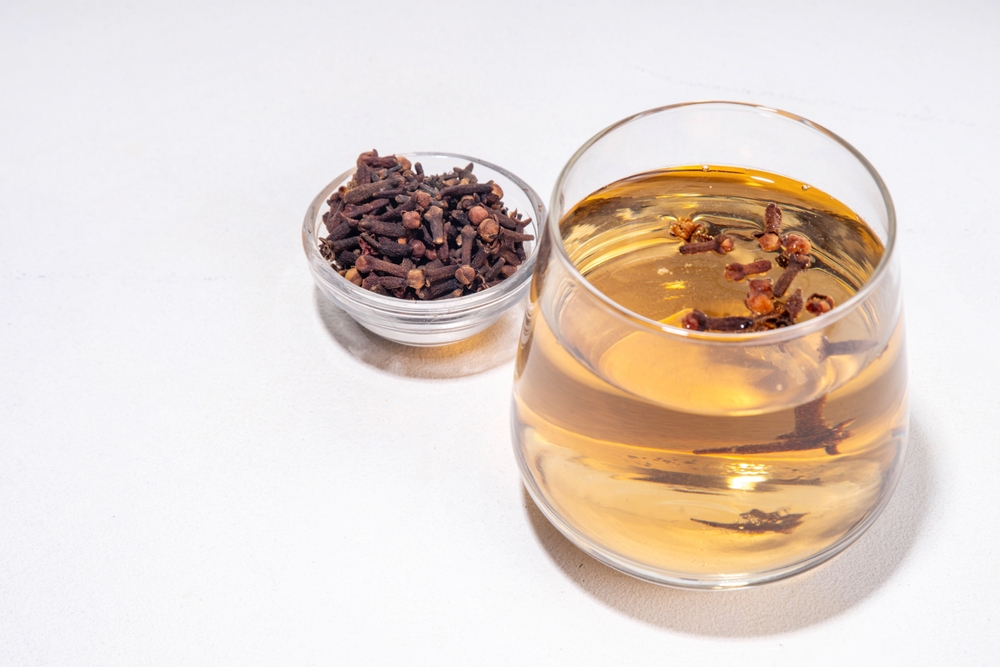
Clove water is made by soaking or simmering whole cloves in water and drinking the resulting infusion. The appeal is straightforward. The dried flower buds of the Syzygium aromaticum tree, native to Indonesia, have been used in cooking and traditional medicine for centuries. They carry a strong aroma, a distinctively sweet and pungent flavor and a well-documented concentration of antioxidant and anti-inflammatory compounds. The logic behind clove water is that steeping them transfers those properties into something drinkable.
That logic has a gap, and it is worth understanding before treating this water as anything more than a flavored drink.
What the research actually shows
The evidence base for cloves themselves is genuinely solid. A 2021 study examining the antioxidant capacity of 12 commonly used spices found that it’s ranked highest, with particularly strong activity from eugenol, a compound with documented cellular-protective properties. Eugenol is responsible for most of the antimicrobial and anti-inflammatory effects observed in laboratory settings.
A 2019 study found that participants taking concentrated clove extract experienced measurable reductions in post-meal blood glucose levels, suggesting a real mechanism for blood sugar regulation when it compounds are present in sufficient concentration. Concentrated products including clove oil have also demonstrated antibacterial, antifungal and antiviral activity against specific pathogens in controlled laboratory conditions.
The operative phrase in all of that is concentrated. Whole cloves. The extracts and the oils. The research that supports them as health-relevant consistently involves forms where the bioactive compounds are present in meaningful amounts.
Where clove water falls short
There is currently no published research that demonstrates health benefits specific to clove-infused water. The steeping process extracts a fraction of the compounds present in whole cloves, and that fraction is far lower than what appears in the extracts used in published studies. This water is primarily water with trace amounts of eugenol and other compounds dissolved into it.
The digestive benefits traditionally associated with cloves, including relief from gas and bloating, come from the compounds in the spice itself. Staying well hydrated does support digestion and helps move food through the intestines, but that is a property of water generally, not of the water specifically.
The blood sugar effect observed with it’s extract is similarly unlikely to carry over. The concentration difference between a supplement-grade extract and a steeped cup is substantial enough that drawing a direct line between the two is not scientifically supportable with current evidence.
Safety and practical considerations
Clove water consumed in moderation, roughly one to two cups per day, is generally considered safe for most adults. The flavor is strong and not universally appealing, which tends to be a natural limiting factor.
Concentrated products are a different matter. It’s essential oil is toxic in large amounts and should not be consumed without medical guidance. The compounds also carry mild blood-thinning properties, which makes caution appropriate for anyone taking anticoagulant medications. People who are pregnant or breastfeeding should consult a healthcare provider before adding any of it’s product to their routine, as the research on safety in those populations is limited.
Adding sweeteners like honey or maple syrup increases calorie and sugar content without adding the health properties that make cloves nutritionally interesting in the first place.
What to do if you actually want the benefits
The most direct way to get what it offer is to use them in cooking. Whole cloves added to rice, braised meats, soups or spiced beverages deliver the full compound profile in a food-safe format with centuries of culinary and medicinal use behind it. Grinding it work in baked goods and spice blends. Both forms retain the fiber, antioxidants and eugenol content that a diluted water infusion does not.
Clove water is not a harmful choice. As a warm, lightly flavored alternative to plain water it has appeal on its own terms. The problem is not the drink itself. It is the gap between what clove water is and what it is regularly claimed to be.