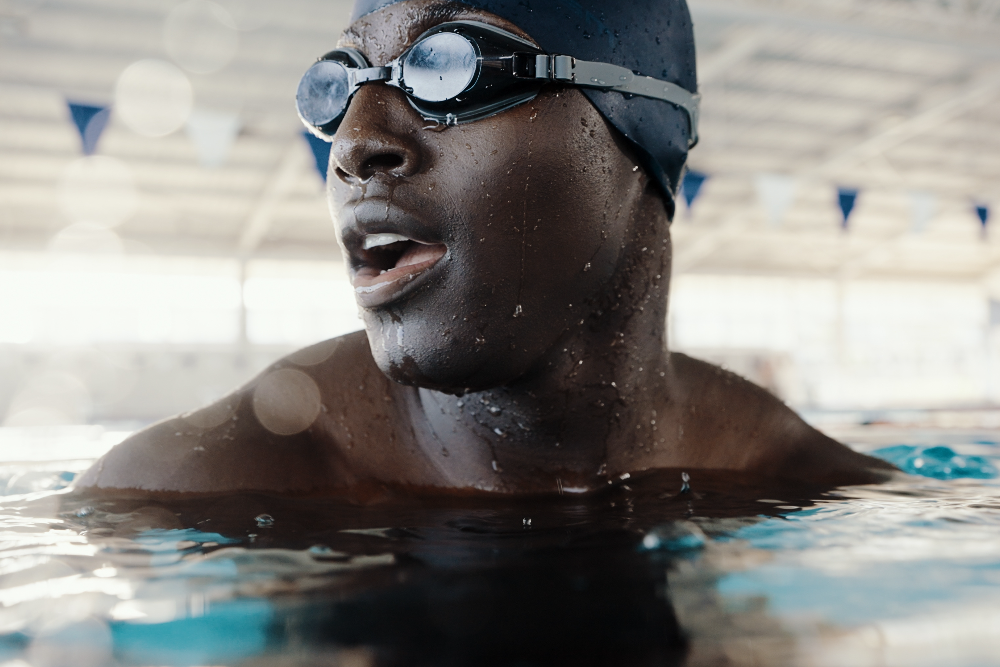
Most cardio conversations start and end with running. Maybe cycling. Perhaps a rowing machine tucked in the corner of a gym nobody touches. But the most complete cardiovascular workout available — the one that works the entire body, protects the joints, sharpens the mind, and burns serious calories — has been sitting in the pool this whole time.
Swimming is not just a workout. It is a total physical overhaul. And once the numbers are laid out, it is hard to argue otherwise.
Why Swimming Stands Alone in the Cardio World
Every popular cardio format has a ceiling. Running hammers the knees, hips, and lower back — the impact accumulates over miles and years. Cycling isolates the lower body and demands near-zero from the upper. Even rowing, often praised as a full-body option, cannot match the resistance and range of motion that water provides on every single stroke.
Swimming engages the arms, shoulders, core, hips, and legs simultaneously — every lap, every length, every session. The water itself acts as resistance from all directions, meaning muscles work harder without the body ever realizing how much stress it is actually absorbing.
The Science Behind Swimming’s Edge
Research consistently backs what swimmers already know. A study published in the International Journal of Aquatic Research found that regular swimming improves cardiovascular efficiency at a rate comparable to running — but with a fraction of the physical wear and tear.
Here is what the data shows
- Swimming burns between 400 and 700 calories per hour depending on stroke and intensity
- It improves lung capacity faster than most land-based cardio formats
- Water resistance is roughly 800 times denser than air, meaning muscles work harder at lower perceived effort
- Heart rate during swimming stays elevated longer due to the body’s horizontal position and cooling effect from water
- Regular swimmers show measurably lower blood pressure and resting heart rates than non-swimmers
These are not marginal gains. This is a fundamentally different physiological response compared to anything happening on a track or a bike.
Swimming Protects the Body While It Builds It
This is where swimming separates itself most decisively. High-impact cardio — running especially — comes with an injury tax. Shin splints, stress fractures, IT band syndrome, plantar fasciitis. The list is long and familiar to anyone who has logged serious mileage on pavement.
In water, the body is buoyant. Impact on joints drops by as much as 90 percent compared to running. That means people who are recovering from injury, managing joint conditions, or simply logging high training volume can push hard in the pool without the recovery debt that land-based cardio demands.
Swimming builds fitness and preserves the body at the same time. Very few workouts can make that claim.
The Mental Health Bonus Nobody Talks About
Physical results aside, swimming carries a mental health benefit that is increasingly hard to ignore. The rhythmic nature of each stroke — the breathing pattern, the repetitive motion, the sensory reduction underwater — has been shown to reduce cortisol levels and trigger a meditative state similar to mindfulness practice.
A 2016 global survey by Speedo found that 74 percent of swimmers reported that time in the pool significantly reduced stress. Nearly 70 percent said swimming helped them feel mentally refreshed in ways that other exercise did not.
The pool is not just a place to get fit. For many, it is the place where the noise of daily life finally stops.
Starting Is Simpler Than Most People Think
The biggest barrier to swimming is almost never physical — it is psychological. The unfamiliarity of a new environment, the technique learning curve, the goggles and the cap and the lanes. But every elite swimmer started with a single lap that left them gasping at the wall.
Start there. One lap becomes two. Two becomes ten. Ten becomes a habit that reshapes the body, clears the mind, and outlasts every other cardio phase ever tried.
The pool has been waiting. It is time to get in.