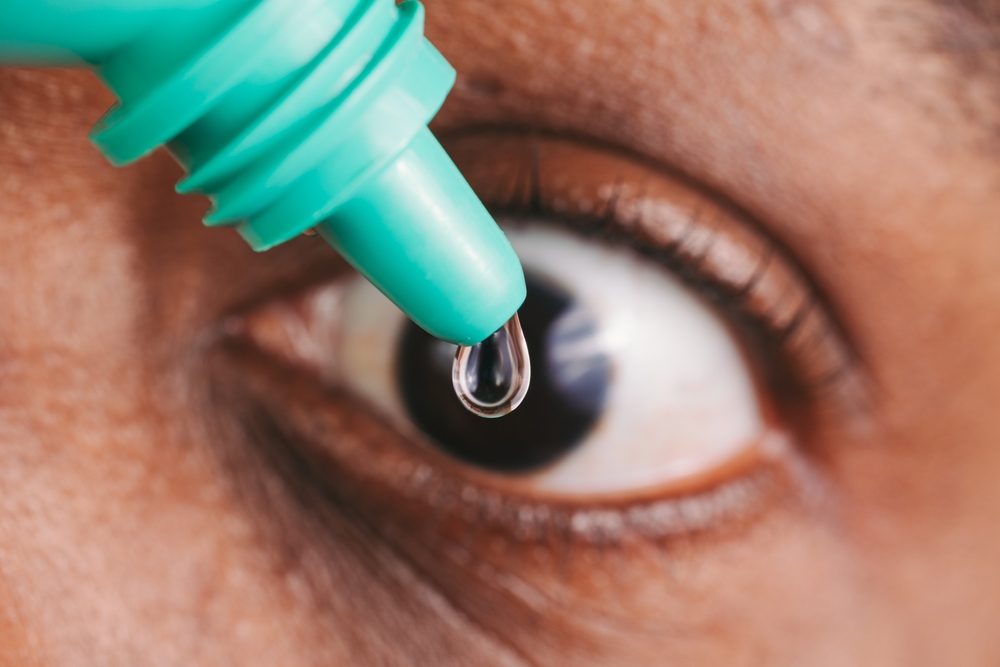
Every medicine cabinet seems to have one — a small bottle of redness-relieving eyedrops tucked behind everything else, ready for the next time eyes look tired or irritated. Millions of people reach for these eyedrops without a second thought. But optometrists are now pushing back hard, warning that this common habit may be doing far more harm than good — and that the eyedrops people trust most could be masking something far more serious.
Dr. Michelle Holmes, an optometrist at Pacific Neuroscience Institute in Santa Monica, California, is direct about the danger. The eyedrops people rely on for quick cosmetic relief, she explains, can suppress the very symptoms that signal an underlying condition — one that may worsen significantly without proper treatment.
Why eye redness is never just cosmetic
When the eye becomes irritated — whether from allergies, pink eye, a cold, or something more serious like glaucoma or a corneal abrasion — blood vessels at the front of the eye dilate and fill with blood. That is what causes the white part to appear red and inflamed.
That redness is not a nuisance. It is the eye communicating that something is wrong. It carries real diagnostic value for both patients and eye care providers, and catching the right condition early can mean the difference between a minor inconvenience and irreversible damage to eyesight.
How eyedrops create a dangerous cycle
Redness-relieving eyedrops work by temporarily constricting those blood vessels, making the eye appear white again. But the relief is entirely surface-level. The underlying cause of the irritation remains completely untouched.
This creates a false sense of security at exactly the wrong moment. Serious conditions — including infections that can progress to permanent vision loss — can worsen in silence while the eyedrops keep the eye looking fine. And once the eyedrops wear off, blood vessels often dilate even more aggressively than before, pushing users to reach for the bottle again. That cycle can quietly develop into dependency, all while the real problem goes undiagnosed and untreated.
The Food and Drug Administration has also flagged broader safety concerns in this product category, issuing warnings against 26 over-the-counter eyedrops products linked to contamination risks tied to partial vision loss and blindness.
What eye doctors recommend instead
Holmes advises patients to replace redness-relieving eyedrops with lubricating artificial tears. Preservative-free formulations are the preferred choice — gentler on sensitive eye tissue and widely considered the safest option for daily use.
The guidance from eye care specialists is consistent. If redness lingers, the right move is an evaluation from a qualified provider — not another round of eyedrops. A brief consultation can identify the source of irritation and point toward a solution that actually resolves it rather than concealing it.
Protecting eyesight for the long term
Preventive eye care remains widely overlooked despite how much is at stake. A significant share of those at high risk for vision loss skip annual eye exams entirely — a pattern that rarely changes until something goes wrong.
Specialists recommend yearly eye exams, UV-protective sunglasses, and ditching habits like sleeping in contact lenses as part of a serious approach to long-term eye health. The principle Holmes returns to is simple: never reach for something that hides a problem instead of fixing it. Eyesight is too important — and too fragile — for cosmetic shortcuts.