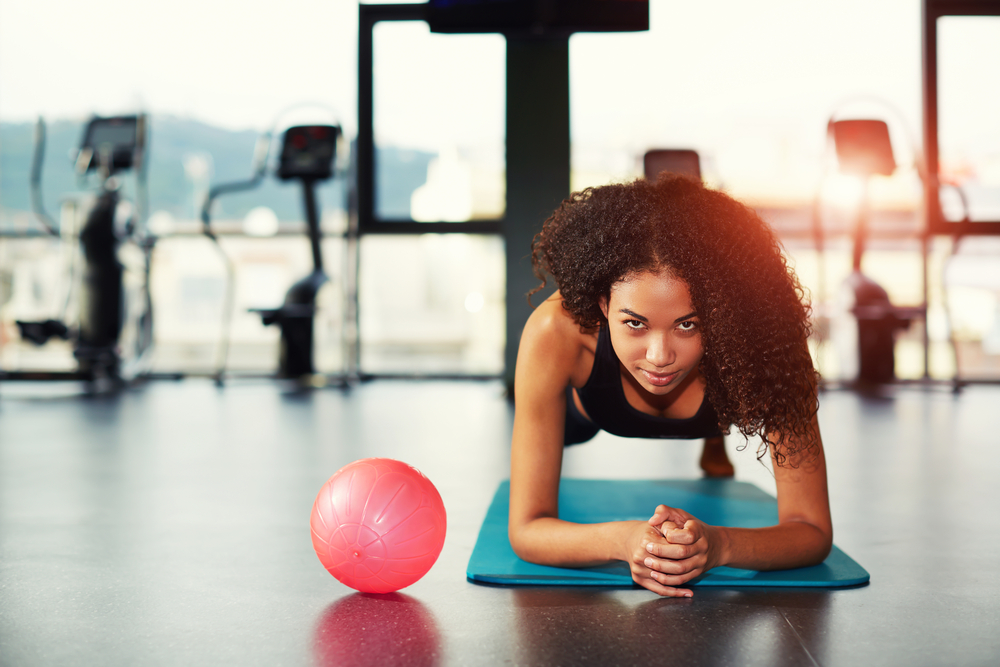
Planks activate more muscle groups simultaneously than almost any other static hold. From the shoulders down to the calves, the body must work in complete coordination to maintain proper form. And unlike crunches or sit-ups, planks protect the spine rather than strain it.
Why Planks Hit Different Than Other Core Moves
The secret is in the isometric contraction. When the body holds a plank, muscles are engaged without actually shortening or lengthening — a type of tension that builds endurance and stability in ways that traditional reps simply cannot replicate. The result is a stronger, more stable core that transfers to every physical activity, from picking up groceries to running a 5K.
The muscles working hardest during a standard plank include
- Transverse abdominis — the deepest layer of the abs, responsible for spinal support
- Erector spinae — the muscles running along the spine that keep posture upright
- Glutes and hip flexors — stabilizing the pelvis and lower body
- Shoulders and chest — bearing the load of upper body weight
- Quadriceps — keeping the legs straight and engaged throughout
Planks and Posture Are Deeply Connected
Poor posture is not just an aesthetic issue — it is a health issue. Chronic slouching contributes to back pain, reduced lung capacity, and even digestion problems. Planks directly counter this by strengthening the posterior chain, the network of muscles along the back of the body that holds everything upright.
People who train planks consistently often report a noticeable shift in how they carry themselves within just a few weeks. The body begins to hold itself differently — shoulders back, spine tall, hips balanced. That kind of structural change does not come from sit-ups.
The Mental Edge Nobody Talks About
Holding a plank is as much a mental exercise as it is a physical one. The moment discomfort sets in — usually around the 30-second mark for beginners — the mind starts negotiating for an early exit. Pushing through that threshold builds what sports psychologists call distress tolerance, the ability to stay composed under pressure.
Studies have linked regular physical challenge, including isometric holds, to reduced symptoms of anxiety and improved emotional regulation. The gym floor becomes a controlled environment to practice resilience, and those lessons follow people off the mat.
Plank Variations That Keep Progress Moving
Once the standard plank feels manageable, the body adapts — and that is the signal to evolve. Fortunately, planks come in dozens of variations that continue to challenge the system
- Side plank — shifts load to the obliques and improves lateral stability
- Plank with shoulder tap — introduces anti-rotation, forcing deeper core engagement
- Reverse plank — targets the posterior chain with emphasis on glutes and hamstrings
- Plank to downward dog — adds mobility and shoulder activation to the hold
- Weighted plank — places a plate on the back for progressive overload without equipment changes
How Long Should Planks Actually Be
Longer is not always better. Research from the University of Waterloo suggests that shorter, repeated plank sets — around 10 seconds each — may be more effective for spinal health than one extended hold. Quality of form matters far more than duration. A 20-second plank with perfect alignment outperforms a shaky two-minute one every single time.
Fitness professionals typically recommend starting with three sets of 20 to 30 seconds and building from there. Once a 60-second hold feels controlled and comfortable, it is time to introduce variation rather than simply extending time.
Planks require nothing but floor space and commitment. No gym membership, no equipment, no excuses. For anyone serious about building a body that is both strong and resilient, this one move is a non-negotiable starting point — and a permanent fixture in any intelligent training routine.