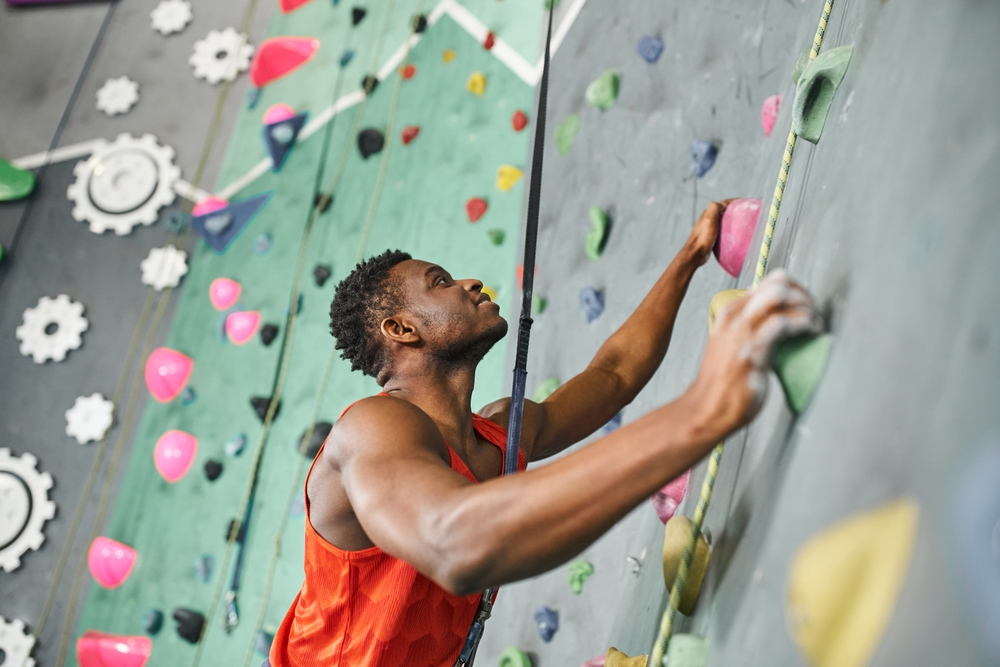
From burning serious calories to sharpening your mind, indoor rock climbing delivers whole-body results that traditional gym routines simply cannot match.
Rock climbing has long carried an image problem — chalked hands, mountain ledges, and a sport that seemed designed for a very specific crowd. But that narrative is crumbling fast. Indoor vertical gyms are popping up in cities across the country, and a growing wave of fitness enthusiasts is discovering what climbers have known for years— this activity is one of the most complete, effective, and surprisingly accessible workouts a body can get.
If your gym routine has gone stale, this sport might be exactly the shake-up your health needs.
Rock Climbing Is a Full-Body Workout That Actually Works
Unlike machines that isolate one muscle group at a time, climbing demands everything at once. Your arms pull, your legs push, your core stabilizes, and your grip holds it all together. A 2018 meta-analysis confirmed that rock significantly improves multiple fitness markers, including pull-ups, push-ups, vertical jump, and core strength. That kind of comprehensive conditioning is difficult to replicate with a standard weightlifting program alone.
The calorie burn is no joke either. Research shows that requires the same amount of energy as running at an 8- to 11-minute-mile pace, burning roughly 600 calories an hour. Whether you are bouldering at a local gym or tackling a tall rope wall, your body is working hard every single minute on that wall.
Here is what climbing engages in a single session
- Upper body — biceps, triceps, shoulders, and forearms
- Core — obliques, lower back, and stabilizers
- Lower body — quads, hamstrings, glutes, and calves
- Grip strength — finger tendons and forearm muscles
- Cardiovascular system — sustained elevated heart rate throughout
Climbing Builds Bone Density and Boosts Flexibility
Cardiovascular health matters enormously in the community, where heart disease remains the leading cause of death. Climbing addresses that risk head-on. Research from the British Journal of Sports Medicine found that rock increases heart rate and produces energy expenditure similar to running at a moderate pace or cycling, while also building significant muscular endurance — especially in previously sedentary populations.
Bone health is another critical benefit. Weight-bearing exercises like this help build and maintain strong bones, with research showing that rock climbers had similar bone density in their arms and legs as people who regularly strength train. Flexibility also improves naturally as climbers reach, stretch, and maneuver across routes, moving joints through their full range of mot3.0ion with every climb.
The Mental Health Payoff Is Just as Powerful
Climbing is not purely a physical discipline — it is a mental one. Every route on the wall is essentially a puzzle. You have to plan your moves, read the holds, stay calm under pressure, and adapt when a plan does not work. Research found that 73 percent of climbers reported better mental health after taking up the sport.
The science behind climbing’s cognitive benefits runs deep. A University of Florida study found that two hours of climbing boosted working memory capacity by 50 percent. For Americans navigating elevated rates of stress, anxiety, and depression — conditions that are often underdiagnosed and undertreated — a sport that simultaneously challenges the brain and releases physical tension is a powerful tool.
Climbing and the Rise of Representation in the Sport
Rock climbing has historically been a predominantly white space, and the barriers to entry—cost, location, and lack of representation—have kept many athletes on the sidelines. That is beginning to change. Brooklyn-based organizations and other community-led initiatives focused on inclusion in the sport are actively working to open doors, build visibility, and create safer pathways for new participants.
Groups like Brown Girls Climb, Climbing for Change, and the BIPOC Climbing Collective are expanding access even further, hosting dedicated nights at gyms and pushing for sliding-scale memberships that lower the financial barrier. The space is no longer just for one type of person.
How to Start Climbing Without Feeling Overwhelmed
Beginners are more welcome than they think. Most indoor climbing gyms offer day passes, rental gear, and beginner instruction — no experience required. Here is what to keep in mind before your first session
- Start with bouldering (no ropes, lower walls) to build confidence and technique
- Warm up with arm circles, shoulder rolls, and light cardio before touching the wall
- Progress gradually and respect rest days, since tendons adapt more slowly than muscles
- Bring a friend — climbing is inherently social and far more fun with a partner
- Tape your fingers during intense sessions for added support as grip strength builds
Rock climbing rewards patience and consistency. Within just a few sessions, most beginners notice real improvements in grip strength, posture, and confidence. The wall has a way of stripping everything else away — for that hour, the only thing that matters is the next hold.
That focus alone might be the best workout of all.