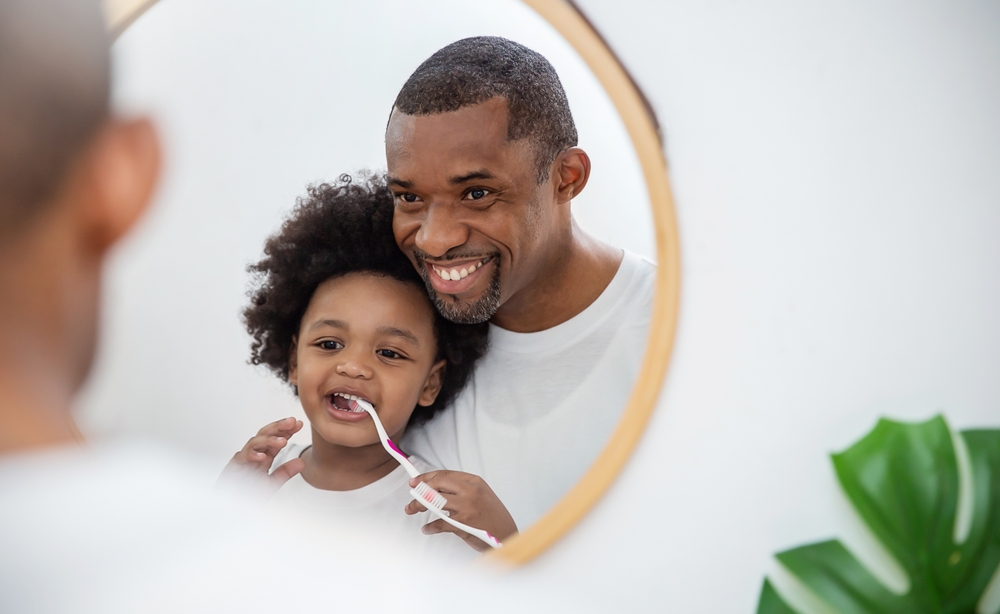
The habits children form in the bathroom mirror today can protect their teeth — and their confidence — for decades to come.
Most parents underestimate just how early children should brush. The image of a father guiding his young child through a morning routine is not just heartwarming — it is one of the most powerful acts of preventive health a parent can do. Starting early and staying consistent turns a simple daily habit into a lifelong advantage that pays off well into adulthood.
Why Dental Care Starts Before the First Tooth
Many parents wait until their child has a full set of teeth before introducing any kind of oral care. Dentists, however, recommend starting much sooner. Even before the first tooth erupts, gently wiping a baby’s gums with a clean, damp cloth helps eliminate bacteria that can affect early tooth development.
Once that first tiny tooth appears — usually around six months of age — brushing should begin immediately. Using a soft-bristled toothbrush designed for infants and a rice-sized amount of fluoride toothpaste is the standard recommendation from the American Dental Association. The earlier this routine is introduced, the more natural it feels to a growing child.
The Power of Brushing Together as a Family
Children are wired to imitate the adults they love most. When a parent practices good oral hygiene alongside a child, the message is clear— this matters, and we do it together. That kind of modeling is far more effective than simply telling a child what to do.
Studies in pediatric dental health consistently show that kids who share a dental routine with a parent or caregiver develop better technique and more consistent habits. The shared moment also creates a genuine connection — low-pressure, repeatable, and truly bonding.
Here is what a strong family oral hygiene routine looks like
- Twice daily — once in the morning and once before bed, every single day
- Right tools — age-appropriate toothbrushes and fluoride toothpaste in the correct amount
- Two full minutes — a fun song or timer app makes hitting the mark much easier
- Positive reinforcement — celebrate consistency with praise, not fear of cavities
- Fresh tools regularly — replace toothbrushes every three months or after an illness
Common Brushing Mistakes Parents Make
Even well-meaning parents can fall into habits that quietly undermine their child’s dental health. Going too hard, skipping the two-minute mark, or using too much toothpaste are among the most frequent missteps.
Another overlooked issue is letting children handle their oral hygiene entirely on their own too soon. Most children do not develop the fine motor skills needed for effective brushing until around age seven or eight. Until then, a parent should finish the job — or at least do a quick check — after the child has had their turn.
Rinsing with water immediately after brushing is another common habit that actually reduces fluoride’s effectiveness. Dentists recommend spitting out excess toothpaste but skipping the rinse — letting the fluoride continue working on tooth enamel.
What Dentists Want Every Parent to Know
The first dental visit should happen no later than a child’s first birthday, or within six months of the first tooth appearing. Many parents delay this, assuming baby teeth are temporary and therefore less important. That thinking, dental professionals warn, is a costly mistake.
Baby teeth hold space for permanent teeth. When they decay early — a condition known as early childhood caries — it can affect speech development, nutrition, and the alignment of adult teeth. A consistent brushing habit and early dental visits are the two most reliable ways to prevent this.
Fluoride remains one of the most proven tools in preventing tooth decay. Parents concerned about fluoride should speak directly with a pediatric dentist rather than avoiding it altogether — the science supporting its safety and effectiveness is well established.
Building a Brushing Habit That Actually Sticks
Consistency is the hardest part. Life gets busy, bedtimes get chaotic, and oral hygiene can feel like one more battle at the end of a long day. But parents who frame brushing as non-negotiable — just like buckling a seatbelt — raise kids who internalize it the same way.
A few strategies that help make the habit stick
- Anchor it to an existing routine — always brush right after breakfast and right before a bedtime story
- Let kids choose their toothbrush — autonomy increases buy-in, even at age two
- Use apps or music — two-minute timers disguised as games work remarkably well
- Stay patient through resistance — pushback is normal, but caving on consistency sends the wrong signal
- Track it visually — a simple sticker chart on the bathroom mirror can motivate young kids powerfully
The goal is not perfect technique every single time. The goal is a child who reaches for their toothbrush without being asked — and one day teaches their own kids to do the same.