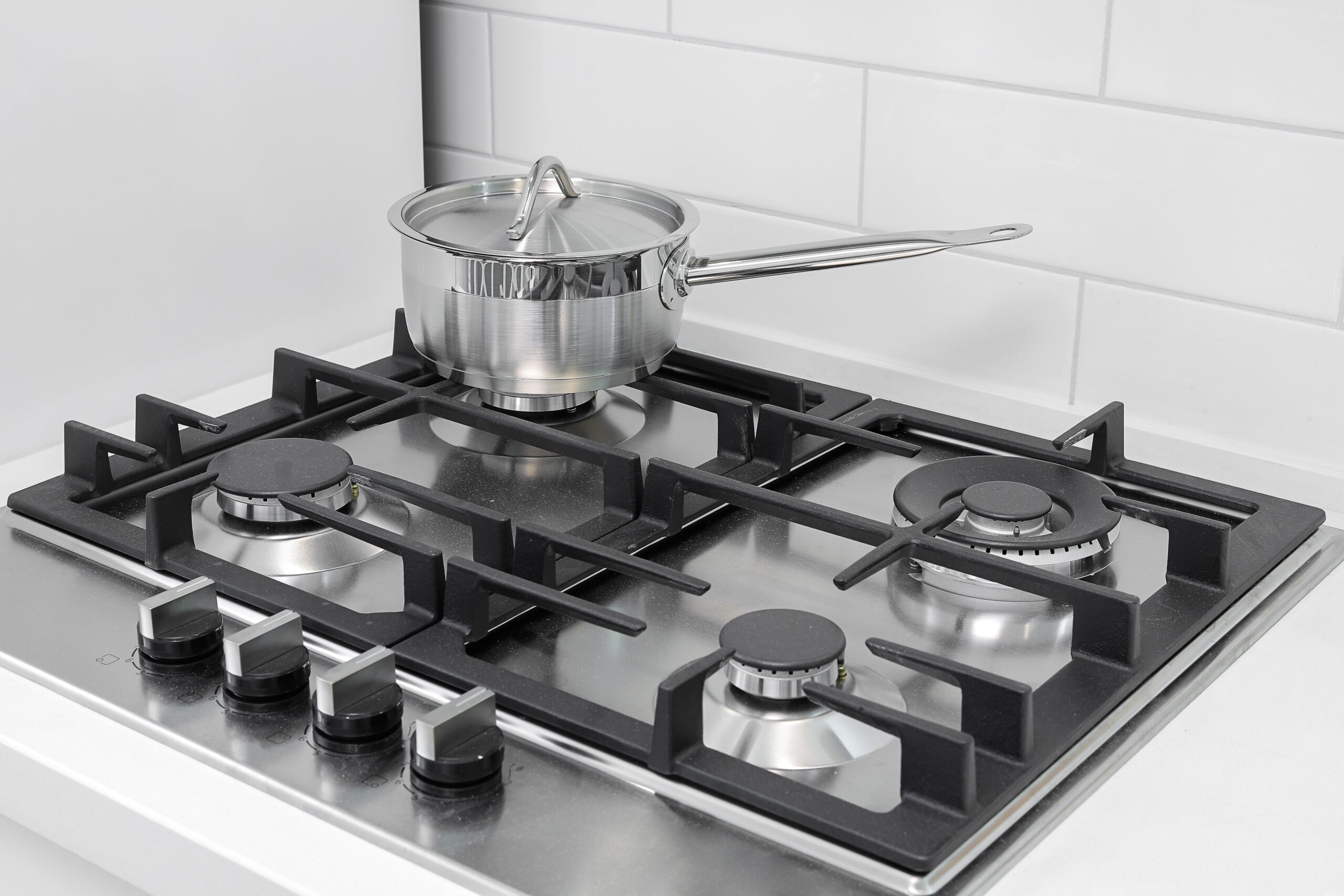
Most people assume their gas hob is only a concern when it is actively burning. New research suggests the greater risk may come when the appliance is completely off. A small but notable study found that close to one in 10 homes with gas hobs in the United Kingdom have leaks even in standby mode, allowing benzene to accumulate indoors at levels that exceed recommended safety thresholds.
Benzene is a colorless, largely odorless gas and a classified group one carcinogen, placing it in the same category as asbestos and tobacco smoke. It enters the body through inhalation and can cause DNA damage over time. Researchers estimate that hundreds of thousands of people across England and Scotland may be regularly exposed to benzene at levels above the recommended limit, raising the long-term risk of leukemia and related blood cancers.
Environmental health experts note that imperfect valve seals are relatively common in gas appliances. While most leaks are minor, a smaller subset releases gas at levels significant enough to affect indoor air quality over extended periods. Because benzene has no strong detectable odor at the concentrations produced by a stove leak, there is no reliable way to identify the problem without measurement.
How serious is the risk
The connection between benzene and cancer is well established in medical literature. It has been linked specifically to blood cancers including leukemia and lymphoma, and its classification as a group one carcinogen reflects decades of consistent evidence. That said, researchers are careful to place the risk in proportion.
Unlike smoking, which increases the risk of lung cancer roughly 25 times over, cumulative benzene exposure from a leaking gas hob is estimated to roughly double the lifetime risk of leukemia in affected households. Given that the baseline risk of leukemia is already low, the absolute increase remains statistically small. Experts emphasize that the elevated risk is associated with long-term exposure over years or decades, not occasional or short-term contact.
One important distinction is that the people most at risk from benzene are typically those with occupational exposure or those who smoke, both of which involve significantly higher concentrations than a residential gas leak would produce. For the average homeowner, the risk is real but modest, and perspective matters when deciding how urgently to act.
How to find out if your home is affected
Benzene is invisible and its scent at low concentrations is too faint to register reliably, which means there is no straightforward way to detect a leak without measurement. The most accessible option is a diffusion tube, a small device placed in the kitchen for approximately one month before being sent away for laboratory analysis. The tubes themselves are relatively affordable, though the cost of chemical analysis varies and may be a barrier for some households.
There is currently no consumer-grade product that detects benzene at the concentrations associated with a gas hob leak, making professional or laboratory-based testing the only reliable path to an answer.
What you can actually do
The most immediate and cost-free step is improved ventilation. Running an extraction hood that vents directly outside, or keeping a window slightly open while cooking, significantly reduces the concentration of any gases that accumulate in the kitchen. This does not address the underlying leak but it meaningfully limits exposure during daily use.
The longer-term solution is switching to an electric or induction hob. Research from Stanford University found that electric hobs emit a fraction of the benzene recorded from gas models, while induction hobs produced no detectable benzene at all. Experts describe making that switch at the next kitchen upgrade as a clear improvement for indoor air quality overall, since it eliminates both the leak risk and the combustion byproducts that occur whenever gas burns indoors.
For households not in a position to upgrade immediately, the consensus among researchers is that panic is not warranted. The lifetime cancer risk attributable to benzene exposure from a leaking gas hob, even with prolonged exposure in the same home, is estimated at roughly two to three cases per million people. In a country where the general lifetime cancer risk sits at approximately one in two, that number remains very small.